Falling shrapnel caused minor damage to an Aramco building in Riyadh. Saudi forces reported intercepting several missiles amid renewed fighting in Yemen.
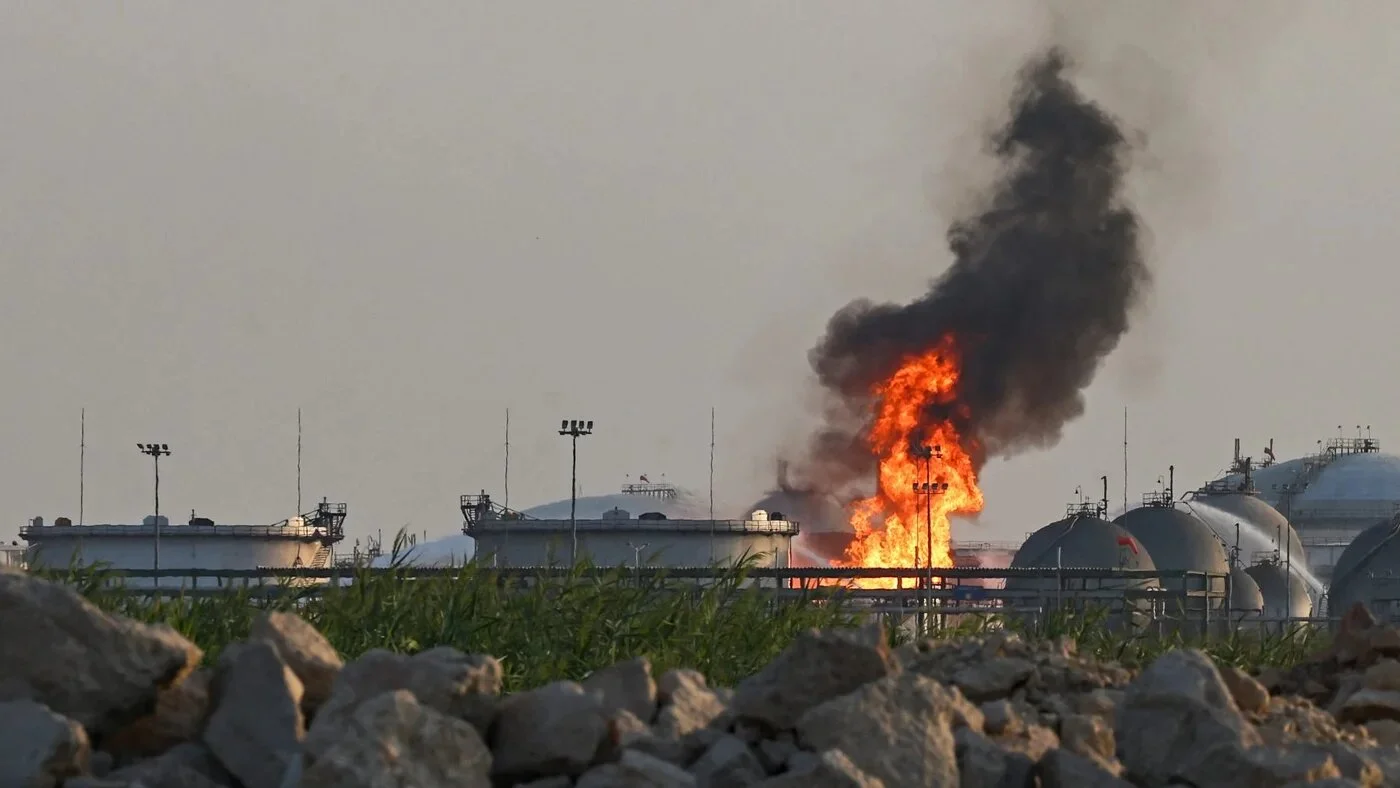
The damage to an Aramco building in Riyadh shows how renewed fighting in Yemen is reaching Saudi Arabia’s capital. Saudi officials said shrapnel struck the company’s administrative building on Sunday, causing minor damage; no injuries or deaths were reported. The account describes limited physical damage at one site, but the location gives the incident a wider significance: it occurred in the kingdom’s political and commercial center, far from the areas where much of the fighting has been taking place.
A Reuters witness saw windows blown out on several floors of Aramco Tower in the King Abdullah Financial District, a major business area. The incident followed loud explosions and an early warning alert from Saudi Civil Defence. Authorities later said the danger had passed. That sequence—warning, explosions, damage, and an all-clear—shows how an attack can disrupt a city’s sense of routine even when officials report no casualties and the immediate threat ends.
Saudi forces report multiple interceptions
The Saudi-led coalition said its air defences destroyed two ballistic missiles headed for Riyadh, then intercepted two cruise missiles over the capital and the kingdom’s southern region. Coalition spokesperson Major-General Turki al-Maliki also said a ballistic missile launched towards the Eastern Province had been intercepted. These are coalition claims, and the source does not provide independent confirmation of the interceptions. Still, the reported sequence points to the scale of the threat Saudi authorities say they faced across several parts of the country.
Missile interceptions can prevent a weapon from reaching its intended target, but they don’t necessarily prevent debris or shrapnel from causing damage on the ground. The reported damage at Aramco Tower makes that distinction tangible: the building was struck by shrapnel, according to Saudi officials, even as the coalition said its air defences had stopped incoming missiles. The available account doesn’t establish which intercepted weapon caused the damage or how the debris reached the building.
The exchanges come after a 2022 truce collapsed and military operations resumed in Yemen. Yemen’s internationally recognised government launched a campaign last month to retake territory held by the Houthis, who have controlled Sanaa since 2014. The renewed campaign has brought the conflict into a more active phase, with claims of attacks and counterattacks crossing the border and reaching Saudi cities.
That matters because a conflict’s reach is measured not only by where forces are fighting, but also by the range of threats that officials say they must manage. For people and businesses in Riyadh, the warning alert and damage to a high-profile office building make the fighting less distant, even if the physical consequences reported so far in the capital are limited.
Conflicting claims over strikes in Yemen
A day before the Riyadh attacks, the Houthi-run Health Ministry said coalition air strikes killed at least 33 people near Sanaa, including eight women and 13 children. Ministry spokesperson Anees al-Asbahi said 39 others were wounded in attacks on homes, roads, paramedics and Civil Defence teams in Bani Hushaish district. Those numbers and descriptions come from a ministry run by the Houthis, one of the parties to the conflict, and the source provides no independent confirmation of them.
The coalition had not immediately commented on the reported strikes. Al Jazeera said it could not independently verify the casualty figures. That caveat is central to understanding the reports: the alleged toll is serious, but the information available here doesn’t allow a reader to establish its accuracy or the circumstances of each reported strike.
Houthi military spokesperson Yahya Saree claimed the coalition carried out 105 air strikes and missile attacks in 24 hours across Sanaa and seven other governorates. He put the number of attacks since the latest escalation began at 4,369, and said Houthi forces had conducted six operations against Aramco facilities, Riyadh airport and Saudi military positions on both sides of the border. The scale of those figures is striking, but they remain claims from one side; the source does not offer a separate count against which to check them.
Here’s the thing: figures released during active fighting can shape public understanding before they’ve been independently checked. A large reported total may indicate the intensity of a campaign, but without a clear method or corroboration, it can’t by itself show how many distinct attacks occurred or what damage they caused. And yet those claims still matter, because they describe how the Houthis say they’re targeting Saudi assets and how they present the campaign to the public.
What the escalation means for Riyadh
For businesses in Riyadh, Sunday’s damage is a reminder that missile threats can reach the capital even as much of the fighting remains centered in Yemen. An incident at a major business district can prompt questions about employee safety, building access, and continuity of work. The account doesn’t say whether offices were closed or operations interrupted, so the practical impact beyond the reported damage remains unclear.
This is more significant than it looks. The reported damage was minor and no one was hurt, but a strike’s effect isn’t measured only in broken windows or casualties; warnings, uncertainty, and the need to assess exposure also affect how people use a city’s business spaces. (And this is the part most people overlook.) The source doesn’t establish a lasting disruption, but even a contained incident can make the boundary between a distant conflict and daily commercial life feel thinner.
If you’re working in this space, the most useful distinction is between what’s been confirmed in the account and what remains a party’s claim. Saudi officials reported damage and no casualties; the coalition reported missile interceptions; Houthi officials reported deaths and a wide range of attacks. The competing accounts underline how quickly the renewed campaign is widening, while also leaving important details unresolved.
Near-term assessments will depend on whether further attacks are reported, what each side says about them, and whether independent information becomes available. The source gives no basis for predicting how the conflict will develop. For now, the episode shows the practical stakes of the renewed fighting: damage in Riyadh, reported casualties near Sanaa, and competing accounts that make it difficult to establish the full picture.



Discussion
Sign in to join the discussion.