From a Roman doll repair shop to miniature crime scenes in Baltimore, these collections reveal the nostalgia, grief, history, and unease that toys can hold.
Why dolls still unsettle us
Dolls became harder to love when makers learned to make them look more human. By the 18th century, porcelain faces, glass eyes, and real-hair wigs had turned playthings into uncanny imitations. Victorian mourning dolls pushed that unease further: some wore the clothes of dead children and were placed on their coffins. Add Chucky, Annabelle, Slappy the Dummy, and their pop-culture company, and the association is hard to shake. The places below show how much a toy can hold: nostalgia, grief, folklore, crime, and a little menace. Some began as cheerful art projects; others preserve darker histories. The oddness is part of the appeal.1. Tombées du Camion - Saint-Ouen, France
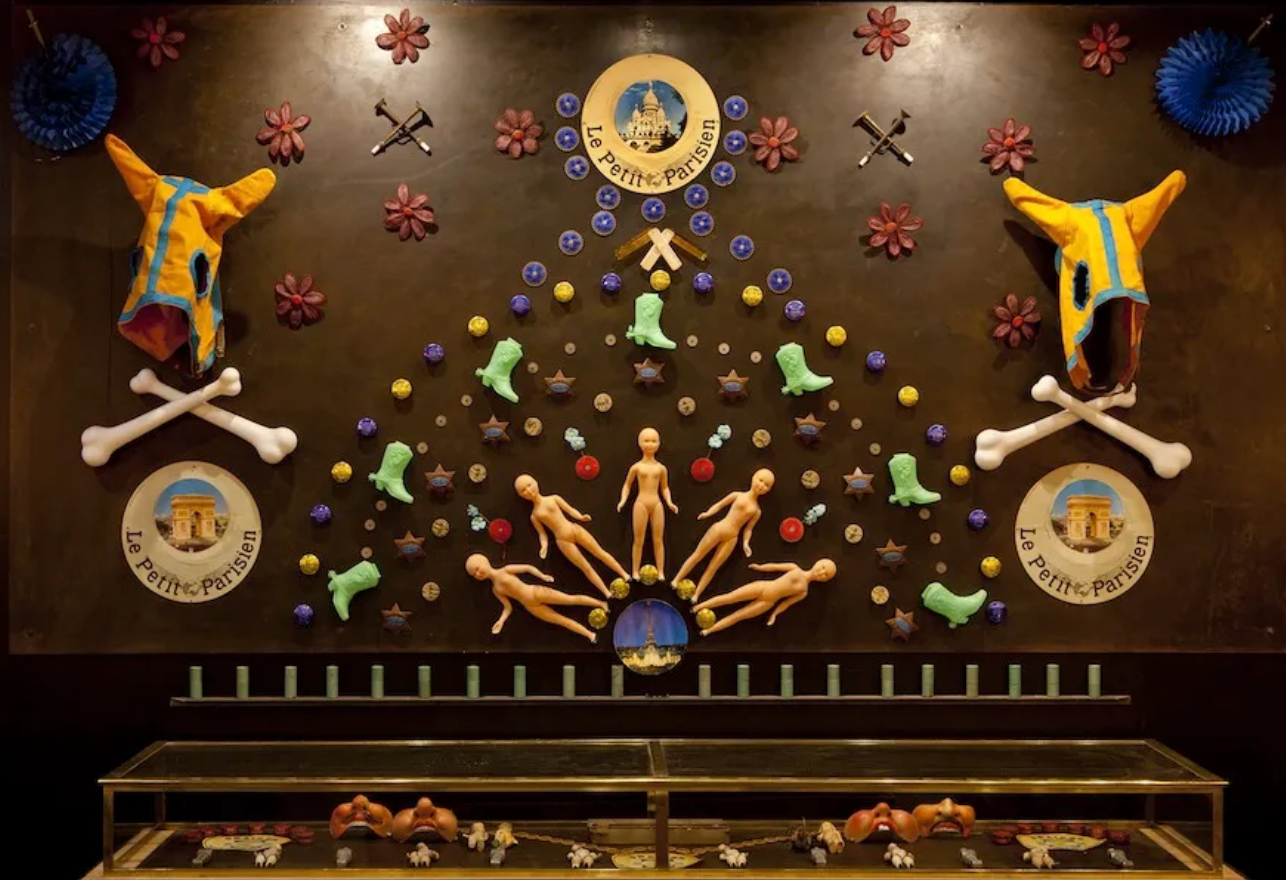
Just outside Paris, this small shop gathers the strange leftovers of French factories. Its name means “goods that have fallen off the back of a truck,” and the stock matches that mischievous promise: glass doll eyes, coffin handles, bicycle-shaped sunglasses, and other curiosities tucked into wooden boxes or suspended from the ceiling. Owner Charles Mas, a sculptor and interior designer, built the shop around the pleasure of rediscovery. He wants visitors to find the toys and trinkets they loved as children. “I focus on objects that have no market value, but an emotional and nostalgic value,” he says. “Many things that, without imagination, are worthless.”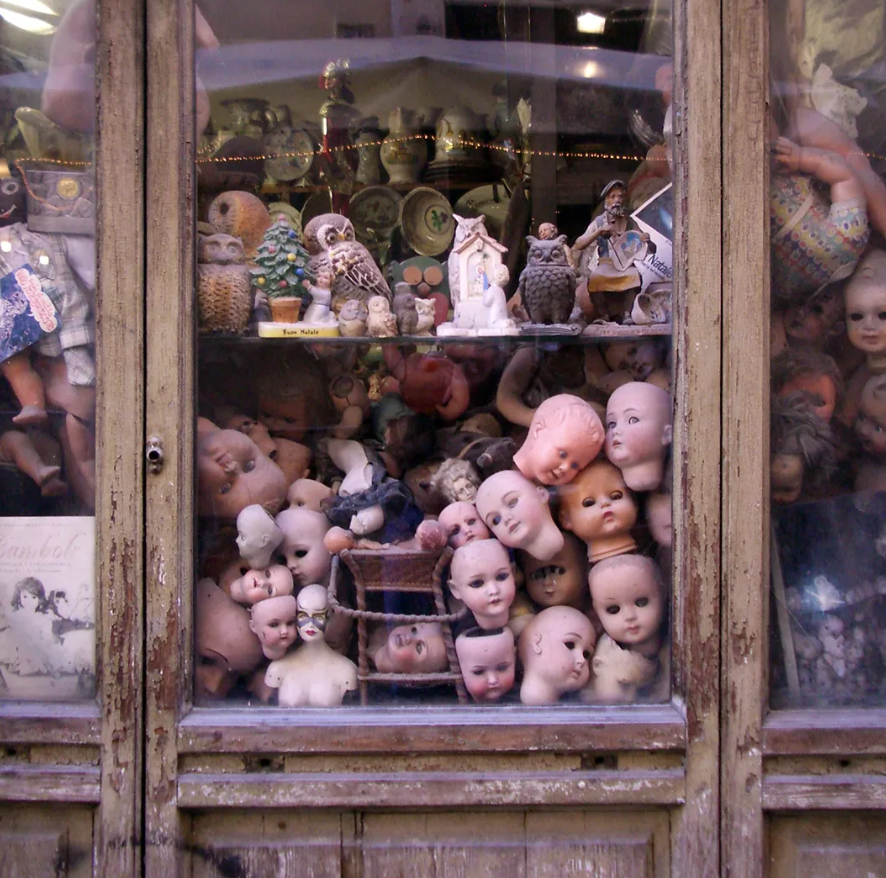
2. Ospedale delle Bambole - Rome, Italy
The Squatriti family has repaired dolls and other keepsakes at this Centro Storico workshop for nearly 90 years. Its benches and shelves are crowded with limbs and torsos; worktables hold brushes, twine, and plaster. The family restores more than 1,000 pieces a year, including vases, statuettes, and plates. Owner Federico Squatriti says little has changed since the shop opened. His family once lived upstairs, and he remembers visiting his father, uncle, and grandmother at work as a boy. Locals call the place a “shop of terror.” For the Squatritis, it feels like home.
3. Nutshell Studies of Unexplained Death - Baltimore, Maryland
Frances Glessner Lee made miniature crime scenes into forensic teaching tools at a time when the field was still young. The Chicago socialite built 20 dioramas at a scale of one inch to one foot, using details drawn from real cases. She attended the autopsies and recreated the scenes with painstaking care; one model even includes a wall calendar showing the year of the crime. Lee named the project the Nutshell Studies after the stated aim of forensic investigation: to “convict the guilty, clear the innocent, and find the truth in a nutshell.” At Harvard’s Magrath Library of Legal Medicine, she used the models to teach students how to interpret evidence. After her death in 1962, the Maryland Office of the Chief Medical Examiner acquired and restored the collection. Investigators still use the dioramas for training.
4. The House of Dreams Museum - London, England
Stephen Wright lives upstairs while visitors explore the ground floor of his home, now a museum of his work. The house, garden, and exterior have become a sprawling sculpture of mosaics, collages, dolls, and handwritten “memory boards.” Wright began the project in 1992, initially as a side pursuit. After his partner and parents died in quick succession, the installation became a place to work through grief. It continues to grow with finds from flea markets and objects visitors give him.
5. Mary’s Gone Wild Folk Art and Doll Baby Museum - Supply, North Carolina
Mary Paulsen says God told her to give her 6,000 dolls a home. The result is a village assembled from painted windows, tin cans, glass shards, and donations from neighbors: a red schoolhouse, soda shop, library, and chapel, where Paulsen married. She turns whatever people bring her into “gonna-make-you-smile art.” Proceeds from the work she sells go to Feed the Children, which fights childhood food insecurity. The village can look eerie at first, but its mood is more playful than sinister. Paulsen often greets visitors herself, pausing her work to show them around. One visitor described her as “a delight to talk with” and the site as “incredibly creative”: “A lot of junk…lovingly presented!”
6. Hospital de Bonecas - Lisbon, Portugal
Opened in 1830, Lisbon’s Hospital de Bonecas is among the oldest doll-repair shops in the world. Its proprietors kept dolls that customers never reclaimed, building a museum of their own: drawers of assorted body parts, miniature furniture, and costumes strung on a clothesline. The shop also makes doll clothing, toy cars, planes, and carousels.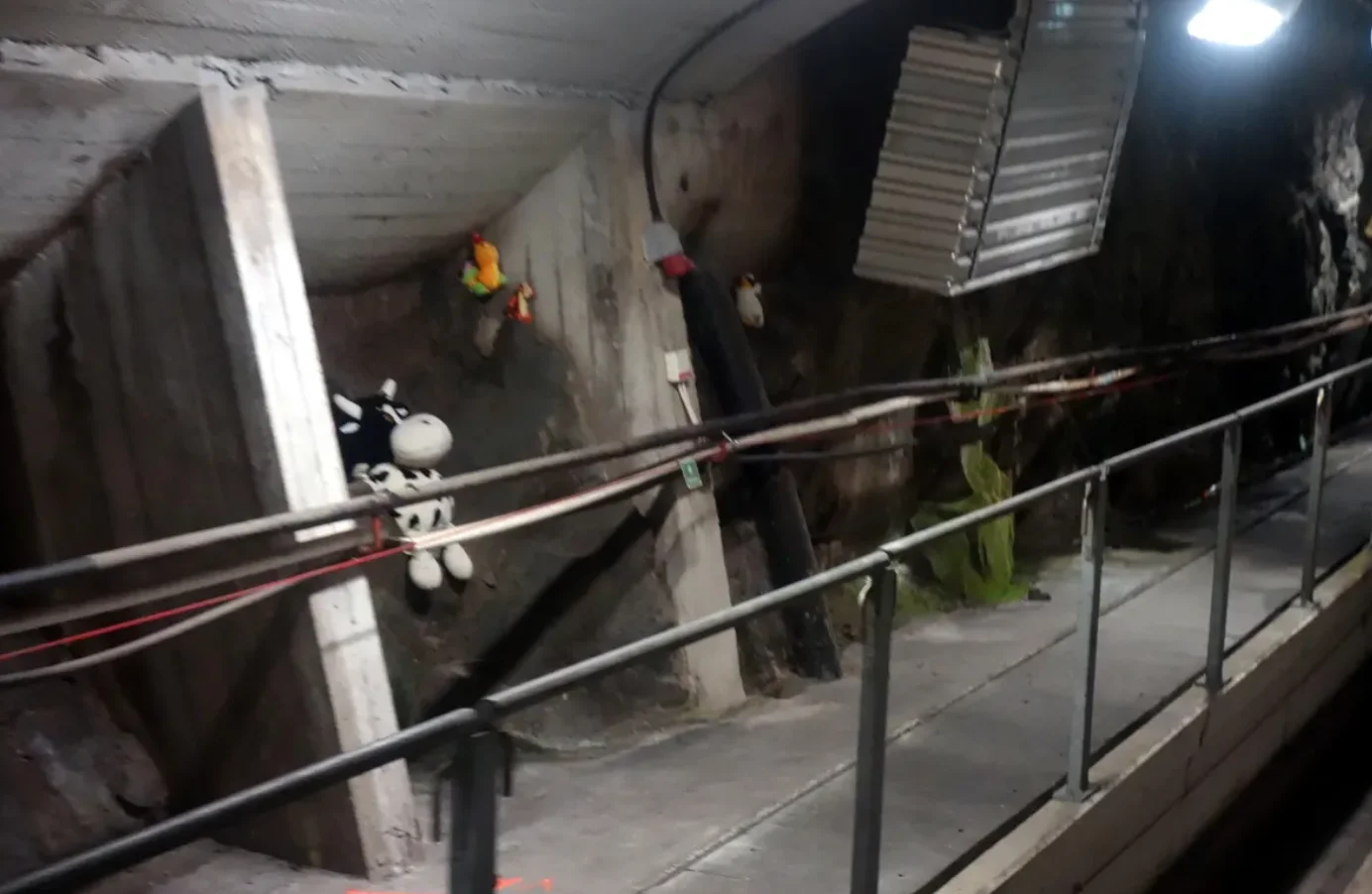
7. Lost Toys of the Nybohov Funicular - Stockholm, Sweden
Since 1964, an underground cable railway has linked Liljeholmen with Nybohov hill. No one seems to know when toys began appearing along its dark tunnel. The collection became a local fixture: when officials tried to clear it in 2012, residents protested. They won, and nearly 30 toys remain on the rails and concrete walls, greeting children who pass through.
8. Doll’s Head Trail - Atlanta, Georgia
At Constitution Lakes, a wetland and forest preserve in Atlanta, doll parts mingle with the landscape. Arms hold toy cars; one nearby brick reads “Giving daddy a hand.” Dolls lean against trees with rusty tools where their heads should be. A baby’s face sits beside a neon “fashion” sign, while another rests among mossy bricks and pinecones. Carpenter Joel Slaton started the trail’s collection by reworking discarded objects he found in the park. Other people joined in, with one strict rule: every piece must use materials found on site. Visitors are discouraged from bringing anything in; a trailhead sign puts it plainly: “litter makes the angels cry.”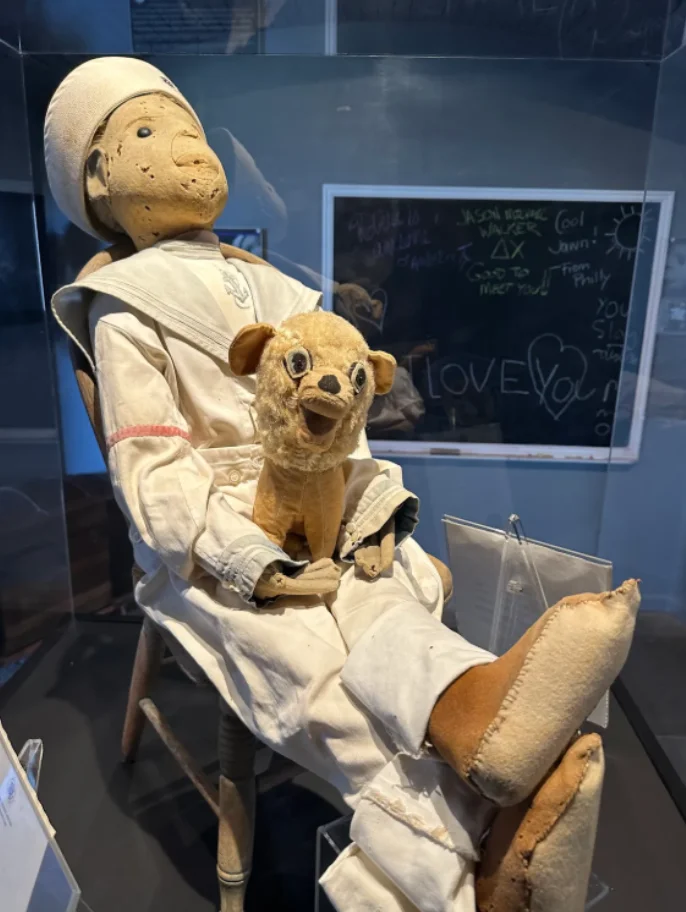
9. Robert the Doll - Key West, Florida
As a boy in the early 20th century, Gene Otto received a straw-filled doll, named him Robert, and took him everywhere. His family later heard him speaking alone in his room and waking with screams at night. When furniture turned over, Gene blamed the doll. Visitors to the Otto home reported hearing high-pitched giggles and seeing a doll-like figure in a window. Robert now lives at the Fort East Martello Museum in Key West, Florida. Visitors can see him there, though the museum lore warns that he curses people who photograph him without permission.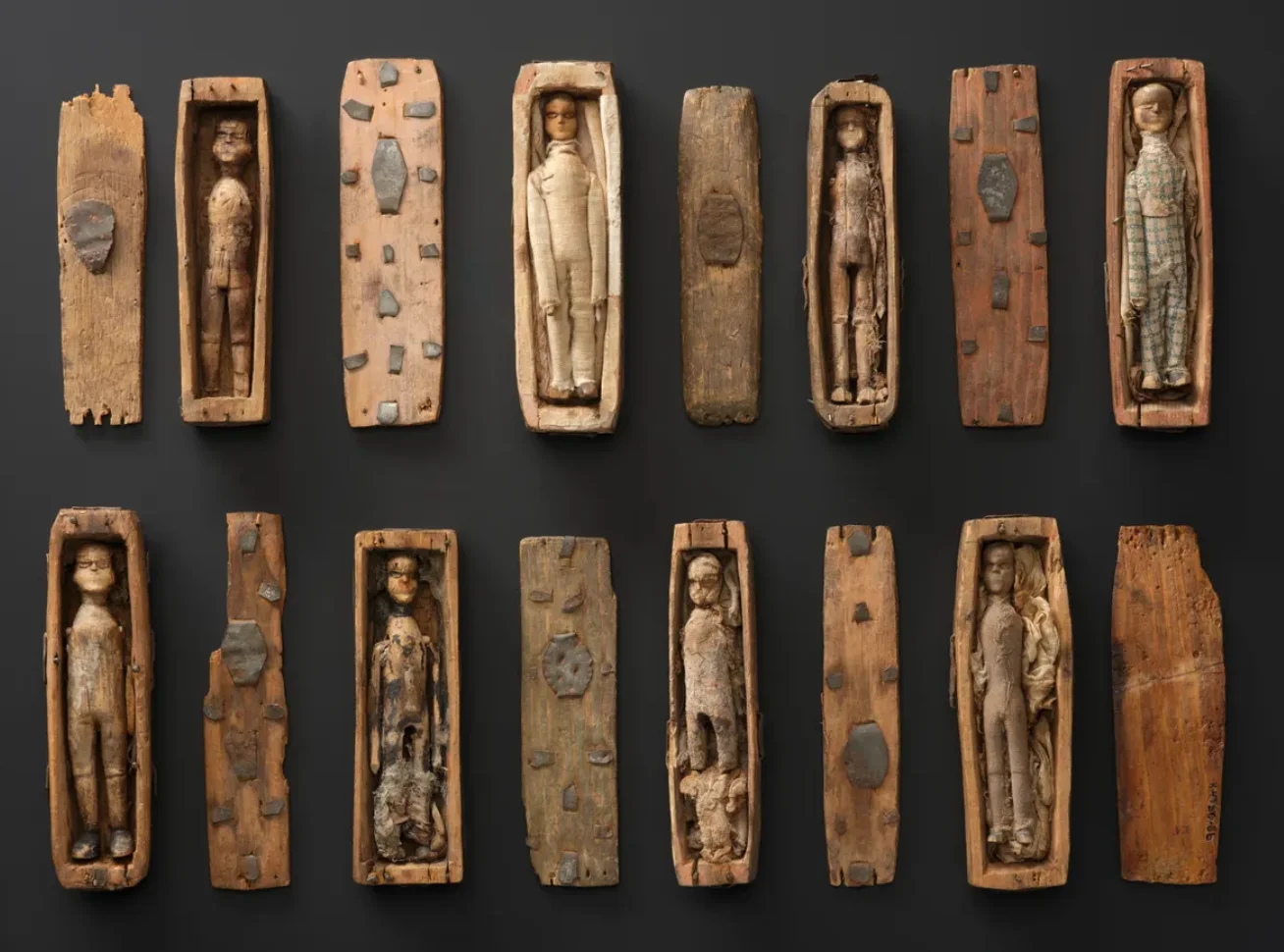
10. Burke & Hare Murder Dolls - Edinburgh, Scotland
Seventeen tiny dolls, each placed in a miniature coffin, turned up in an Edinburgh park nearly a decade after William Burke and William Hare became known as the “Anatomy Murderers.” Their identities remain a matter of speculation. Some thought the figures represented the pair’s victims; others guessed they were sailors who had died without proper burials. The dolls’ hinges and nails suggest they may have been made by a cobbler.
11. Doll Garden of Sabile - Sabile, Latvia
Daina Kučere has populated her garden with hundreds of straw figures doing ordinary chores: cooking, biking, chopping trees, and sawing wood. Their clothes range from police uniforms and wedding dresses to baggy sweats, depending on what Kučere finds. Asked why she created the village, her answer boils down to “Why not?” Visitors can wander through freely and leave a few coins in the central donation box.
12. Miyoshi Mononoke Museum - Miyoshi, Japan
Japan’s first public museum devoted to yokai—spirits and monsters from Japanese folklore—holds more than 5,000 artifacts, including dolls and action figures of these curious beings. The interactive room invites visitors to animate images with light projections or color a yokai that then appears on screen. A “yokai camera” lets guests place themselves inside a historic picture scroll and transform into one of the creatures.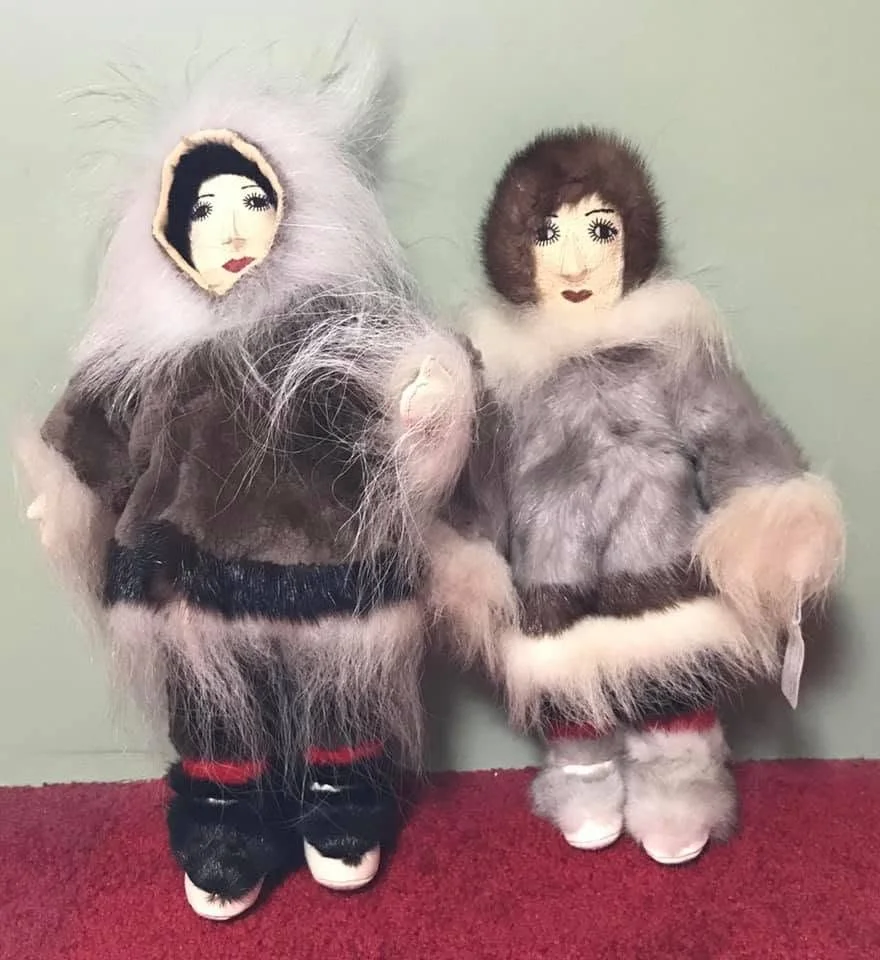
13. Aunt Claudia’s Dolls - Juneau, Alaska
Claudia Kelsey moved to Juneau with her dolls and figurines shortly after World War II. A toy collector and artist, she kept building the collection until her death six decades later. A close friend opened it as a public gallery in 2010. Kelsey especially sought handmade Alaska Native dolls, though the collection spans many countries. Since the gallery opened, enthusiasts have donated dolls from Greenland, Scandinavia, Russia, and elsewhere. Its director and curator, Mary Ellen Frank, also makes figurines of Alaska Native leaders and elders using traditional carving methods.
14. Beaver Island Toy Museum - Beaver Island, Michigan
On a Lake Michigan island, Mary Rose’s toy museum places doll heads in jars alongside midcentury action figures and even a jar of tacks. The compact rooms make inventive use of space: bicycles hang overhead, while toy cars and planes are fixed to the walls. Outside, plants, bright deck chairs, and stone animals fill the yard. A back shed displays local artists, including a photo series of Bigfoot relaxing around the museum and island. Rose, now in her 80s, still welcomes visitors most days and has a sharp eye for what belongs in the collection. A conversation may lead to a look at her son’s art—or a suggestion for the right toy to take home.


Discussion
Sign in to join the discussion.