From a Darth Vader carving to a vampire rabbit, these eight architectural figures show how stonework can preserve local stories and stray humor.
Stone figures on buildings can do more than channel rainwater or decorate a facade. They can memorialize a police officer, immortalize a pop-culture villain, or leave a joke suspended above a doorway. These eight gargoyles and grotesques reward the people who look up.
The distinction is practical: gargoyles direct rain away from a building, while grotesques serve as decoration. In appearance, the two can be equally strange. Here are examples whose stories range from documented design choices to local speculation.
Pop culture and contemporary faces
Darth Vader Grotesque — Washington, D.C.
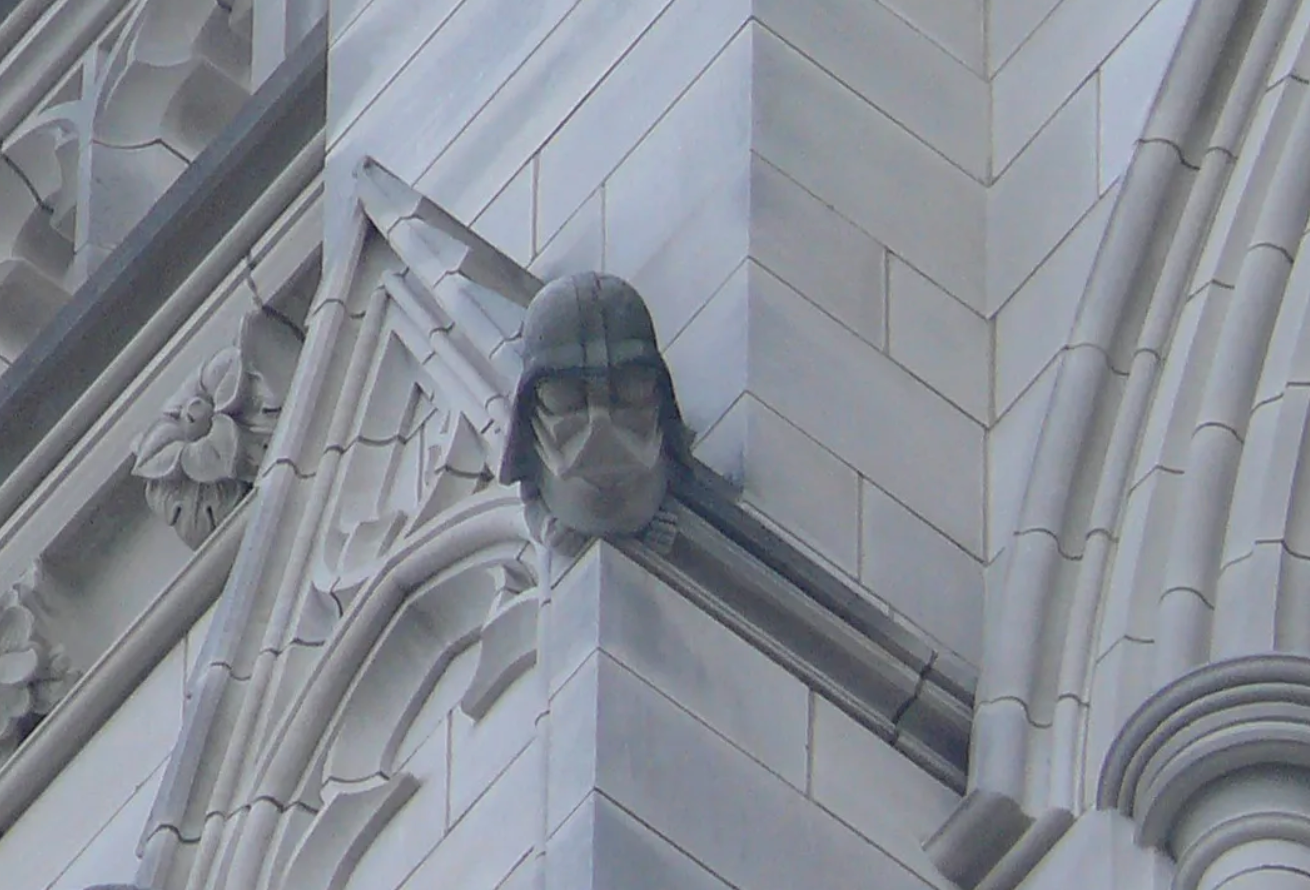
The National Cathedral in Washington, D.C., is the largest cathedral in the United States and the world’s sixth largest. One of its smaller details is a carving of Darth Vader, added after a design contest for schoolchildren during construction in the 1980s. Vader’s entry placed third. For a closer look, bring binoculars to the northwest parking lot and scan the northwest tower, where the figure sits above a large skull.
Plein Rond de Eik — Amersfoort, Netherlands
Architect Changiz Tehrani gave this mixed-use building a set of 22 faces based on WhatsApp emoji. The expressions include a smile, a wink, heart eyes, a kiss, and the tongue-out wink. Tehrani drew on an earlier architectural precedent in Amsterdam: “The House with the Heads,” whose facade features six Greek gods. The result brings a familiar digital shorthand into a very different medium.

Carvings with stories attached
House with Chimaeras — Kyiv, Ukraine
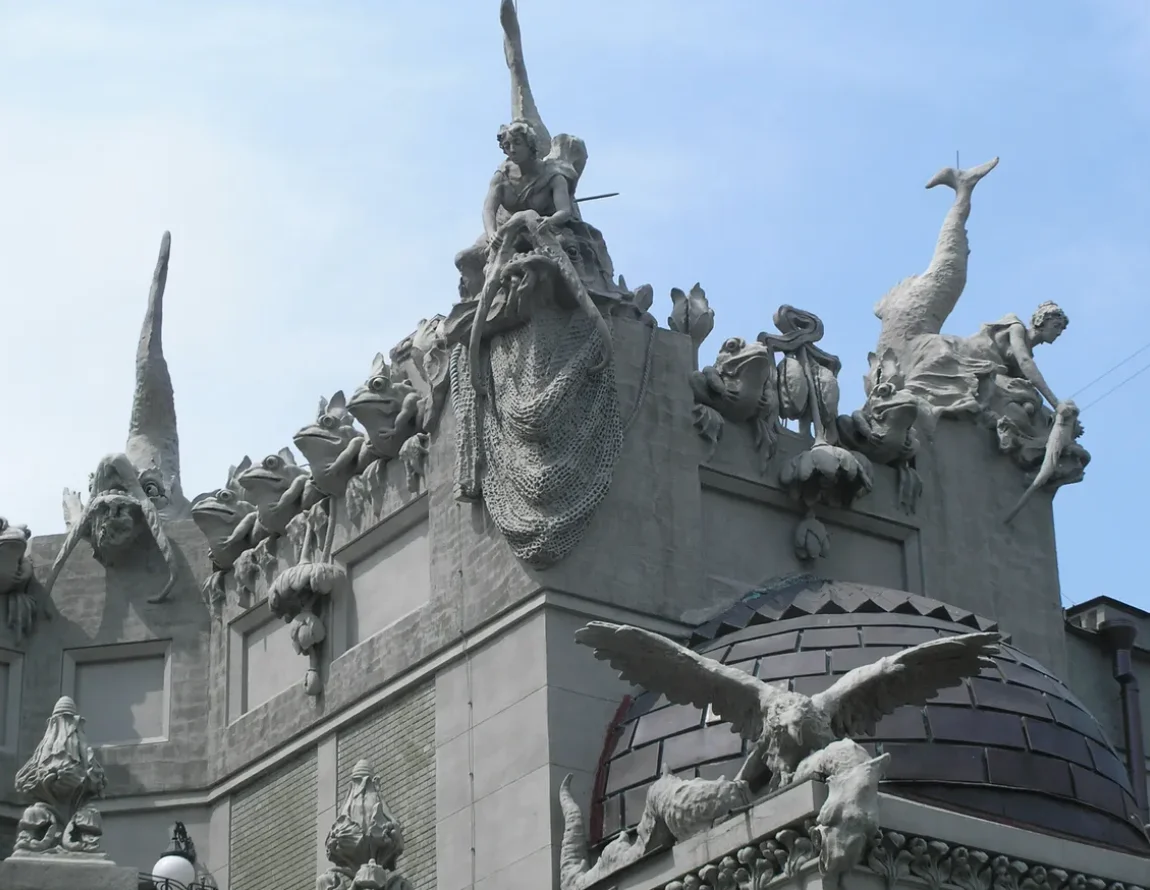
Vladislav Gorodetsky, a Polish-Ukrainian architect sometimes called “the Gaudí of Ukraine,” designed this animal-covered residence in Kyiv’s historic Lypky neighborhood. He planned to live there, but financial trouble forced him to leave. The building, across from the Ukrainian president’s office, has hosted diplomatic ceremonies since 2005. Gorodetsky’s interest in hunting shaped the exterior figures, and stuffed animals inside echo the stone creatures outside.

The Policeman Grotesque — Carlisle, England
A stone likeness of Police Constable George Russell appears on the south-facing exterior of Carlisle Cathedral. Russell died in the line of duty; his carving wears a helmet and star badge, marking his service. He is buried in Carlisle, and a plaque at Oxenholme Lake District railway station also commemorates him. Set among medieval figures, the portrait makes a personal memorial part of the cathedral’s stonework.
The Bull of Santa Maria del Fiore — Florence, Italy
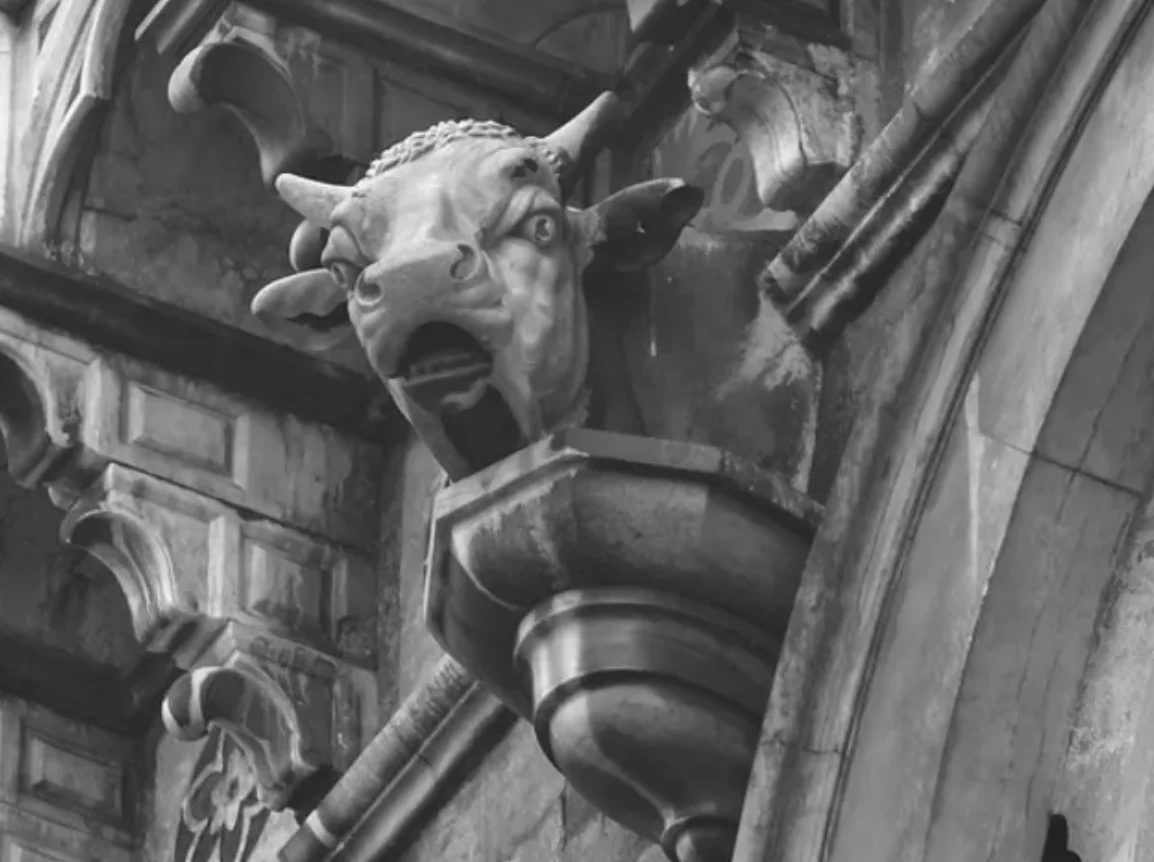
Above the Porta della mandorla on Florence’s Duomo, a bull’s head faces Via Ricasoli. The doorway leads toward the cathedral’s dome. One explanation casts the carving as a tribute to the draft animals that helped build the church. A more colorful story says a stonemason aimed the bull toward the shop of his lover’s husband, so the husband would be reminded each day who she loved. The tale remains one of two explanations for the sculpture.
Unlikely creatures and architectural humor
The Vampire Rabbit of Newcastle — Newcastle upon Tyne, England
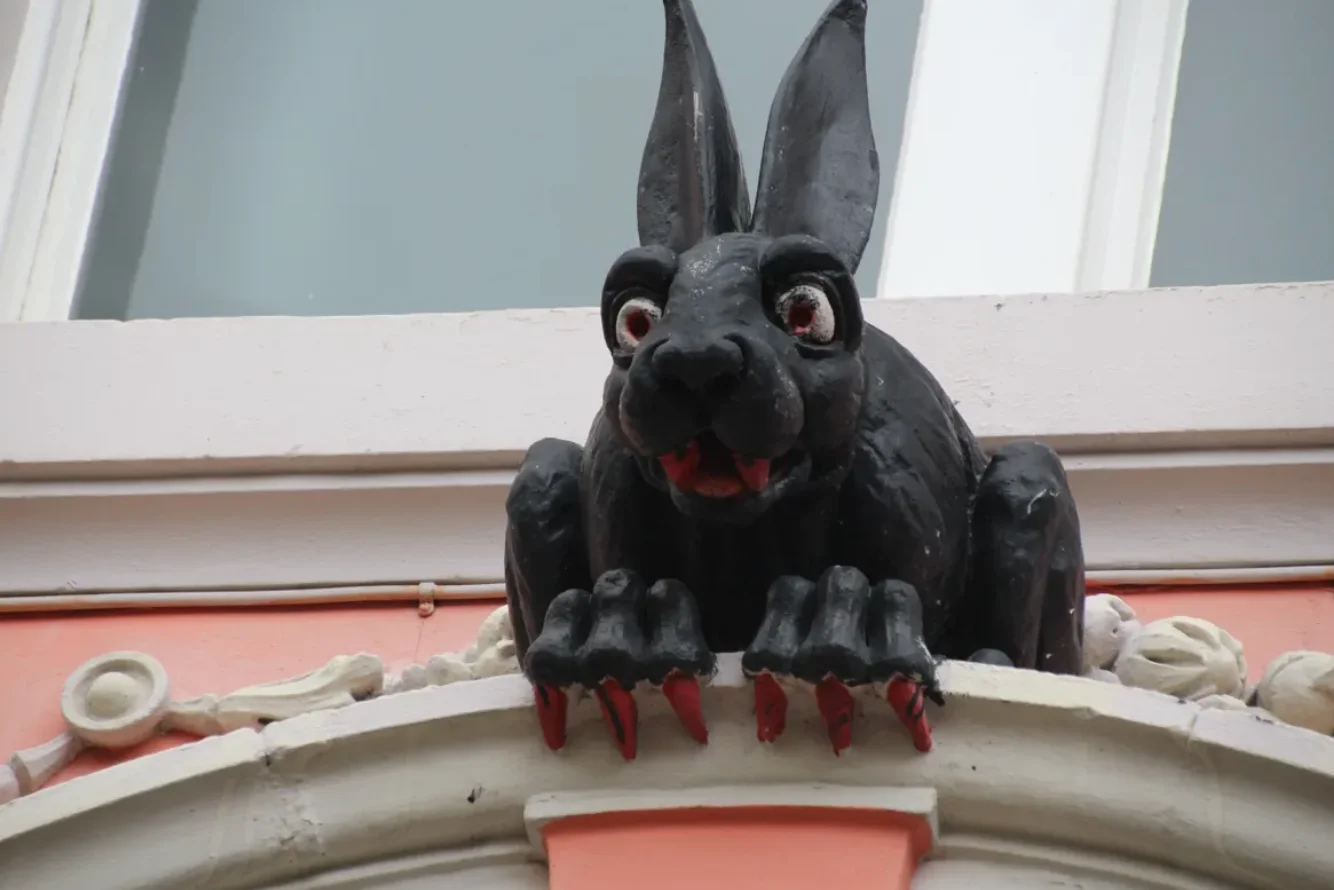
A strange rabbit carving has watched over the back of St. Nicholas Cathedral for more than a century, though its origin is unknown. It may represent spring, like the Easter Bunny, or have been meant to frighten grave robbers. Another theory is simpler: the sculptor intended an ordinary rabbit and fitted its ears backward. None of the explanations is confirmed, which leaves the figure’s odd anatomy to do the talking.

‘Alien’ Gargoyle — Paisley, Scotland
During renovations at Paisley Abbey in 1993, workers removed 13 gargoyles and installed replacements. One stonemason gave a new figure a distinctly alien look, recalling H.R. Giger’s Xenomorph from the “Alien” films. Whether that resemblance was deliberate has never been confirmed. Either way, the carving shows how repair work can leave a contemporary mark on a historic facade.

Park Grove Manor — Oak Park, Illinois
Architect E.E. Roberts worked across Victorian, Tudor, and Prairie styles in Oak Park, a Chicago suburb. Park Grove Manor may be his most playful project: chubby-faced figures decorate the building, while sculptures above the service entrances depict an architect and a bricklayer. Their cartoonish treatment suggests Roberts was willing to poke fun at architectural self-importance in his later years.
These carvings make buildings legible in unexpected ways: as records of a community, a builder’s private joke, or a moment when popular culture reached the stone facade. The details are easy to miss from street level, but they’re often where a building’s character comes through most clearly.


Discussion
Sign in to join the discussion.