Analyses of a 115-million-year-old Brazilian dinosaur bone suggest preserved blood-cell structures, though researchers disagree over how conclusive the evidence is.
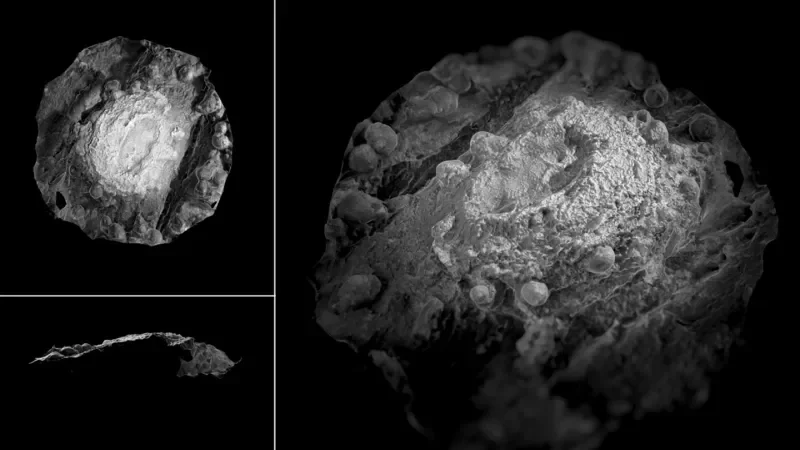
A 115-million-year-old dinosaur bone may preserve more than a record of its structure: researchers say it contains chemical traces consistent with ancient red blood cells. The finding could help paleontologists study extinct animals’ biology, but the evidence remains disputed, and the debate turns on whether the chemical signals can be tied specifically to the cell-like shapes.
The specimen belonged to Aratasaurus museunacionali, a small feathered theropod discovered at Mina Pedra Branca, a fossil-rich site in northeastern Brazil. In a paper published November 2 in the Proceedings of the National Academy of Sciences, Kliti Grice of Curtin University in Bentley, Australia, and colleagues report what they describe as the oldest red blood cell structures identified so far, and the first supported by chemical evidence.
That claim matters because molecular remains could offer clues to the physiology of animals that disappeared tens of millions of years ago. Grice says such evidence might eventually inform research into metabolism and activity levels. But identifying a mineral shape as a biological structure is difficult: minerals can form inside bones after death and mimic features of living tissue.
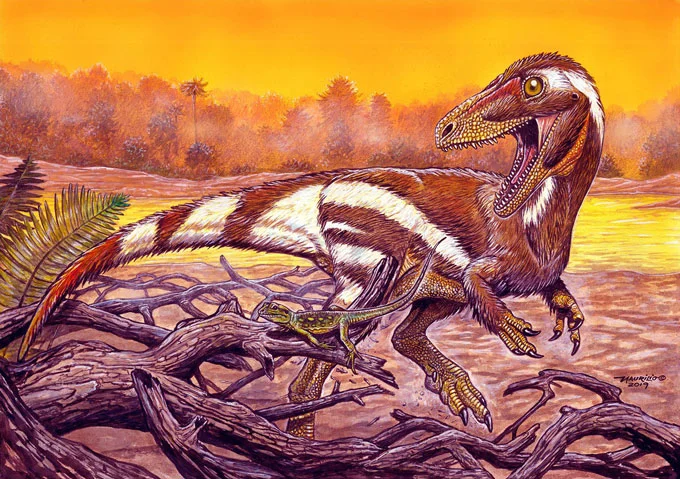
Maurilio Oliveira/Wikimedia Commons (CC BY 4.0)
Several kinds of evidence converge
The team examined thin slices from the dinosaur’s limb bone, using focused electron beams to image its internal structure. Inside the fossilized network of blood vessels, they saw tiny elliptical shapes. Their form alone could not establish that they were cells, so the researchers tested their chemical composition as well.
Elemental mapping found iron, carbon and nitrogen in the ellipsoids. Those elements occur in heme, the iron-containing molecule at the center of hemoglobin, which carries oxygen in red blood cells. The team also used a laser-based method that identifies molecules by the way they scatter light. The results indicated porphyrins, ring-shaped organic compounds associated with blood and related to heme.
A further analysis separated molecules in an extract from the bone to check whether the signal might instead come from other porphyrins, including chlorophyll. That test also pointed toward heme. The researchers argue that the combination of anatomy, imaging and chemical analyses supports a blood-cell interpretation more strongly than shape alone would.
They also offer a possible explanation for how these structures could have persisted. Their analyses found hausmannite, a manganese oxide mineral, within the ellipsoids. The team proposes that the mineral helped preserve the structures and shield some of their molecular contents, potentially including amino acids from collagen.
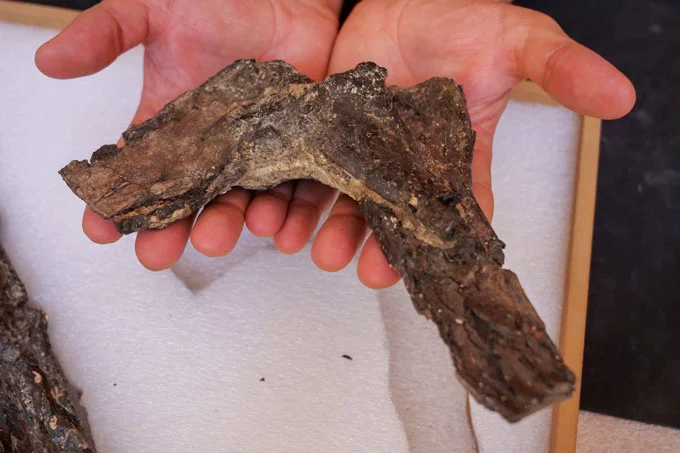
Curtin University
Why the interpretation is contested
Blood cells normally break down within days after an animal dies. For cell-like features and their molecules to survive fossilization, decay must have been interrupted under unusual conditions. Even then, researchers have to distinguish preserved biological material from minerals that formed later as mineral-rich fluids moved through the bone.
A 1997 study illustrates the problem. Paleontologists examined tiny spheres inside the limb of a fossil that may have belonged to a pterosaur. The spheres were once considered possible blood-cell remains, but the researchers concluded they were pyrite, an iron mineral deposited after death. They proposed that claims of fossilized blood cells should be supported by comparisons with living related animals and by the identification of biological markers such as heme compounds.
Grice and her colleagues say their work meets that bar. In their account, hausmannite was involved in preservation rather than simply taking the place of biological material after it had decayed. Grice says the close association among the mineral, the cell-like structures and the chemical signals raises the possibility that mineralization helped entomb and protect parts of the original tissue.
Mary Schweitzer, a paleontologist at North Carolina State University in Raleigh who did not take part in the study, isn’t persuaded that the evidence is conclusive. One concern is that the heme-related signals were measured across the bone, rather than localized to the round structures themselves. If the structures were fossilized red blood cells, she says, a more specific match would be expected. She also points out that the proposed cells differ in size and shape from red blood cells in living birds and reptiles.
Schweitzer has previously been at the center of debates over possible soft tissue in dinosaur fossils. In 2005, she and colleagues reported flexible, soft-tissue blood vessels in a 68-million-year-old fossilized Tyrannosaurus rex leg bone. The report drew questions about how delicate tissue could persist for so long and how researchers can reliably identify it today.
“I am not convinced” that the team has definitively identified heme compounds, Schweitzer says. She praised the researchers for bringing multiple methods to bear, while stressing that extraordinary claims require strong evidence and sophisticated technology.
A promising preservation clue, pending better tests
Grice says there is no clear reference for the exact shape of dinosaur red blood cells, and fossilization could have changed the structures or allowed heme-related molecules to move beyond their original cellular boundaries. Her team’s conclusion, she says, depends on the combined evidence from anatomy, morphology, mineralogy, elemental analysis and molecular chemistry.
That distinction matters for what comes next. The study does not settle whether the ellipsoids are red blood cells, but it gives researchers a specific preservation mechanism to investigate: hausmannite may have helped protect biological traces inside fossil bone. Grice says it remains unknown whether the same process occurs in other fossils, though this kind of preservation may be more common than researchers currently recognize.
For now, the strongest takeaway is methodological: claims about ancient cells need multiple independent lines of evidence, especially when minerals can imitate tissue. Finding similarly preserved structures in other fossils, and linking their chemical signatures directly to their shapes, would help show whether this Brazilian specimen is an exception or a window into a broader record of dinosaur biology.


Discussion
Sign in to join the discussion.