Tests suggest earwax can absorb moisture from ants’ feet and cling to their bodies, revealing a physical defense that may inspire pest resistant surfaces.
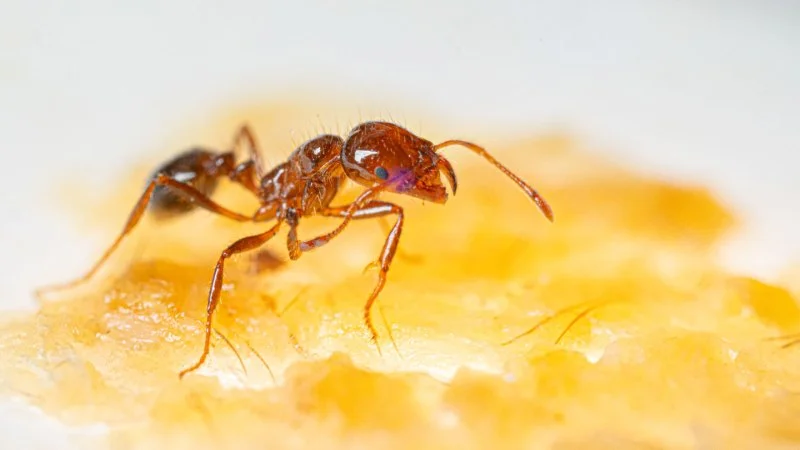
Earwax’s unusual texture may do more than protect the ear canal from dust: it can make the surface difficult for insects to climb. A study led by bioengineer David Hu at Georgia Tech suggests earwax both absorbs moisture from ants’ feet and sticks to their bodies, disrupting their grip and triggering repeated grooming. The result is a defense that works through contact and texture rather than through an active chemical repellent. That distinction matters: a material can interfere with an insect’s movement even when it isn’t poisonous or designed specifically to target it.
The findings, reported October 28 in Soft Matter, recast earwax as a physical barrier against small arthropods. “This familiar biological material may represent a sophisticated physical defense against small arthropods,” says Stanislav Gorb, a functional morphologist at the University of Kiel who wasn’t involved in the research. The study doesn’t show that earwax evolved for this purpose, or that it could be used directly to control pests. It does offer a closer look at how an everyday bodily material can combine several physical effects in a small space.
A surface that defeats ants
Hu’s team tested 36 earwax samples from pigs, sheep, dogs, cows, rabbits and humans, examining their mechanical and chemical properties. The range of animals gave the researchers a way to assess whether the material’s relevant features appeared across different sources, rather than in one unusual sample. They also watched fire ants (Solenopsis invicta) encounter natural and synthetic earwax. Ants that readily climb kitchen cabinets struggled on a thin coating of earwax, slipping off glass slides.
David Hu
Hu suspects earwax draws moisture from the ants’ feet, weakening the contact they need to climb. The material also coats the insects, prompting them to groom repeatedly. “It’s both sticky and slippery,” Hu says. Those effects pull in different directions: the coating can adhere to an ant while making the surface beneath its feet harder to grip. This is more significant than it looks, because it suggests that a surface can disrupt climbing through a combination of properties instead of one simple barrier.
The experiments described here focus on ants meeting earwax-coated glass. That setup makes the slipping easy to observe, but it doesn’t establish how the material would perform across other surfaces or against other insects. A useful next question is whether the same combination of moisture absorption and adhesion matters under conditions closer to practical pest control.
Why earwax behaves this way
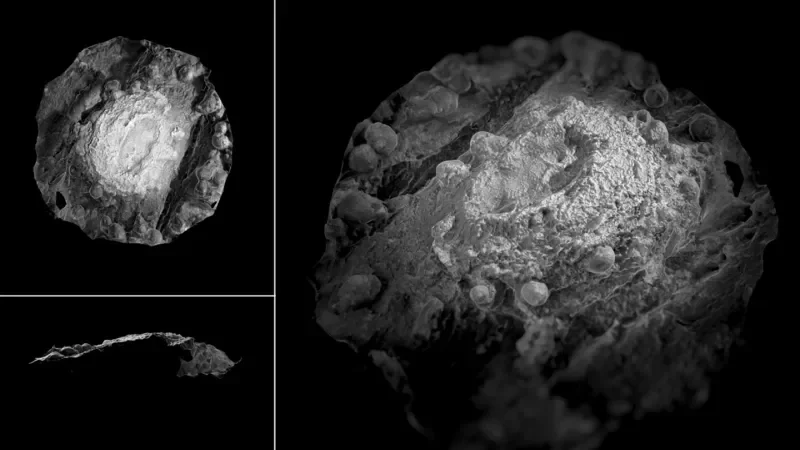
Despite its name, earwax isn’t simply a waxy substance. The samples contained about 60 percent dead skin cells, along with oils and moisture. Their porous structure may resemble tiny ink bottles, Hu says, allowing earwax to absorb up to twice its weight in water while limiting fluid movement in the ear canal. Its consistency varies widely, much like mucus. That mix helps explain why “wax” alone is a misleading description: earwax is a changing material, with components that can affect both how it holds water and how it behaves on a surface.
Earwax also changes over time. Under ordinary conditions it dries and crumbles in roughly 10 weeks. Cells lining the ear canal then carry it outward, acting as a cleaning conveyor belt. This process keeps the coating at a useful thickness, Hu says. A thin layer is most effective at stopping ants; a thicker buildup can give their claws enough purchase to climb. The relationship between thickness and performance is a reminder that material design often depends on conditions: a property that helps at one scale or amount can become a drawback when it changes.
Researchers have paid less attention to earwax than to other bodily fluids, Hu says, even though buildup can clog earbuds and hearing aids or affect hearing. A better understanding of its properties could help explain both its protective role and its less welcome effects. Here’s the thing: studying an inconvenient material can still reveal useful mechanics. In this case, the same substance that can interfere with devices may also offer clues about how surfaces manage moisture, adhesion and movement.
A biological model for pest control
Earwax itself is too scarce to make a practical insect repellent. Hu estimates that each person has about a grain of rice’s worth in each ear at a given time. Still, the study points to a design principle for materials intended to deter insects without relying on toxic chemicals. The principle is more useful than the raw material: a manufactured coating could, in theory, combine features that weaken an insect’s grip and encourage it to leave the surface.
Companies are exploring biodegradable, biofriendly pest controls, Hu says. Gorb suggests earwax could inform physical coatings for stored food, agricultural products and technology. If you’re working in this space, the challenge is clear: a coating has to retain its effect on the surface where it’s used, at a scale that makes practical sense. Earwax offers a starting point, not a ready-made product.
What the findings could mean
The next step is translating earwax’s combination of grip disrupting and sticky properties into surfaces that can work at useful scale. That raises questions the study, as described, doesn’t answer: how durable such a coating would be, how it would behave in different environments, and whether it could deter insects without creating new problems for the materials it protects. Similar physical pest controls typically have to balance effectiveness with the demands of their setting. A coating for a device, for instance, would face different constraints from one intended for stored food.
And yet, the study offers a concrete way to think about pest deterrence: change the surface interaction, and an insect may struggle without being exposed to a toxin. The idea still needs translation and testing beyond the laboratory setup. For now, earwax is an intriguing model with a practical limit attached. Not a repellent in a person’s ear, but a clue about how sticky, absorbent materials might make climbing harder.


Discussion
Sign in to join the discussion.