From Galileo’s finger to Chopin’s heart, these collections show how preserved remains became objects of science, faith, memory and spectacle.
Preserved human remains sit at the intersection of science, faith and public memory. Some were kept for research; others became relics, wartime symbols or unusual local traditions. Their stories can be as arresting as the displays themselves, from a frostbitten toe served in a Yukon bar to a saint’s head carried across medieval Italy.
These collections also show how views of the body change. A specimen once used to pursue phrenology can now mark the limits of that science, while a relic’s importance may rest more on centuries of devotion than on certainty about its identity. Here are 15 places where the remains—and the histories attached to them—make the visit memorable.
Collections shaped by medicine and research
1. National Museum of Health and Medicine - Silver Spring, Maryland
The National Museum of Health and Medicine holds 24 million medical instruments and anatomical specimens, giving visitors a remarkably broad view of how medicine has studied the human body. Among the collection’s most striking objects are pieces of Abraham Lincoln’s skull, still accompanied by hair, and the amputated leg of Gen. Daniel Sickles. Another skull records the unusual path of a Civil War soldier shot across the top of the head.
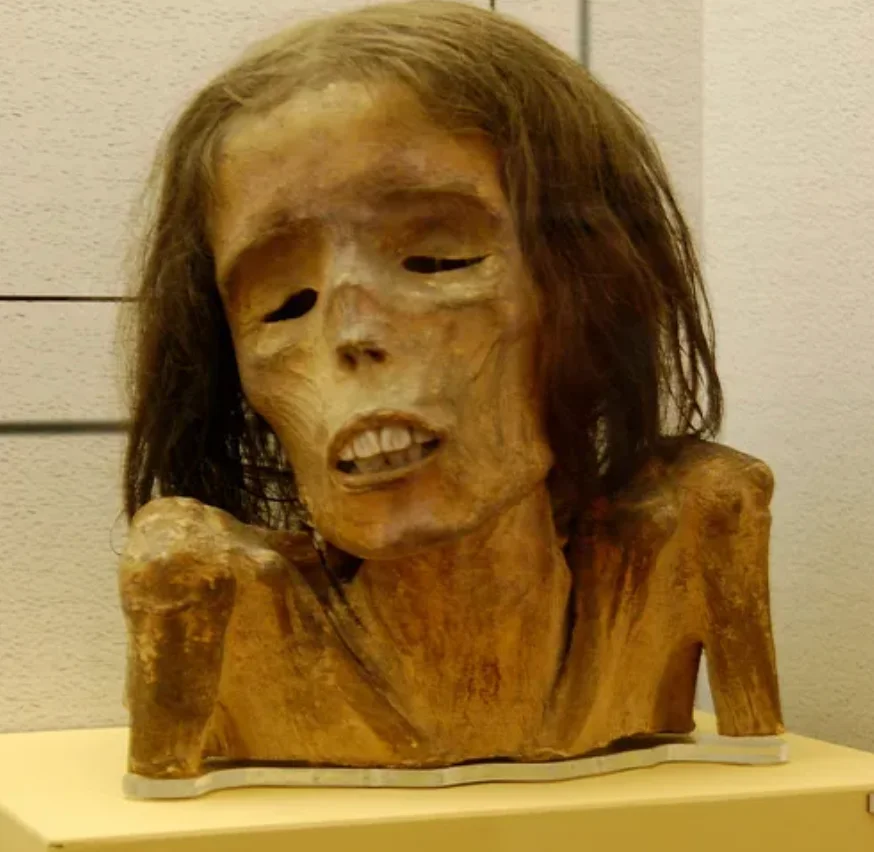
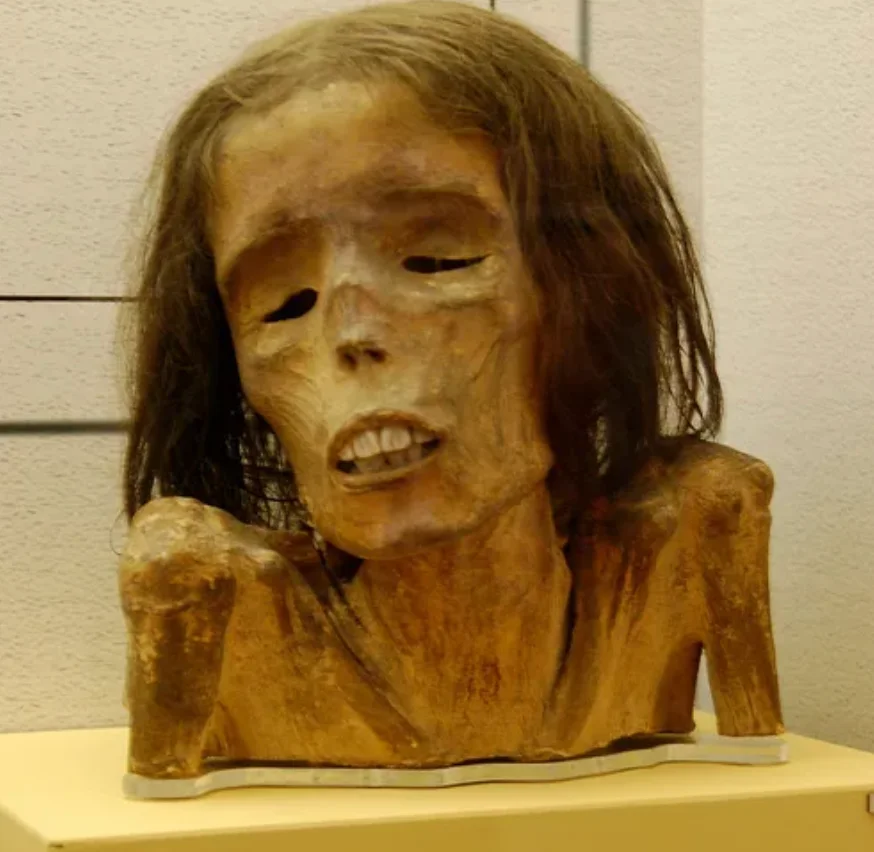
The museum also traces human development and variation through small skeletons from different stages of childhood, a conjoined twin preserved in alcohol, and a mummified head and shoulders belonging to a girl from the late 19th century. Its neuroanatomical holdings are among the world’s largest, spanning both healthy and pathological human brains as well as brains from other mammals.
5. Mütter Museum - Philadelphia, Pennsylvania
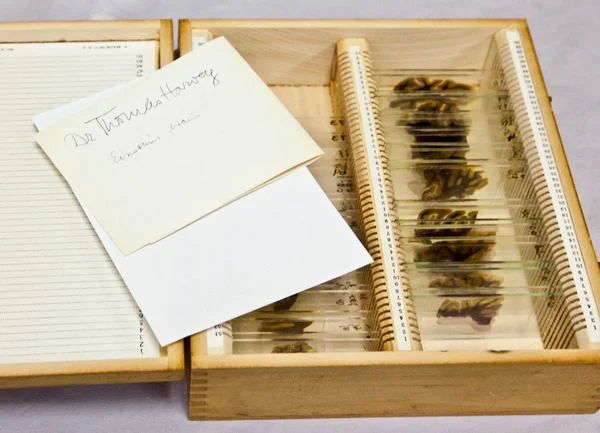
Inside the College of Physicians, the Mütter Museum assembles objects that make anatomy tangible and sometimes unsettling. Its holdings include 2,000 objects removed from people’s throats, skeletons of conjoined twins, and the remains of a man who stood 7 feet 6 inches tall. The best-known specimens may be the slivers of Albert Einstein’s brain, displayed on 46 microscope slides.
Researchers have examined the samples over the years. Some have proposed that features of Einstein’s brain helped support the “combinatory play” of images he described as central to his discoveries. Others see ordinary brain tissue, with its condition complicated by repeated journeys across the country. That unresolved difference between scientific interpretation and a famous name is part of what gives the display its pull.

4. Preserved Head of Diogo Alves - Lisbon, Portugal
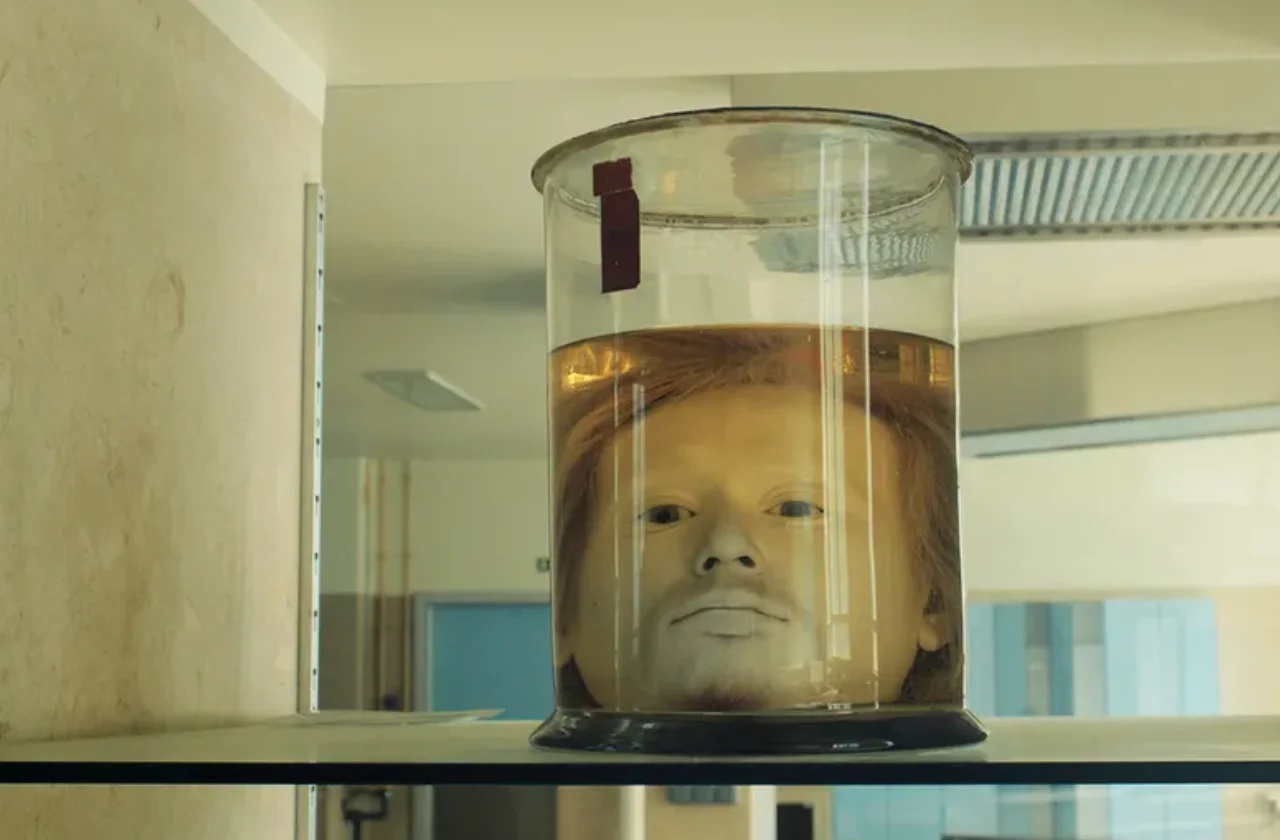
Diogo Alves, Portugal’s first serial killer and one of the last men in the country to be hanged, has spent generations as a preserved head in a jar. After his execution in 1841, phrenologists sought to study his skull, hoping its shape would explain his crimes. The theory failed its test: phrenology was formally labeled a pseudoscience by 1843.
Alves’s head remains at the University of Lisbon, where medical students and professors pass it in an anatomical theater. It shares the space with a diaphanized hand. The display preserves both a physical specimen and a record of an era when people believed criminal behavior might be read from the skull.
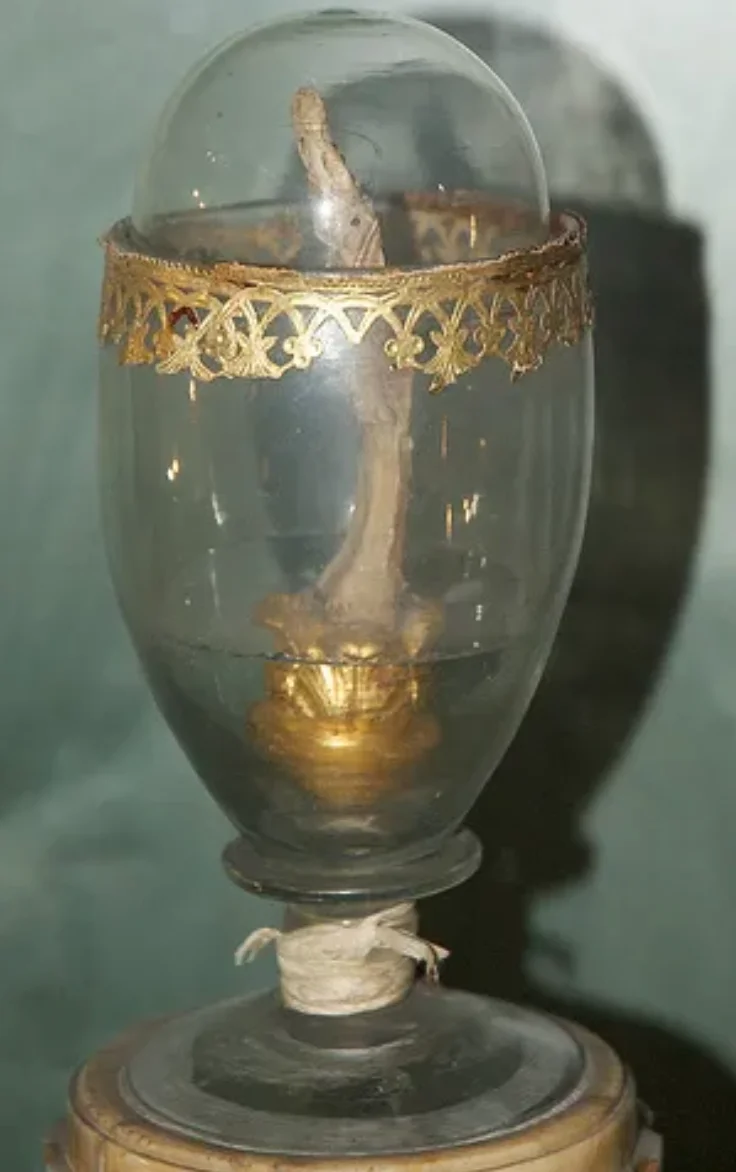
11. Galileo’s Middle Finger - Florence, Italy
Nearly a century after Galileo was buried, an antiquarian and an anatomist removed three of his fingers and a tooth. The reason remains unclear. His middle finger eventually entered the Laurentian Library’s collection before moving to the Museo Galileo, where it stands upright in an egg-shaped glass case on a marble base.
A commemorative inscription by astronomer Tommaso Perelli honors the finger that once “measured out paths of the sky” and “pointed to orbs never before seen by mortals.” In 2009, the finger was reunited with Galileo’s newly authenticated index finger, thumb and tooth. The collection turns a strange act of removal into a meditation on the body parts people choose to preserve as scientific memory.

Bog preservation and the evidence it leaves behind

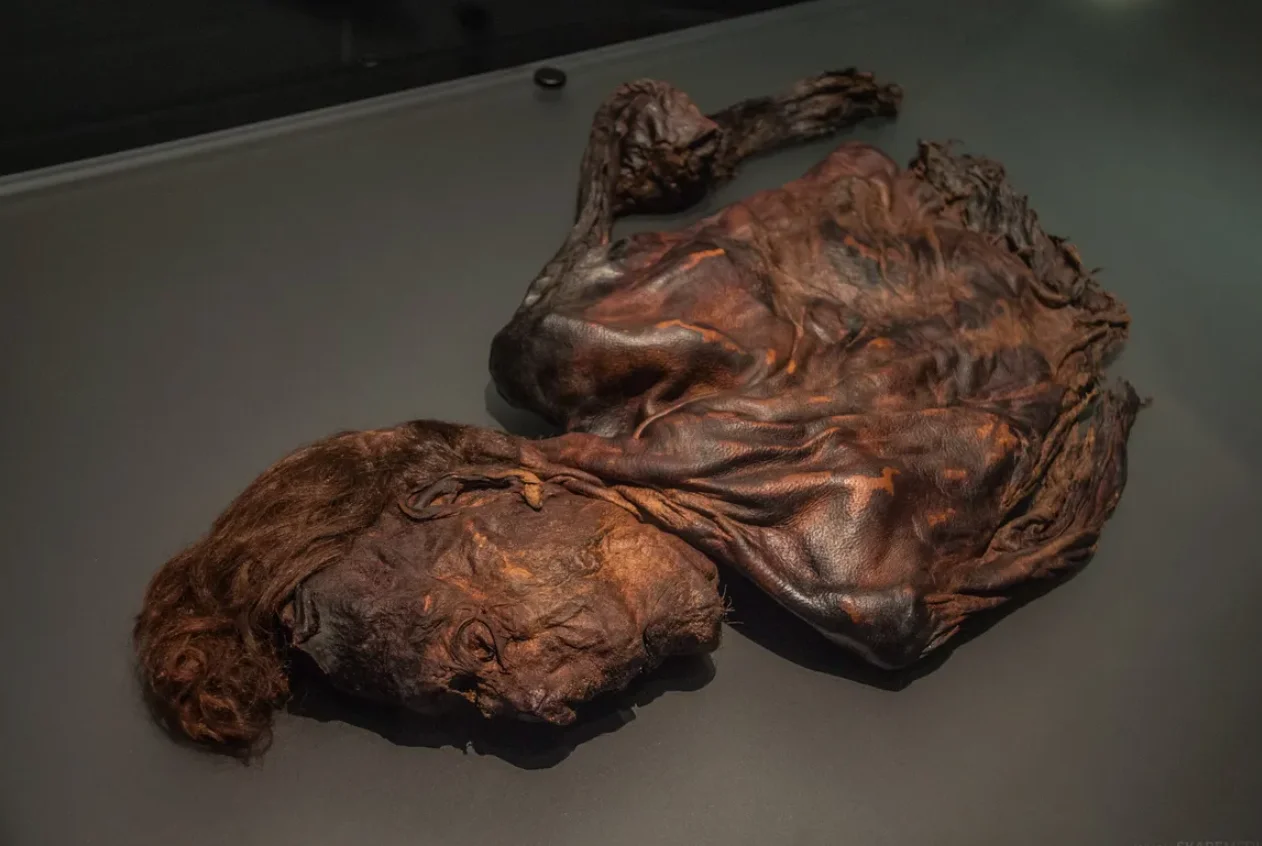
3. Lindow Man - London, England
Found in a bog, Lindow Man is an unusually well-preserved window into life and death nearly two millennia ago. Scientists estimate that he was about 25 when he died, sometime between 2 B.C. and A.D. 119. The conditions preserved his skin, hair and internal organs. Analysis even identified his last meal: unleavened bread made with wheat and barley.
His body also bears evidence of a violent death. Indentations on his head, broken ribs and a slashed throat point to a prolonged struggle, though researchers cannot say whether he was murdered or killed in a ritual sacrifice. He is now on display at the British Museum, where the preserved body invites close attention to what the evidence can—and cannot—establish.
14. Kingship and Sacrifice - Dublin, Ireland
The National Museum of Ireland’s permanent exhibition Kingship and Sacrifice focuses on Iron and Bronze Age people deposited in bogs along tribal boundaries. These “bog bodies” include Cashel Man, described as the oldest fleshed bog body ever unearthed, and Gallagh Man, who was strangled with a willow twig rope.
The exhibition puts the bodies alongside objects that help set them in context: weapons, horse trappings, utensils, boundary markers and votive deposits of butter known as bog butter. The result makes the bogs legible as places where human remains and everyday or ceremonial objects have endured together.

Relics, devotion and national memory

6. St. Anthony’s Tongue - Padua, Italy
St. Anthony was known for preaching across France and Italy, making the preservation of his tongue an especially resonant story for his followers. When his body was exhumed in 1263, the tongue was among the parts found not decomposed. It and the saint’s jaw are now displayed in ornate gold reliquaries at the Basilica of St. Anthony in Padua.
The relics sit within a larger architectural and artistic draw. The basilica blends Romanesque, Byzantine and Gothic styles, with works by Giotto and Donatello among its treasures. For believers, the tongue carries a devotional meaning; for other visitors, it’s a striking example of how a body part can become a lasting symbol of a person’s public life.
12. St. Catherine’s Severed Head - Siena, Italy
When St. Catherine died in 1380, Siena wanted her remains but expected Rome to refuse. The Sienese response was a clandestine journey: they removed her head, hid it in a paper bag and carried it past Roman guards while praying for the saint’s protection. The head was placed in an ornate reliquary at the Basilica of San Domenico, where it remains. Her thumb is also displayed there; her foot is in Venice.
The episode shows how relics could bind a saint to a city, even when the body itself was divided among locations. In Siena, the head’s presence is both a devotional focus and a story of local ingenuity.

9. St. Valentine’s Shoulder Blade - Prague, Czechia
A shoulder bone said to belong to St. Valentine has been displayed at the Saints Peter and Paul Basilica in Prague since it was found in the church basement in 2002. The story attached to it reaches back to the 1300s, when Holy Roman Emperor Charles IV supposedly brought the relic to the basilica. A special Mass is held for it each Valentine’s Day.
Its identity is uncertain. Many churches have claimed to hold parts of St. Valentine, so the bone’s authenticity is hard to establish. That ambiguity doesn’t erase its place in the basilica’s history; it gives the relic a story shaped as much by centuries of competing claims as by the devotion surrounding it.
13. Buddha Tooth Relic Temple & Museum - Singapore
Singapore’s Buddha Tooth Relic Temple and Museum was built to house a tooth said to have been recovered from a collapsed stupa in Myanmar during the 1980s. Some experts have questioned whether the tooth is human. Its provenance remains disputed, but the temple’s appeal extends well beyond the relic itself.
Visitors can explore multiple floors of Buddha statues, a front prayer hall and dragon snakes guarding sacred objects. The temple makes clear how architecture can gather meaning around a relic, whether a visitor accepts its claimed identity or comes for the art and setting.
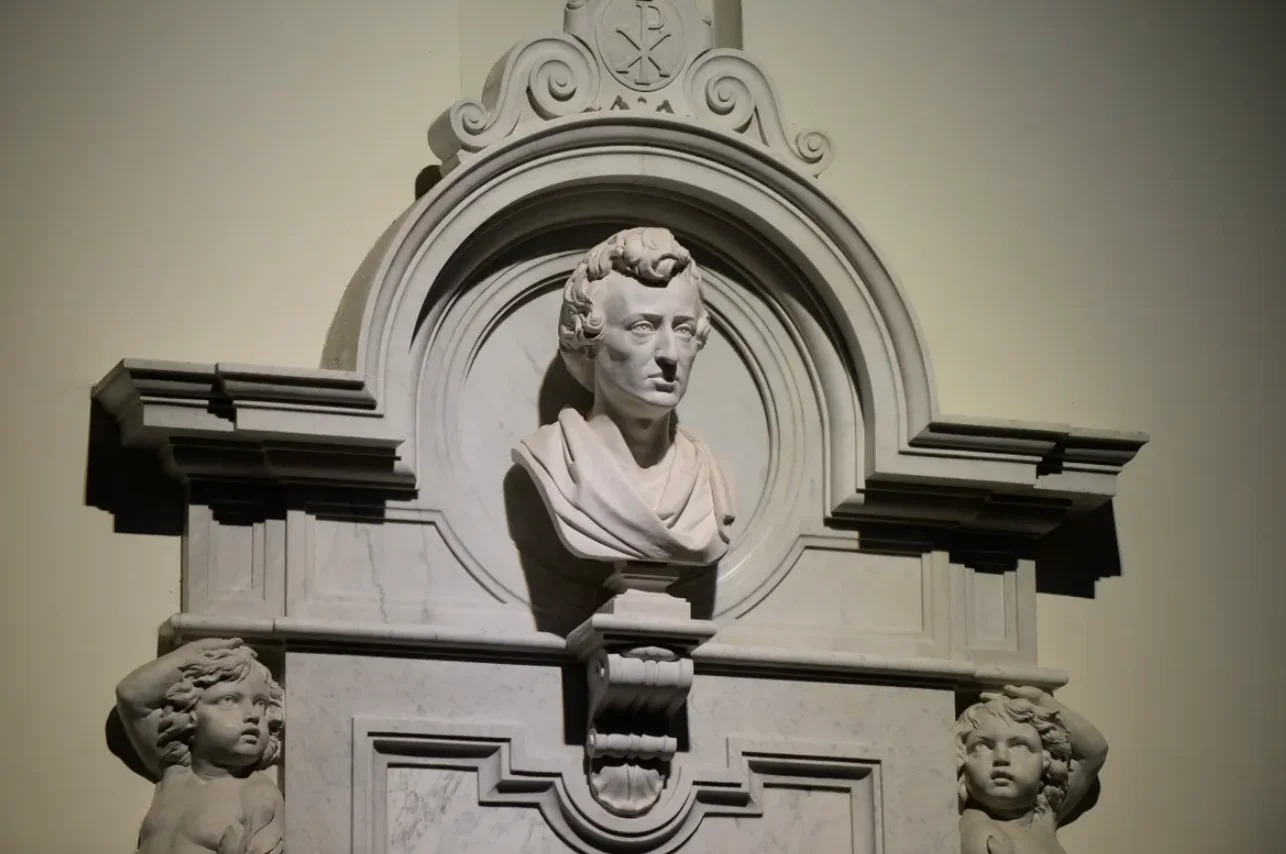
8. Chopin’s Heart - Warsaw, Poland
Frédéric Chopin asked for his heart to be returned to Poland, his birthplace, rather than buried with his body in Paris. His sister, Ludwika Jędrzejewicz, carried out the request: she removed his heart before burial and smuggled it to Warsaw in a jar of alcohol. It rests beneath Holy Cross Church.
The heart became a symbol of Polish national pride. During World War II, the Nazis took it in an effort to weaken morale, then Germany returned it after the war. Its journey gives the relic a history that reaches beyond the composer’s personal wish, tying it to the country’s sense of identity.

7. Transi de René de Chalon - Bar-le-Duc, France
Prince René de Chalon, who died at 25, left instructions that his body should not be represented as handsome or peaceful. He wanted to be remembered as a decomposing corpse, with dried skin and a hollow body. Sculptor Ligier Richier made that image in white stone in 1547 for the Church of Saint-Étienne-le-Vieux.
The statue once held a heart-shaped reliquary containing René’s own shriveled heart. The heart disappeared, or was stolen, during the French Revolution. The sculpture still presents mortality in unusually direct terms: a memorial designed to show the body’s decay rather than conceal it.
Remains kept as public curiosities
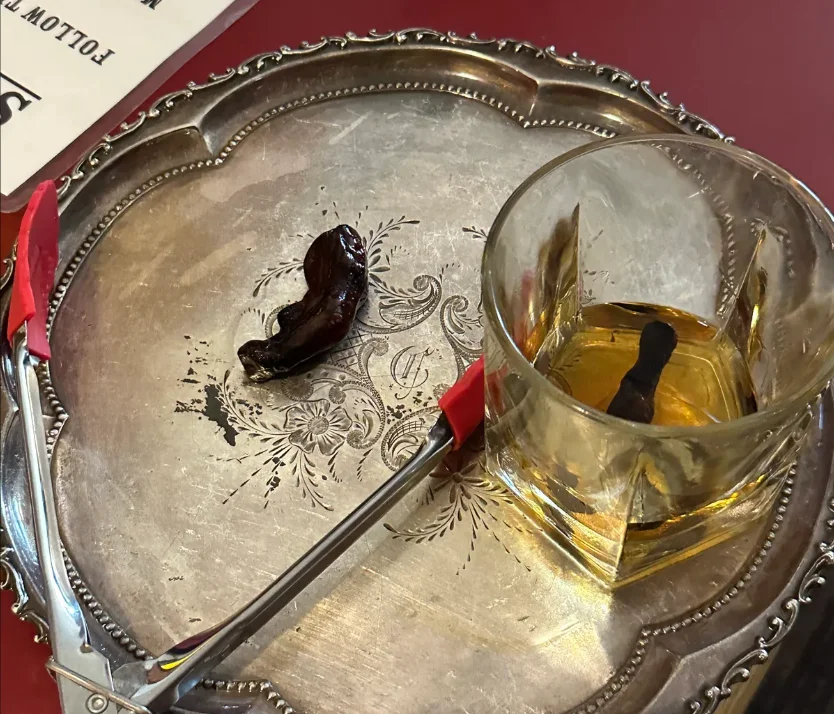
2. The Sourtoe Cocktail - Dawson City, Yukon
The Sourtoe Cocktail turns a preserved body part into a bar ritual. Miner and rumrunner Louie Linken had a frostbitten toe amputated and kept it in alcohol. Decades later, a local Yukon captain found the jar and brought the toe to a saloon, now the Downtown Hotel, and started dropping it into customers’ drinks as a surprise garnish.
The original toe lasted seven years before it had to be replaced. Since then, donors have supplied enough toes to account for a whole foot. To join the Sourtoe Cocktail Club, drinkers must follow one rule: “You can drink it fast, you can drink it slow, but the lips have gotta touch the toe.” It’s a strange tradition with a simple point of entry—and a very specific measure of participation.
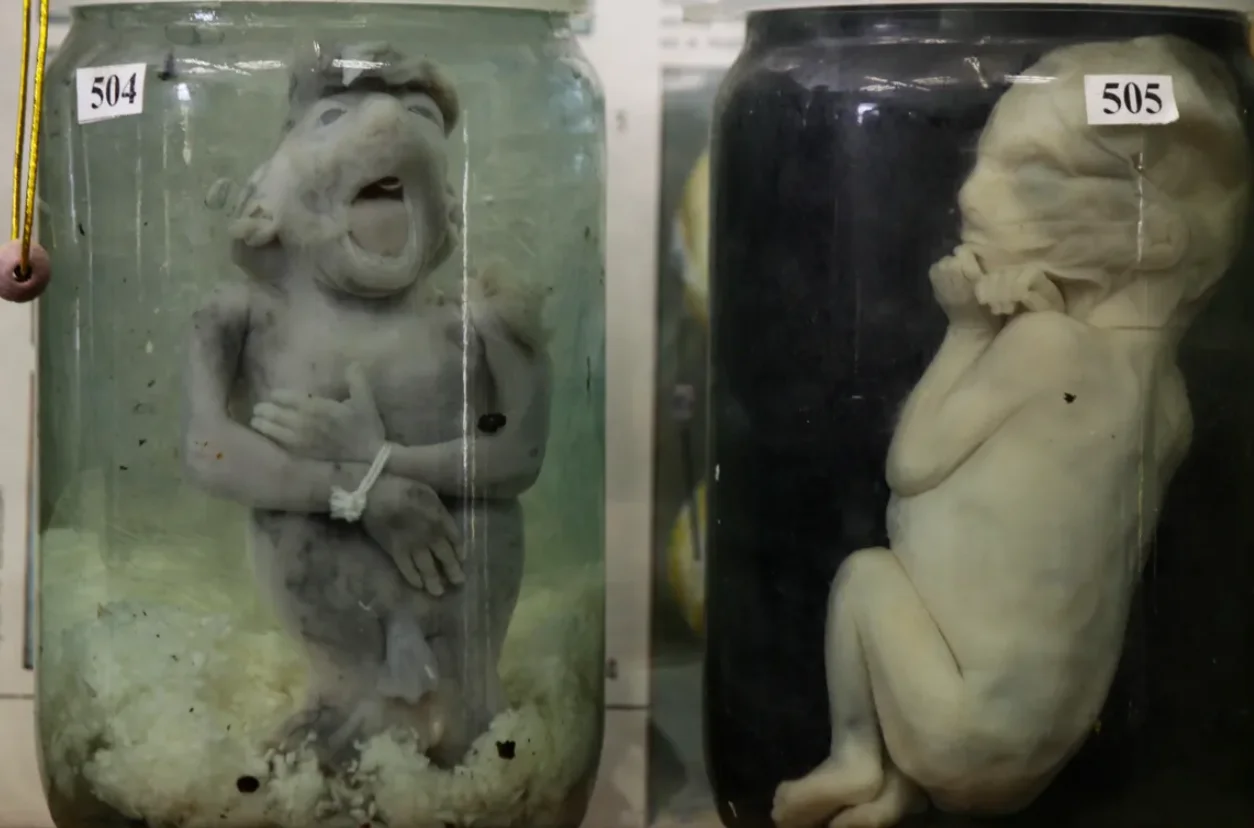
10. Museum of Sin - Tambov, Russia
Forensic pathologist Yuri Shchukin built the Museum of Sin from decades of morgue experience. Its collection contains more than 700 body parts and organs, presented as evidence of the damage caused by vice. Among them are embryos from mothers who drank or took drugs, the severed finger of an unfaithful husband, and a horn said to have grown from a robber’s head.
A Latin inscription at the entrance reads, “This is a place where the dead teach the living.” The specimens make the museum’s message physical, though their unusual stories also put the focus on the line between medical display and public spectacle.
15. Grave of Captain Jones’ Leg - Washington, New Hampshire
In 1804, Capt. Samuel Jones was doing construction work when his leg became trapped between a building and a fence. The injury led to amputation. Jones, a beloved tavern proprietor in rural New Hampshire, responded by holding a funeral for the limb and burying it in a local cemetery, partly to guard against phantom limb pain.
Years later, Jones’s body was buried elsewhere; accounts place his grave in Boston, Rhode Island or the Bronx. His leg remains in Washington, marked by a plain gravestone. The modest memorial makes the story feel less like a museum oddity and more like a personal attempt to give a lost part of the body a proper resting place.
Across these sites, preserved remains carry meanings that exceed their physical form. A bone may anchor devotion, a brain may attract debate, and a leg may receive its own funeral. The objects endure because each asks a different question about what people choose to remember—and what they believe a body can still represent.


Discussion
Sign in to join the discussion.