Submitted to Turkey’s parliament, the pact calls on its signatories to defend one another against threats to sovereignty and territorial integrity.
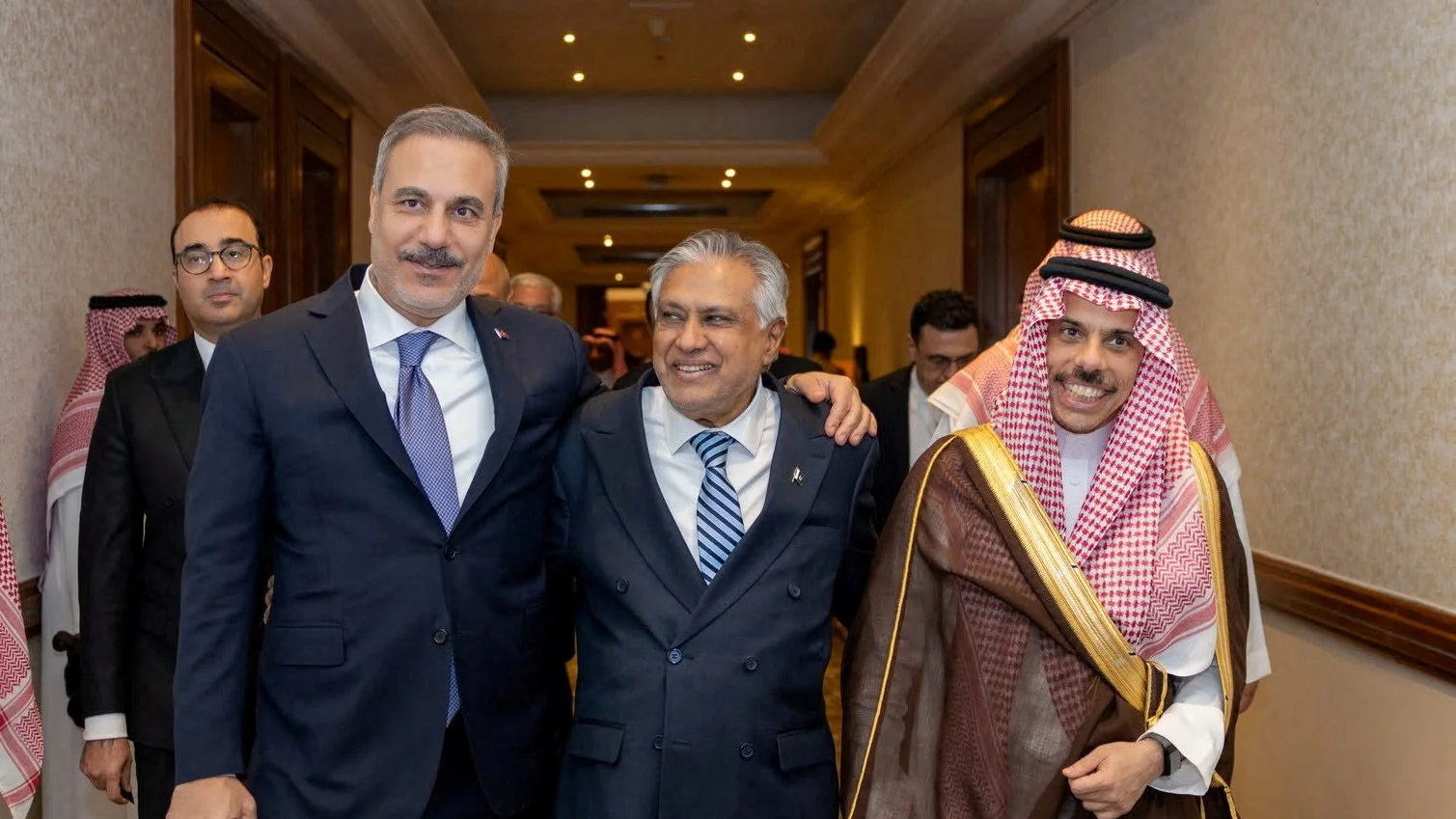
The Mecca Defence Pact commits Turkey, Saudi Arabia and Pakistan to support one another if any signatory faces an armed attack or a threat to its sovereignty and territorial integrity. It names no specific country or region as a potential threat, leaving the agreement’s stated scope broad. That wording matters: the pact describes a shared obligation without identifying the circumstances or actors that might activate it. Readers therefore have the central commitment, but not a public account here of how the three governments would judge a threat or coordinate a response.
Turkey’s government submitted the pact’s text to parliament on Tuesday. Signed by the three countries in August, it creates an international defence alliance with a mutual defence provision comparable to Article 5 of the North Atlantic Treaty. The comparison points to the pact’s basic principle: an attack on one member is treated as a concern for all. It doesn’t, by itself, establish that the two arrangements have the same procedures, institutions or military obligations. Those details would determine how a general promise becomes action, and the information available here doesn’t spell them out.
What the agreement requires
Article 1 says the parties must use “all necessary means” to address threats or danger to a member’s territorial integrity, sovereignty or internationally recognised borders. The text was obtained exclusively by Middle East Eye. The phrase sets an expansive standard, while leaving room for the parties to decide what measures are necessary in a particular case. That could make the commitment adaptable to different kinds of threats, but it also means the wording alone doesn’t tell the public what response to expect.
That distinction is central to reading the pact. A mutual defence clause can signal political solidarity and raise the stakes for anyone considering pressure on a signatory. Its practical force, though, depends on how members interpret the trigger, what they agree to do, and how quickly they can act together. The article’s language establishes a duty to respond; the supplied text doesn’t describe a decision-making process, a standing military command or a specific menu of responses. Those omissions don’t prove such arrangements are absent. They do mean the public account here offers a framework, not a complete operating manual.
The pact also links defence to sovereignty and internationally recognised borders, terms that can cover more than a conventional invasion. A threat to territorial integrity may be understood differently depending on the incident and the government assessing it. That makes consultation among the members especially important. Here’s the thing: a broad clause can strengthen a partnership by allowing it to address varied risks, yet broad language can also leave outsiders uncertain about where the commitment begins and ends.
Three signatories, shared interests
The agreement brings together Turkey, Saudi Arabia and Pakistan, three states whose participation gives the pact a reach across distinct parts of the region. The source identifies their governments and foreign ministers, but doesn’t describe the negotiations, military planning or political calculations behind the agreement. Any account of those motives would go beyond the facts available here. What can be said is that the pact makes their security relationship a formal commitment rather than a statement of general cooperation.
That formal step may matter even before any crisis tests it. Governments often use defence agreements to communicate that an attack or serious threat against one partner could draw a response from others. The message can be consequential, but its credibility rests on more than the signing itself. Members need shared expectations about what counts as a threat and what “all necessary means” would involve. (And this is the part most people overlook.) A promise can be clear in principle and still leave difficult questions for the moment when leaders have to apply it.
If you’re working in this space, the distinction between a pledge and an implementation plan is the one to watch. The text as described supplies a mutual defence obligation, while the account here doesn’t identify operational arrangements or explain how disagreements among the signatories would be handled. That gap limits what can responsibly be concluded about the pact’s day-to-day military significance. It doesn’t erase the political signal. It does make the next evidence about coordination more revealing than the announcement alone.
Signatories meet in Riyadh
Turkey’s Foreign Minister Hakan Fidan, Pakistan’s Foreign Minister Mohammad Ishaq Dar and Saudi Arabia’s Foreign Minister Prince Faisal bin Farhan Al Saud attended a pact committee meeting in Riyadh on 5 October 2026. The meeting shows that the three governments have a committee associated with the agreement and that their foreign ministers participated in it. The account doesn’t say what was discussed or whether the meeting produced decisions. Its existence is a sign of continued contact, but it shouldn’t be mistaken for evidence of a particular military plan.
Foreign ministers can provide a political channel for coordination, especially when an agreement requires governments to assess a shared threat. Still, the meeting’s significance depends on its work and follow-up, neither of which is detailed here. The pact’s committee could help members clarify expectations over time; the available information doesn’t establish its powers, schedule or role in a crisis. A committee meeting is a start. The substance of its decisions is what will show how much structure sits behind the commitment.
What the pact could mean
This is more significant than it looks, but the significance lies in the commitment’s breadth and the relationships it formalises, not in any demonstrated change to military posture. The agreement gives the three governments language for treating threats to one member as a shared concern. That can shape how partners and potential adversaries assess the costs of a confrontation. Yet without a named threat, defined response or public account of implementation, the pact’s deterrent effect is difficult to measure from the text described here.
That said, broad language can be a deliberate feature of a defence agreement. It allows governments to respond to circumstances they can’t predict in advance, while keeping the public promise at a high level. The trade-off is uncertainty: each signatory may need to settle the meaning of the clause when a real dispute arises. The pact’s future weight will depend on whether the members turn that general obligation into regular coordination and a common understanding of what action requires. No such details are provided in this account.
For now, the clearest conclusion is also the most limited one: Turkey, Saudi Arabia and Pakistan have signed a mutual defence pact, Turkey has submitted its text to parliament, and their foreign ministers have met through a pact committee. The agreement commits them to use “all necessary means” against specified threats to a member’s sovereignty and territorial integrity, while naming no particular adversary. A framework is in place. How it works under pressure remains an open question.
Read more: Exclusive: Full text of the Mecca defence pact signed by Turkey, Saudi Arabia and Pakistan


Discussion
Sign in to join the discussion.