Amnesty’s report says universities shared tactics for responding to Palestine solidarity protests, including discipline, injunctions and Prevent referrals.
Amnesty report describes shared responses to Palestine solidarity protests
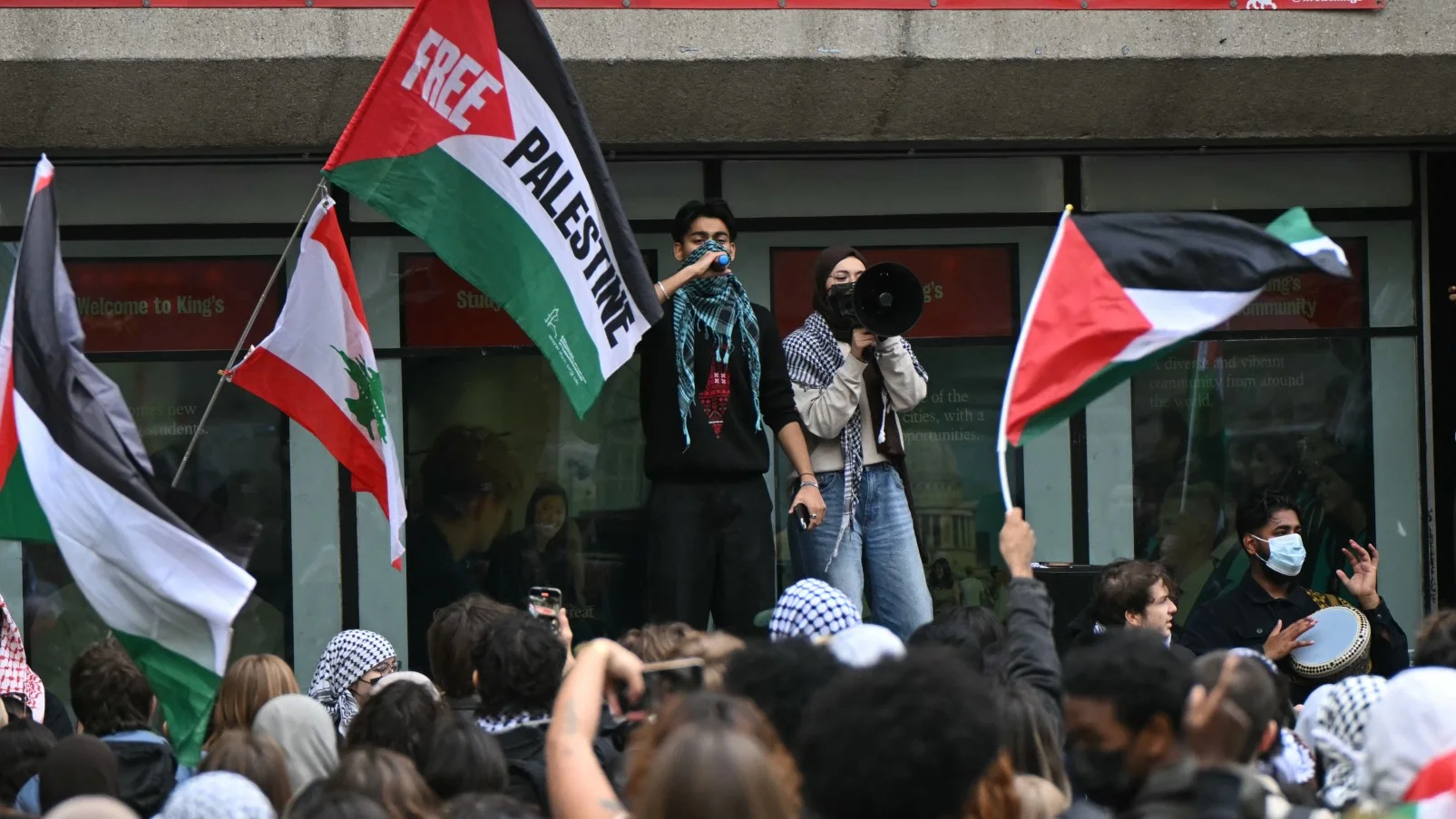
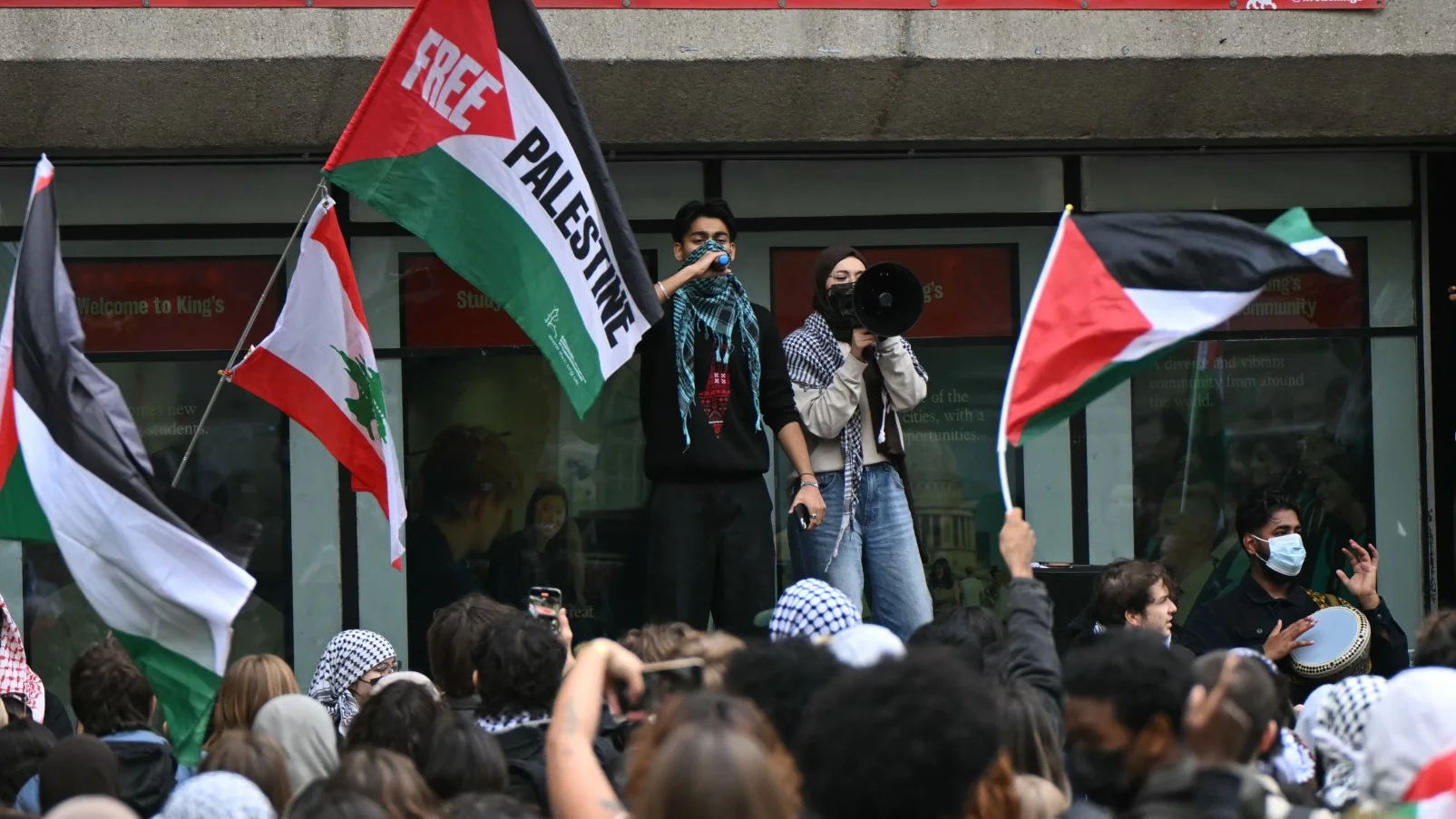
Amnesty International says UK universities shared approaches to restrict student protests over their institutions’ ties to Israel during the war on Gaza. Its report, Silencing Dissent, was published Tuesday. The report’s central claim is that some university responses should be understood as connected: administrators discussed methods with peers elsewhere, rather than each institution developing its approach in isolation.
That distinction matters. Universities make decisions about protest on their own campuses, but shared exchanges can spread a common set of practices across institutions. Amnesty’s account raises questions about how those practices were discussed, what concerns prompted them and whether measures intended to manage demonstrations risked limiting students’ ability to express political views.
The report’s review of Freedom of Information disclosures describes universities as part of a network that encouraged repressive responses to Palestine solidarity protests. Messages obtained through FOI requests show administrators discussing disciplinary action, injunctions to halt protests and referrals of student protesters to the UK’s Prevent counterterrorism programme. These are distinct measures, with different consequences: a disciplinary process can affect a student’s status at their university, an injunction can restrict activity through the courts, and a Prevent referral brings a protester to the attention of a programme concerned with counterterrorism.
The report’s evidence, as described here, comes from messages released through information requests. That gives the account a documentary basis: readers can consider what administrators wrote and how they discussed possible responses. But the existence of correspondence alone doesn’t establish that every proposal was adopted, that all universities acted alike, or that any particular student was ultimately disciplined or referred. The distinction between discussing a tactic and carrying it out is central to understanding the claims.
Emails point to coordination between institutions
Emails released by the University of Northampton offer a direct example of the exchanges Amnesty describes. Senior staff exchanged tactics for containing protests, and one administrator asked colleagues at other institutions whether they were “locking in” student protesters. The phrase is striking because it frames the question as a practical measure to compare across campuses, rather than as a debate about protest policy in the abstract.
That wording deserves scrutiny, though the surrounding circumstances aren’t supplied in the article. Without more context, it’s not possible to establish what “locking in” meant in that exchange, whether it referred to a specific action, or what happened as a result. The email does show staff asking peers about a way of handling protesters. That’s the point Amnesty presents as evidence of coordination.
In a university, decisions about demonstrations can involve administrators, security staff and disciplinary procedures. When staff consult colleagues at other institutions, that can help them compare experience and prepare for similar situations. It can also carry a risk: a restrictive response discussed as a workable option may become easier to repeat elsewhere, particularly if the conversation focuses on containment without giving equal weight to students’ rights to protest.
Here’s the thing: coordination isn’t proof of wrongdoing by itself. Universities may exchange information to understand operational challenges. The concern Amnesty raises is more specific: whether that exchange promoted measures that suppressed Palestine solidarity activity. The material described in the report makes the question concrete, but the available account doesn’t answer every part of it.
Why the methods matter
Disciplinary action, court injunctions and Prevent referrals aren’t interchangeable tools. Each can affect a protester in a different way, and even the prospect of being subjected to one can shape how students decide to take part in a demonstration. A student weighing the consequences may consider not only whether a protest is permitted, but whether participation could lead to a formal university process or another kind of referral.
That effect can extend beyond the people directly involved in a case. If students believe that protest activity might bring severe consequences, some may choose to stay away or avoid visible roles. This doesn’t show that such a chilling effect occurred at the institutions mentioned; it explains why the choice of response matters when universities handle political demonstrations.
Universities also have to manage competing concerns when protests take place. Demonstrations can raise practical questions about access, safety and disruption, while students may see public protest as a necessary way to challenge their institutions. The report’s account puts the focus on whether responses were proportionate and whether administrators treated Palestine solidarity activity as a matter for ordinary campus management or as a reason to consider more forceful measures.
FOI disclosures can make internal institutional discussions visible, but they don’t by themselves provide the full record of a decision. The messages described here offer evidence of what some administrators discussed. To assess the wider claim, readers would also need to distinguish between proposals, actions taken and outcomes for students. Amnesty’s report makes a case about shared approaches; the summary here doesn’t provide a complete account of each university’s decisions or responses.
The wider implications for campus protest
This is more significant than it looks. If staff at separate universities are comparing tactics for containing a particular kind of protest, the issue reaches beyond one campus and one email. It raises a broader question about how institutions set norms for political expression, and whether a response developed in one place can influence decisions elsewhere. That’s especially relevant when administrators are discussing measures with consequences that can follow students through formal university or public processes.
And this is the part most people overlook: the effect of a policy isn’t limited to the students who face it directly. The way an institution responds can also signal to other students what kinds of protest it will tolerate. That signal may come from formal rules, but it can also come from how staff describe demonstrators and which options they consider in private correspondence.
If you’re working in this space, the practical distinction to watch is between managing a demonstration and constraining it. A university can have operational reasons to plan for protests; the report asks whether the planning described in the disclosed messages moved towards a coordinated effort to restrict Palestine solidarity activity. The answer depends on the details of the exchanges and what institutions did with the options they discussed.
The available account leaves important questions open. It doesn’t set out the full contents of the emails, the number of universities involved, or the outcomes of the measures discussed. Still, it identifies a line of inquiry that can be tested against the documents: whether administrators shared methods, whether those methods were used, and how they affected students’ ability to protest.
Not a minor procedural question. The response to campus protest helps define how much room students have to challenge their institutions in public. Amnesty’s report argues that the messages show universities exchanging restrictive approaches; the emails from Northampton provide one example of that exchange. Further scrutiny of the disclosed material will determine how far the evidence supports the report’s wider characterization.
Read more: UK universities worked together to suppress pro-Palestine activism, report reveals


Discussion
Sign in to join the discussion.