The Turkish government's recent raid on Halk TV underscores a chilling wave of media repression and political intimidation against dissenting voices.
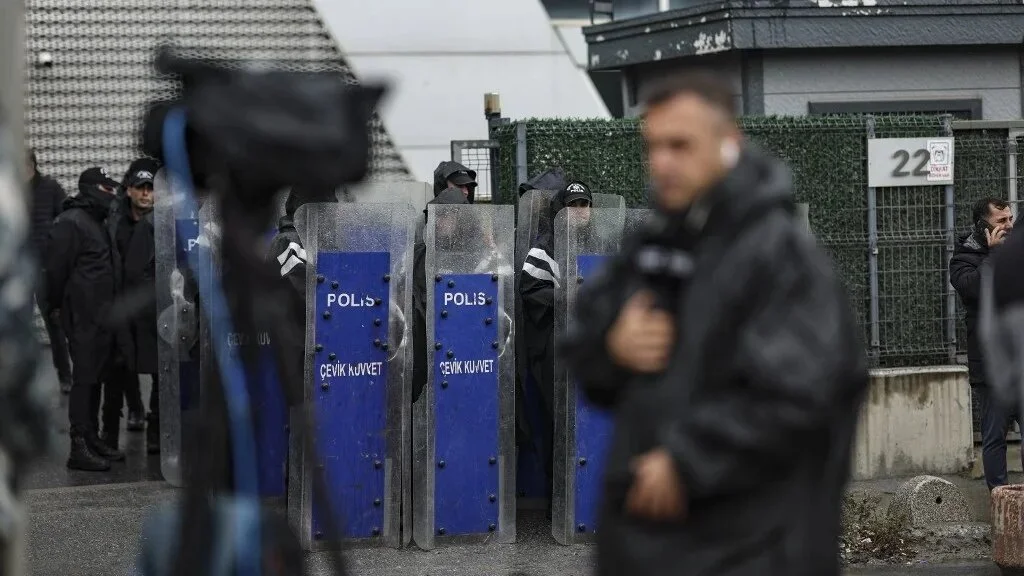
Turkish authorities have executed a dramatic raid on Halk TV, the country's leading television channel, during a live broadcast, marking a tense escalation in censorship efforts directed at critical media outlets. This intervention comes alongside the appointment of a government-aligned manager, an action widely criticized as a stark violation of journalistic freedom.
Cafer Mahiroglu, chairman of Halk TV, condemned the actions, labeling the day as a "dark day for Turkey." The raid led to the detention of several individuals connected to the channel, including seven of Mahiroglu's family members, which he described as part of broader intimidation tactics in the country.
Authorities apprehended 11 individuals linked to an investigation into Mahiroglu, who currently faces serious charges that include bribery and money laundering. Although warrants have been issued for 17 people, Mahiroglu remains abroad and was not personally detained.
"The public's right to information is being compromised for political gain," Mahiroglu asserted on X, refuting the allegations against him as unfounded. He added, "Utilizing the judiciary as a weapon is the greatest harm inflicted on Turkey."
Media Crackdown Intensifies
Turkey has established a reputation over the years for its suppression of opposition media, particularly targeting those with connections to pro-Kurdish groups or individuals linked to Fethullah Gülen. Recently, however, the ruling Justice and Development Party (AKP) has sharpened its focus on institutions tied to the main opposition party, the Republican People's Party (CHP), and its splinter group, the New Party.
'It sends a clear message of intimidation to the entire press'
- Ricardo Gutierrez, European Federation of Journalists
The head of the New Party, Özgür Özel, highlighted on social media that the raid on Halk TV correlates with ongoing judicial proceedings against the incarcerated former mayor of Istanbul, Ekrem İmamoğlu. İmamoğlu's arrest last year was perceived as politically motivated, closely related to his rising popularity and potential challenges to President Recep Tayyip Erdoğan's authority.
Ricardo Gutierrez, the secretary general of the European Federation of Journalists (EFJ), expressed grave concerns about the implications of placing Halk TV under a trustee and halting its broadcasts, particularly as İmamoğlu begins his defense. "This deprives the public of critical information at a pivotal moment," he stated, warning that the combination of ongoing detentions and media censorship signals a broader climate of fear across the journalistic community. The EFJ urges Turkish authorities to reverse the trustee appointment and restore Halk TV’s broadcasts.
A Broadening Scope of Censorship
The actions against Halk TV are part of a wider crackdown on critical voices in Turkey, which has gained traction in recent weeks. Reports indicate hundreds of individuals and organizations—including pro-LGBTQ+ groups—have faced detention and raids amid government efforts to curtail dissent. Informal estimates suggest over 80 individuals have been formally arrested, with further charges ranging from "obscenity" to "assisting prostitution" based on alleged financial connections abroad.
Alongside these detentions, the government has restricted access to numerous media sites and social media accounts. Last week, the Freedom of Expression Association (IFOD), a notable monitor of internet freedom in Turkey, reported limitations on its X accounts, including its project focused on tracking social media bans.
Under Turkish government requests, X has blocked numerous accounts belonging to organizations such as Amnesty International Turkey, the left-leaning Evrensel newspaper, and various civil society entities. This raises serious questions about the state of freedom of expression in Turkey.
Yaman Akdeniz, founder of IFOD, remarked, "While the situation has always posed challenges for press freedom in Turkey, the current wave of censorship feels unprecedented. The crackdown has spiraled into a tsunami affecting both media and civil society, particularly targeting voices critical of the government."
The developments surrounding Halk TV not only reflect ongoing struggles for press freedom but also highlight the precarious state of political discourse in Turkey, placing the spotlight on the urgent need for protections of free expression in the face of systematic repression.


Discussion
Sign in to join the discussion.