Jordan Bardella faces serious antisemitism allegations that threaten the far-right party's efforts at rebranding and distancing from its extremist roots.
The Crisis Surrounding Bardella
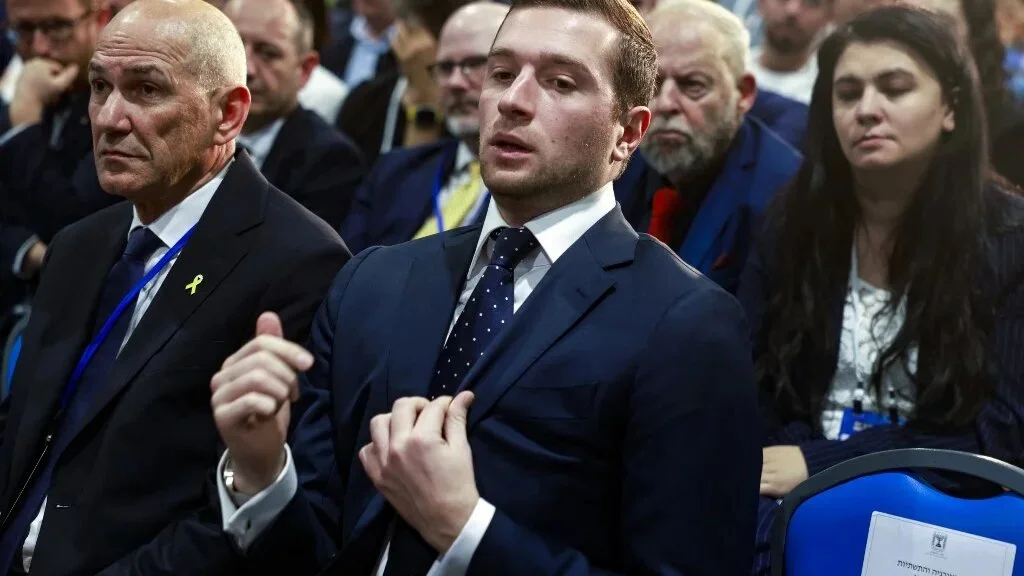
Jordan Bardella, the president of France's far-right party, Rassemblement National (RN), finds himself embroiled in controversy over allegations of antisemitism. Recent reports from investigative outlet Mediapart have surfaced messages allegedly written by Bardella, dating back to 2013, when he was a mere 17 years old and already connected to the party.
The allegations detail claims made by Bardella on social media, stating that “banks are all owned by Jews” and perpetuating harmful stereotyping about Jewish influence in politics and finance. In response to the accusations, Bardella has vehemently denied the authenticity of the messages, describing them as crude fabrications and stating that he has filed complaints for defamation.
The Party’s Response
Bardella is not standing alone in this situation. Marine Le Pen, the party's anticipated candidate for the coming presidential election, has openly supported him, asserting that she trusts his integrity completely and condemning the reporting by Mediapart as a malicious attack. This allegiance highlights the solidarity within the RN, which seeks to protect its leadership amid mounting scrutiny.
Interestingly, Bardella has even attracted backing from Amichai Chikli, Israel's minister for combating antisemitism, who described him as a "clear voice in Europe against Hamas." Chikli's endorsement seems at odds with the serious allegations Bardella faces and contrasts sharply with sentiments from many in the Jewish community who remain skeptical of RN's commitment to fighting antisemitism.
The Historic Context
Background on the RN reveals a party deeply rooted in controversial ideologies. Founded by Jean-Marie Le Pen—whose antisemetic remarks and convictions are well-documented—the RN has attempted to reshape its image over the years through a strategy termed “de-demonisation.” This initiative sought to remove extremist figures from its ranks and distance itself from its historically radical roots, presenting a more palatable identity to potential voters.
Bardella, who ascended to the party presidency at the age of 27, was positioned as part of this new image, a departure from the historical baggage that has long shadowed the RN. Yet, the recent allegations expose the fragility of this rebranding effort and prompt questions about the efficacy of its so-called modernization.
Public Reaction and Implications
Political analysts view the party's transformations with skepticism, noting that the RN's fundamental political platform—focused on nationalism, security, and stringent immigration policies—remains unchanged. Sylvain Boulouque, a political analyst, asserts that antisemitism continues to be embedded within the party's identity and that a significant portion of its electorate resonates with the views attributed to Bardella.
In response to the situation, French MP Sabrina Sebaihi has taken legal action to address the allegations, underscoring the political ramifications of Bardella's comments. Alongside other left-wing politicians, she seeks accountability, arguing that failing to address such comments fuels a culture of racism and antisemitism.
Notably, polls suggest a divided public perception; while only 45% of RN voters see Bardella's alleged statements as serious, this contrasts starkly with broader public sentiment, where 74% view them as concerning, revealing a disconnect between the party's base and general voter beliefs.
The Path Forward
As the RN heads toward the presidential race in 2027, the latest developments create uncertainty around Bardella’s leadership and the party’s electoral viability. Critics argue that attempts to detoxify the party's image are more superficial than substantive, aimed primarily at electoral gain rather than genuine ideological transformation.
Though Bardella's popularity has dipped slightly in recent polls, he remains a frontrunner, positioning himself effectively among certain voter demographics, including those drawn by the party's hardline stances. This indicates that, for now, the RN continues to maintain a significant electoral presence, despite being challenged by allegations that threaten to unravel its reshaped identity.
The revelations may ultimately test the limits of the RN's appeal and whether it can convincingly distance itself from its past as it navigates through this public relations crisis. Observers are watching closely to see if this incident will be a turning point for the party or just another chapter in its contentious history.


Discussion
Sign in to join the discussion.