Recent research reveals that charged water droplets may significantly contribute to corrosion, challenging existing understanding of material degradation.

Water droplets have an unexpected trait: as they glide over surfaces, they can accumulate electrical charge that plays a role in damaging materials. This phenomenon not only has implications for vehicles and infrastructure but could also affect cultural heritage sites, potentially leading to costly restoration efforts.
According to a study published in Nature, water droplets that acquire a charge during their movement can transfer it to metals upon landing. This charge transfer can trigger corrosion, even on surfaces meant to be protected by coatings. The research, conducted by physicists including Zhongyuan Ni from the Max Planck Institute for Polymer Research, underscores a previously overlooked aspect of material degradation—one that could have wide-reaching implications for both modern technology and historical preservation.
The implications of this finding could lead to advancements in anticorrosion coatings, notes Stefan Weber, a physicist who was not involved in the study. He emphasizes that while prior studies have recognized charging from sliding water, the connection to corrosion marks a significant advancement in understanding this relationship. This could revolutionize how engineers and conservationists approach both new constructions and the maintenance of ancient structures.
Understanding the Mechanism
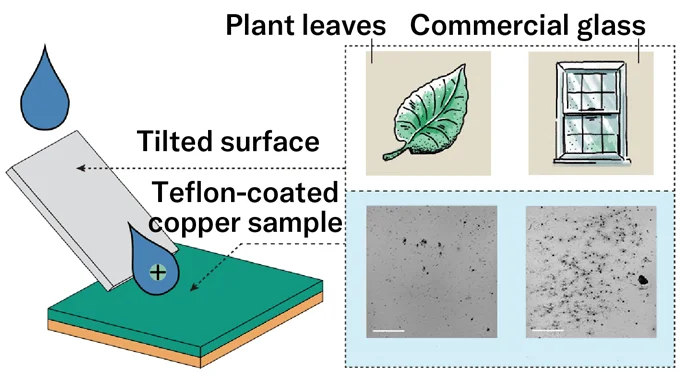
The study's experiments show that as water droplets rolled off common surfaces, including leaves and a type of glass known as polystyrene glass, they amassed an electrical charge. In tests where thousands of these electrified droplets fell on Teflon-coated copper, noticeable damage emerged—nearly invisible to the naked eye but detectable under a microscope. This hints at a complexity in material science that many remain unaware of.
(And this is the part most people overlook) The fact that something as common as water can accumulate electrical charges and cause damage is a wake-up call. It forces us to reconsider how we design everything from consumer products to critical infrastructure. For example, surfaces used in high-traffic areas or those exposed to harsh weather could be at risk in ways not previously understood.
The Economic Impact of Corrosion
Corrosion represents a substantial economic burden, with the U.S. automotive sector spending over $30 billion in 1999 alone on prevention and mitigation efforts. While costs connected to corrosion vary significantly and aren't always tracked, the global financial toll likely reaches trillions. This figure can’t be ignored, especially as industries strive for greater efficiency and lower operational expenses—money that could be funneled into innovation rather than maintenance.
Earlier studies mainly attributed damage to the physical impact of water droplets and any corrosive substances they carried. However, Zhongyuan Ni's initial tests revealed minimal damage after exposing surfaces to a limited number of droplets. After inadvertently allowing the experiment to run longer, he uncovered a delay in observable damage, prompting a deeper investigation. This delayed reaction might suggest a cascade effect, where the build-up of charge leads to unexpected failures over time.
The researchers discovered that thousands of droplets were necessary to inflict noticeable harm. They effectively released numerous droplets onto Teflon-coated copper while charging them by sliding across various surfaces. This thorough approach showcased that only the surfaces impacted by charged droplets sustained damage, in contrast to those hit by uncharged ones. Such findings showed that the electrical properties of droplets could penetrate coatings, causing corrosion in a range of materials, including copper and gold, not just Teflon-coated specimens. Practically, this means that industries relying on metal components might need to reconsider the longevity of their materials under environmental stress.
What This Means for the Future
Despite the implications of charged droplets, Zhongyuan Ni reassures that their effects remain relatively minor for most scenarios. Yet for machinery, monuments, and infrastructure enduring prolonged exposure to environmental elements, these small charges could accumulate and become significant over time. What this means for you in construction or preservation is straightforward: even small electrical charges shouldn't be dismissed. They can play a notable role in the long-term degradation of materials.
Implications for Material Science and Conservation
The findings from this study open up a conversation about reevaluating materials used in various applications, especially in an era where sustainability is prioritized. This is more significant than it looks. If corrosion can be exacerbated by something as ordinary as raindrops, then the design of these materials needs to change. Future advancements in coating technologies could focus on minimizing charge accumulation or improving resistance to corrosion. Researchers and industries might also look into alternative materials that offer better long-term durability in the face of environmental challenges. The challenge remains significant; there's a need for a proactive approach in addressing these newly identified vulnerabilities.

Discussion
Sign in to join the discussion.