Recent findings in China's Bianfu Cave offer unprecedented insights into Denisovan culture, revealing their lifestyle and adaptation strategies.
New Insights from Bianfu Cave
A recently unearthed cave in southwestern China is reshaping our understanding of Denisovan existence. This archaeological site, located in an abandoned quarry in Yunnan Province, provides some of the first concrete evidence of Denisovan culture—a sister species to modern humans that thrived across Asia between 400,000 and 30,000 years ago. As more details emerge, one can't help but wonder about the implications for both anthropology and modern genetics.
The Significance of Recent Fossils
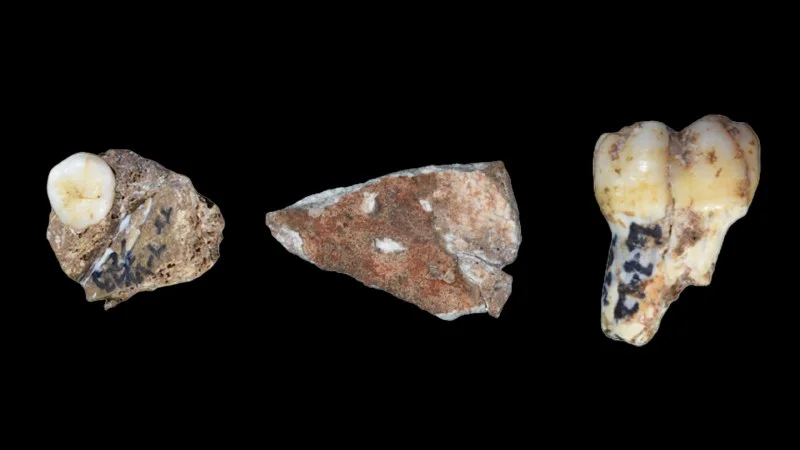
Excavations at Bianfu Cave have led to the discovery of numerous fossils, including key fragments from at least three Denisovan individuals. Detailed protein analysis and high-resolution X-ray scans confirmed these findings, pinpointing their age to between 167,000 and 134,000 years ago. Published studies in Nature highlight that these remains were found alongside butchered animal remains and more than 1,300 tools. This presents a striking image of an ancient culture—suggesting a rudimentary yet organized approach to life that went beyond mere survival.
This new evidence not only adds depth to the Denisovan narrative but also challenges previous notions of their intellectual and social capabilities. The presence of tool usage indicates that these creatures weren't just scavengers; they were developing methods for hunting and processing food. It raises questions about their social structures and whether they worked collectively to achieve these tasks.
Increasing Our Understanding of Denisovan Life
Shara Bailey, a paleoanthropologist at New York University, notes that the cave offers valuable insights into Denisovan life, stating that “Denisovans are becoming a bit less mysterious.” While previously unearthed Denisovan remains have been few and far between, mostly discovered in Denisova Cave in Siberia, Bianfu represents a significant expansion in our understanding of how these ancient humans interacted with their environment.
This new site not only sheds light on physical remains but also establishes a comparative framework to evaluate Denisovan cultural and technological development. The concentration of tools and animal remains invites deeper questions about their social practices and cognitive skills, suggesting that their survival strategies may have included more than just adaptive responses to environmental challenges.
Connecting Past and Present
Since the initial discovery of Denisovans through DNA analysis of a tooth and finger bone in 2010, genetic studies have revealed that various modern populations—including some in the Philippines, Tibet, New Guinea, and Australia—carry Denisovan DNA. Despite this widespread genetic legacy, much about their day-to-day existence has remained elusive.
The new findings from Bianfu Cave provide much-needed clarity on their tools and dietary habits, highlighting the species' adaptability in various ecological contexts. What’s striking here is how these ancient populations connect with today's human experiences, raising questions about the continuity of human adaptation. If you're working in this space, these connections provide particularly fertile ground for further exploration of our modern genetic diversity.
Excavation Revelations
After a 2019 ecological restoration project led to the cave's discovery, subsequent excavations uncovered four human teeth, two pieces of a skull, and a fragment of an arm bone. Researchers employed micro-CT scans to compare these teeth to remains from known hominin species. The results were telling; many characteristics aligned with traits seen in other Denisovan specimens from Laos and Tibet. This consistency strengthens the case for Bianfu as a critical site for understanding Denisovan variability and regional adaptations.
The implications of identifying Denisovan traits across different geographical locations suggest a broader and more complex narrative surrounding human ancestry. The patterns observed may suggest migration or interbreeding, or possibly adaptations to varying environmental conditions. It's a puzzle that calls for further investigation.
Tools and Dietary Evidence
The artifacts recovered from the site date back between 190,000 and 70,000 years, with no evidence indicating other human species occupied the cave during this span. This absence hints that the tools—designed for processing animal remains—were likely crafted by Denisovans themselves. Tools used for breaking bones, cutting meat, and scraping hides were discovered alongside an impressive collection of over 1,600 identifiable animal remains, predominantly from deer.
This evidence presents a vivid picture of Denisovan dietary habits, reinforcing the idea that they were not mere scavengers but active participants in their ecosystem. These findings add layers to what we know about their day-to-day survival and adaptability, emphasizing a more complex relationship between species and their environments than previously thought. (And this is the part most people overlook.)
Understanding Denisovan Adaptation
The presence of butchered deer bones speaks volumes about the Denisovans’ adaptive strategies. Bence Viola, a paleoanthropologist at the University of Toronto, emphasizes that this evidence suggests they were versatile hunters, able to adjust their techniques based on available prey. Such discoveries contribute to a “much more complete picture” of how Denisovans lived, hunted, and thrived in diverse environments.
A glance at their hunting strategies reveals something fascinating: the Denisovans demonstrated an ability to adapt their technology to meet the challenges of their surroundings. This sophistication challenges the primitive hunter stereotype often ascribed to ancient human relatives. If their tools could process various types of prey, one has to wonder how those skills were passed down generations. What were their social structures that allowed for such knowledge retention?
Future Implications: Where Do We Go from Here?
With each new find at sites like Bianfu Cave, our understanding of these ancient populations deepens, gradually revealing the complexities of their lives on the landscape. The evolving picture of the Denisovans hints at richer social dynamics than previously understood, opening up new avenues for research into human evolution.
As more fossils and artifacts come to light, the field of paleoanthropology may soon redefine what we think about the connections between Denisovans and modern humans. The implications could extend to broader discussions around migration patterns, cultural exchanges, and the very nature of human adaptability. The coming years could see a profound shift in our understanding of not just who our ancestors were, but how they shaped the genetic and cultural legacies that continue to influence us today.


Discussion
Sign in to join the discussion.