When children reject unfamiliar foods, tight grocery budgets make repeat tries costly. Food assistance and school meals can help families build healthier eating habits.
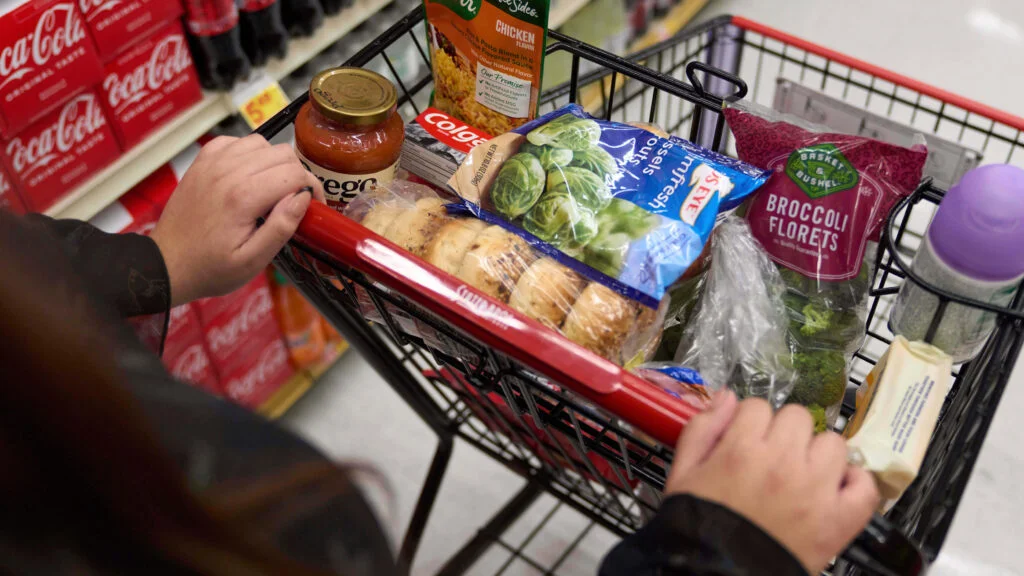
For families with little room in the grocery budget, a child refusing a new food can shape the next shopping trip. That makes picky eating more than a routine parenting frustration: it can push caregivers toward familiar foods their children will finish, even when they’re trying to support healthier diets.
The squeeze is growing. Grocery prices are nearly a third higher in dollar terms than in 2020, while more than 5 million people, including an estimated 2 million children, have left SNAP since summer 2025. When food assistance shrinks and household costs climb, parents have less capacity to absorb the cost of a meal a child won’t eat.
That trade-off matters because children’s food preferences develop over time. A child may need repeated exposure to an unfamiliar food, including bitter vegetables, before accepting it. Pediatricians and nutrition experts advise parents to keep offering fruits and vegetables after a refusal. For families with enough money, that can mean trying again another day. For families budgeting closely, each attempt carries a financial risk.
When a rejected meal changes the calculation
Sociological research has documented how the possibility of wasting money shapes what low-income parents buy. Caitlin Daniel’s research found that parents facing that risk often chose less healthy items they knew their children would eat. Research by Priya Fielding-Singh also found that parents’ own experiences of food insecurity could influence those choices: caregivers sought to spare their children similar hardship by relying on familiar foods that would fill them up.
New research by Fielding-Singh and Darcy Cherlin, drawing on low-income parents in three states, adds a further tension. Parents described making significant efforts to prioritize their children’s nutrition, sometimes at the cost of their own diets. At the same time, they watched their children’s preferences closely and bought foods likely to be eaten. One mother said she would rather her daughter be “happy and fed than sad and hungry.”
That choice isn’t a sign that parents don’t value nutrition. Under tight constraints, avoiding a meal that goes uneaten can be a practical way to stretch limited resources and keep dinner from becoming a struggle. But the short-term calculation can make it harder to offer children the repeated experiences that help them accept a wider range of nutritious foods.
Experts’ advice to keep offering unfamiliar foods assumes parents can pay for those experiments. The gap between that advice and families’ budgets is becoming harder to ignore. A national survey found that more than half of low-income parents were cutting back on groceries, and over two-thirds worried they would have to choose between paying bills and buying healthy food for their children.
Support can lower the cost of trying again
Food assistance is one part of the response. SNAP, the country’s largest food assistance program, helps millions of families put food on the table. The authors argue that Congress should reverse cuts to SNAP enacted through H.R. 1 and prevent benefit costs from shifting to states, a change they say could threaten continued access to the program. They call for a bipartisan effort to reverse the cuts.
Support can also make nutritious purchases less financially risky. The authors point to protecting and strengthening WIC’s fruit and vegetable benefit and expanding Double Up Food Bucks for SNAP recipients. These programs can help families stretch grocery dollars and make it more feasible to buy foods a child might reject on the first try.
Schools and childcare programs can share the work of introducing children to healthy foods. They already provide meals, but they can also give children regular chances to see and taste fresh produce without placing the full cost on parents. The Fresh Fruit and Vegetable Program and Farm to School offer examples, using produce, taste tests, gardens and other activities to introduce new foods.
Nutrition guidance needs a workable budget behind it
Children’s tastes don’t change on demand, and parents can’t guarantee that a new food will be eaten. That’s why repeated exposure is a useful part of building healthy eating habits—and why the cost of food refusals belongs in discussions about nutrition. Advice to keep offering fruits and vegetables has limited reach if families have to choose between another attempt and food they know their children will eat.
The practical goal is to give families both reliable access to enough food and room to support children’s developing tastes. SNAP, nutrition benefits and programs in schools and childcare can each reduce the pressure on parents to make every grocery purchase a sure bet. With that support, another serving of vegetables can become an opportunity to learn a new taste rather than a gamble a household can’t afford.



Discussion
Sign in to join the discussion.