With a FIDE rating of 2,235, Mohammed Seder has championship wins and an international record. Travel barriers and scarce tournaments complicate his next move.
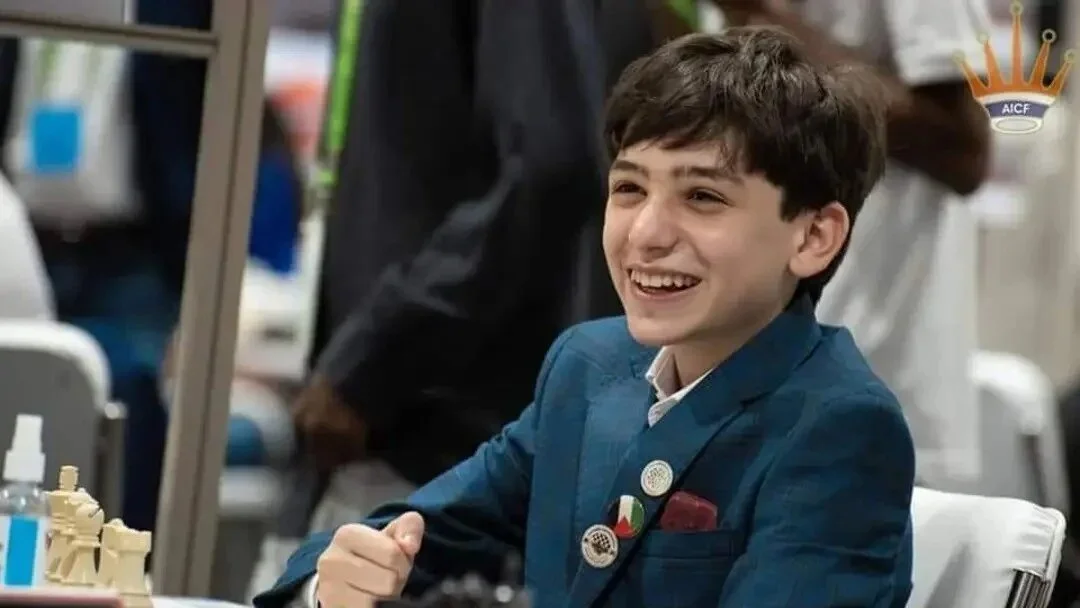
At 17, Mohammed Seder has already won Palestine’s national chess championship twice and built a reputation beyond Hebron, where he lives. His FIDE rating of 2,235 places him at master level. The next target is an International Master title, but reaching it depends on something he can’t control at the board: getting enough chances to compete.
Seder began with chess puzzles at five. His father, Naji Seder, a former Palestinian national champion, saw promise in his son and started training him. Mohammed entered competitive chess at 10. Since then, he has won Arab youth championships in the under-eight, under-10 and under-14 categories, and has represented Palestine at international tournaments and Chess Olympiads.
“I hope to become a grand master one day,” he said. The nearer step is the International Master title, which requires a FIDE rating of 2,400 as well as performances against players who already hold the title. For now, tournament access is the constraint: Seder says he played in just one event in 2026.
Preparation at the board, and beyond it
Seder’s approach to competition is methodical. Once he knows who he’ll face, he studies that player’s profile: their style, preferred openings and responses to difficult positions. Coaches then help him prepare for the specific matchup. He also treats rest and food as part of the work, aiming to sleep enough and eat well without making a meal so heavy that it leaves him sluggish.
He learned that last point through experience. Seder recalls losing a tournament in Düsseldorf after eating too much at lunch in a Turkish restaurant. The food, he said, was “too delicious.” When he can’t travel to play, he keeps up daily practice on online chess platforms including Lichess and Chess.com.
Chess has also made him known around his school in Hebron. He often competes in tournaments for the school, and winning, he told Middle East Eye, can feel as if he has “done everything in the world for the school.” His results have carried him much farther: he has travelled to more than 20 countries for tournaments.
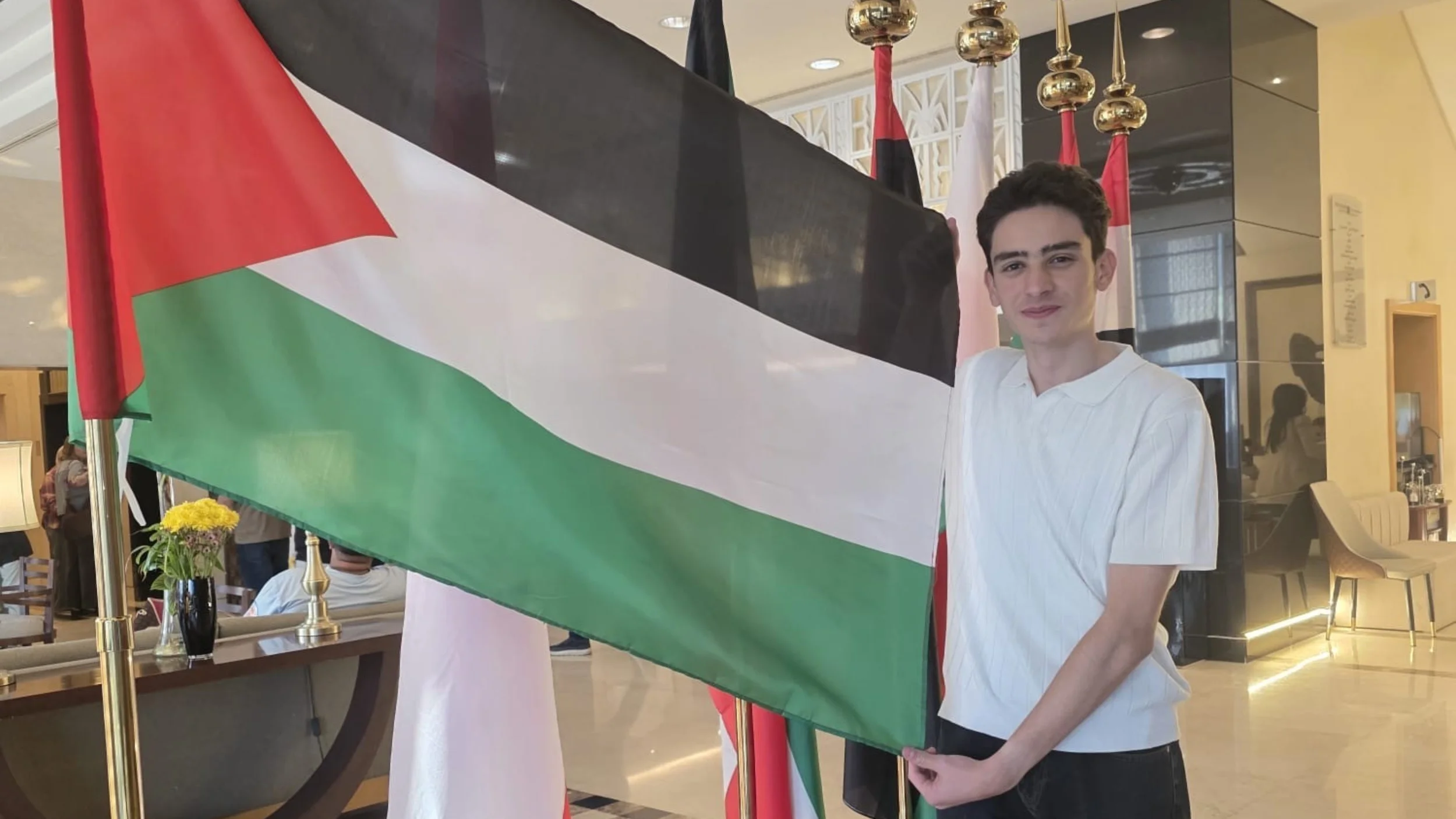
For Seder, those trips are a chance to represent his home as well as his own game. “When I travel abroad, I am very proud to represent Palestine,” he said. He sees that role as a responsibility to show that Palestinians include “a lot of very smart and very good people.”
His 12-year-old sister, Randa, is building a chess record of her own. She won the 2026 Palestine Women’s Classical Chess Championship and competed at the FIDE Chess Olympiad in Samarkand, Uzbekistan, where the Palestinian team entered both the Open and Women’s sections. Mohammed missed that Olympiad because of upcoming school exams. At the 2022 Olympiad in Mamallapuram, India, Randa became the event’s youngest-ever participant.
School and the next chapter
For now, Seder is concentrating on his final year of school and the Tawjihi, Palestine’s General Secondary Education Certificate, which he expects to take next spring. He hopes strong results will help him secure a scholarship to study computer science or engineering at a university in the United States or Europe.
Saint Louis University in Missouri is his first choice because of its collegiate chess program, club and tournaments. But he says he is prepared to consider other universities if Saint Louis doesn’t admit him or provide a scholarship. Studying abroad could offer access to more chess opportunities, though Seder says he intends to return to Palestine.
“Chess doesn’t matter to me when it comes to Palestine. My land is much more important to me than chess,” he said. “If I leave Palestine for some years, I will come back for sure.”
Travel limits the tournament schedule
The gap between Seder’s ambitions and his current schedule reflects practical barriers facing Palestinian chess players. Restrictions on movement in the occupied West Bank can make travel between cities slow and unpredictable, while limited funding leaves few opportunities to enter demanding tournaments.
Hebron is roughly 60 kilometres from Ramallah, Nablus and Jenin, but Seder told Middle East Eye that a drive to those cities can take four or five hours, and sometimes more than 12. That distance matters for a player who needs regular competition, coaching and access to stronger opponents.
Seder described several journeys disrupted by delays. On the way to a tournament in Kuwait, he said, he was stopped at a border because he did not have his Palestinian national ID with him; he noted that the document is usually useful only inside Palestine. On another trip between Palestinian cities, soldiers told his group to leave their car, and they waited beside it for two hours.
He also said Israeli soldiers entered his family’s home at night about two months before the interview and arrested his father, who was released several hours later. The account adds another dimension to the uncertainty surrounding Seder’s training and travel.
Money is a separate obstacle. Seder says corporate support for chess in Palestine is scarce, and the tournaments that would challenge him are difficult to access. To pursue the International Master title, he estimates he needs to play three or four tournaments each month. His current pace falls far short.
“It’s not very hard, but I don’t have the opportunity to play in enough tournaments,” he said. “If I continue living in Palestine, my chess career will end.”
That tension shapes the choices ahead: finish school, seek a scholarship and find a way to compete often enough to keep improving. Seder has already shown that he can perform on international stages. The measure of his next step may be whether he can reach them regularly.


Discussion
Sign in to join the discussion.