For $6, visitors can explore a Coventry home dating to the late 1600s and trace how its owners changed it through the 1940s.
A house shaped by work and time
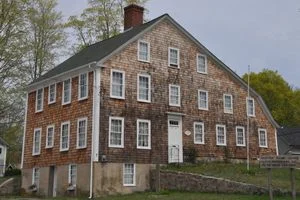
For a $6 admission, Paine House Museum in Coventry offers a direct encounter with a period of Rhode Island life that can be difficult to picture from dates and documents alone. The house dates to the late 1600s, when Samuel Bennett built a single room as part of his sawmill operation. That origin matters: the building began as part of a working property, rather than as a museum or a carefully staged representation of the past.
A single room also gives the house a useful starting point for thinking about how domestic space could develop over time. Buildings often change as families, work, and practical needs change; an early structure may be enlarged, adapted, or used differently by later occupants. The source describes several owners leaving marks on the property, though it doesn’t specify what each person changed. That distinction is worth keeping clear. A visit can show the accumulated result, while individual alterations may require interpretation to connect them to particular owners or periods.
There’s a physical quality to that kind of history. A surviving house makes scale and arrangement tangible in a way that a short account of the past can’t: visitors can stand inside a space that began as one room and consider how a building’s later life may have altered its form. The house doesn’t, by itself, answer every question about how people lived. It does give those questions a place to start.
What a historic home can show
The description frames Paine House as a view of life before modern comforts. That’s a broad promise, and the most useful way to understand it is as an invitation to notice how much everyday life depends on the spaces and conveniences people take for granted. A historic home can prompt questions about how rooms were used, how households organized daily routines, and how a building’s design reflected the needs of its occupants. The available details don’t identify particular furnishings, heating methods, or household practices, so those shouldn’t be assumed. The house’s age and evolution provide context; the objects and interpretation on site determine how far a visitor can follow it.
Buildings are evidence, but they’re not complete records. A structure can preserve clues in its size, layout, and successive changes while leaving much of its social history unspoken. Who lived there, what work they did, and how they understood their surroundings are questions that need reliable documentation or carefully presented interpretation. That’s why historic house museums can be most compelling when they make clear which details are documented and which conclusions are broader readings of the building.
Here’s the thing: the appeal of Paine House isn’t simply that it’s old. It’s that the account connects the house to a specific working activity, Bennett’s sawmill, and then follows its life through multiple owners and into the 20th century. The result is a story of continuity and change, even if the available summary leaves the details of those changes open. A real building, altered and inhabited across generations. That’s a more grounded point of entry than treating the past as a single frozen scene.
Generations of use
The property passed through several owners, each leaving a mark on the house, and it remained lived in until the 1940s. That span links the building’s early origins to a much later period of ordinary domestic use. It also complicates the idea that a historic house belongs to only one moment in time. The structure began in the late 1600s, but it continued to serve people whose needs and circumstances may have differed from those of its first occupants.
That long use can make a visit more interesting than a simple tour of period architecture. Each generation may inherit a building and make decisions about how to live in it, maintain it, or adapt it. The source doesn’t say which owner made which change, and it would be misleading to assign motives or specific renovations without evidence. Still, the sequence itself offers a valuable perspective: historic buildings survive through use as well as preservation. They’re not just remnants set apart from daily life; for much of their history, they were places where daily life happened.
This is more significant than it looks. The date of a house’s construction tells you when its story began, but not how it continued. A building that remained occupied until the 1940s carries a history extending well beyond its first form, even if the account doesn’t detail every chapter. If you’re working in this space, that’s a reminder to treat adaptation as part of a site’s history, rather than as noise around an imagined original state.
A visit with room for context
At $6, the admission price gives visitors a relatively accessible way to encounter the site, though the fee alone can’t tell you how extensive the tour or interpretation will be. The core draw is clear: a surviving house in Coventry whose history stretches from a single-room structure associated with a sawmill to a residence used across several generations. Visitors who arrive with that outline can look for the relationship between the building’s physical form and the story being told about its changing ownership.
It’s also reasonable to arrive with questions. What parts of the house date to its earliest period? How did later owners alter it? What evidence supports the account of those changes? The supplied description doesn’t answer these, but they’re the kinds of questions that help turn a short visit into a more attentive one. The value of a historic site often rests not only in what a visitor sees, but in how clearly the site connects that evidence to its interpretation.
That said, a visit needn’t become an exercise in testing every claim. The building itself offers a chance to think about the practical realities behind historic preservation: houses change, their uses change, and the version that survives may contain evidence from more than one era. The challenge for any museum is to make that layered history legible without presenting uncertain details as settled fact. (And this is the part most people overlook.) The marks left by later owners can be as revealing as the original construction.
The lawn and the wider visit
In warmer months, a farmers market may also set up on the lawn. The wording is appropriately tentative: the market isn’t described as a year-round feature or a guaranteed part of every visit. When it’s present, it can give the grounds a contemporary use alongside the house’s historic one, bringing visitors to the property for a different reason and placing the museum within a living community setting.
That combination changes the rhythm of a visit. A museum house encourages attention to interiors, materials, and the past; a market invites people to spend time outdoors and engage with the present. The two experiences don’t need to be forced into a single story. Their proximity simply makes the site more than a building to inspect, while the museum’s central draw remains its history and the physical house.
Why the story matters
Paine House Museum’s account is brief, but its basic outline points to a useful way of understanding local history. A building began as one room connected to a sawmill, passed through several owners, and remained lived in until the 1940s. Those facts provide a framework for considering how work, domestic life, and changing needs intersect in a single place. They don’t support invented details about particular families or renovations, and the house is more interesting when its known history is kept distinct from speculation.
For visitors, the most worthwhile approach may be to treat the house as both a historical site and a record that invites questions. Its value lies in the chance to see a structure with a long life, consider how it changed, and ask what evidence helps explain those changes. What this means for you is straightforward: a modest admission buys access to a tangible setting for thinking about everyday life across generations, with a possible seasonal market adding another reason to spend time on the grounds. The house won’t make the past fully transparent. It can make that past easier to picture, and harder to reduce to a date on a plaque.


Discussion
Sign in to join the discussion.