Jordan Bardella's alleged antisemitic comments have rattled France's far right, raising questions about his political future and the party's image.
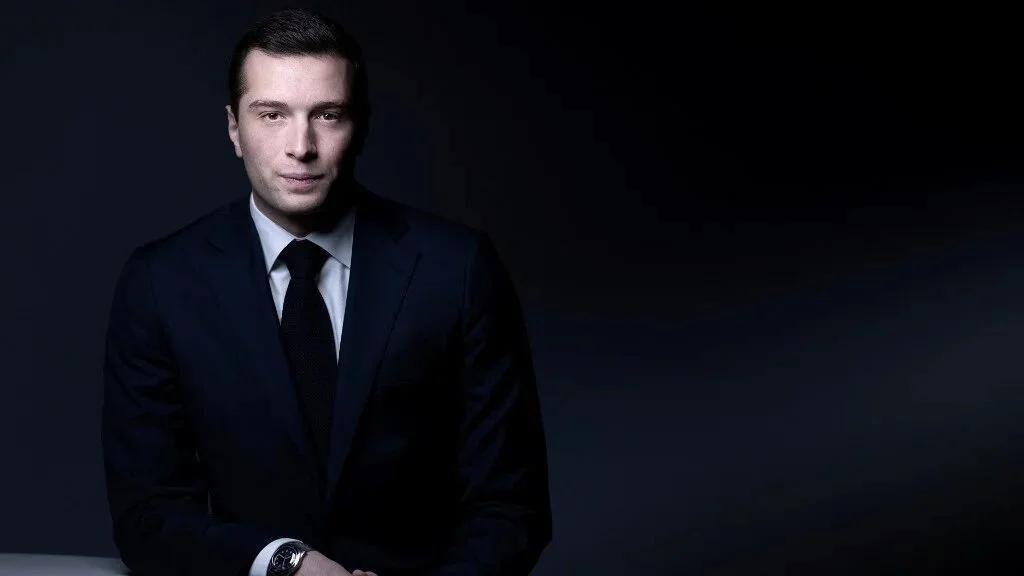
Mediapart's recent investigation has created turmoil within the French far-right National Rally (RN) by revealing purported antisemitic messages linked to the party's president, Jordan Bardella. The allegations come as Bardella, only 31, fights to maintain his position amid the scandal. This situation is more than just a personal crisis for Bardella; it has the potential to echo throughout the political landscape in France, affecting voter sentiment and party dynamics in the lead-up to the presidential elections.
The investigative outlet reported that messages from Bardella dating back to 2013 to 2015 surfaced, illustrating his endorsement of various antisemitic conspiracy theories. Specifically, these exchanges purportedly depict a narrative of Jewish control over banks and the French government, alongside a sweeping "new world order" purportedly dominated by Israel. Such themes are not just inflammatory; they tap into deeply ingrained prejudices that have historically resonated with certain segments of the population, particularly in hyper-polarized political environments.
At just 17, Bardella had just joined the RN under the leadership of Marine Le Pen, who is currently gearing up for the 2027 presidential elections. This youthful entry into politics enabled Bardella to align himself with Le Pen’s vision for a rebranded RN, focused on appealing to a younger demographic disenchanted with traditional parties. In response to the allegations, Bardella branded the reports as part of a "total war" aimed at undermining Le Pen's electoral ambitions. This defensive stance hints at a broader strategy, where Bardella aims to paint himself as a victim of a politically motivated smear campaign, which could galvanize supporters who view the media as biased against the far-right.
Mediapart characterized Bardella's remarks as revealing an "obsession with the supposed Judeo-Zionist control of the country," and noted that the private messages had been authenticated, though the full content remains unpublished. The choice not to disclose every detail raises questions about transparency; even so, the mere existence of these messages is a blaring alarm for the RN, which has tried to distance itself from overt antisemitism in public discourse.
Among the more controversial comments attributed to him, Bardella allegedly stated, "all banks are owned by Jews," and expressed an extreme view that "the Jew must dominate other peoples, crush them and rob them; a Zionist is necessarily Jewish, and profoundly Jewish." His references to prominent French figures, such as Bernard-Henri Lévy and Jacques Attali, were cited as examples of this alleged dominance. Remarks like these don’t just reflect personal biases; they threaten the RN’s carefully crafted message of moderation and tolerance which Bardella has attempted to promote in recent years.
Lévy, a polarizing figure known for his pro-Israel stance and vocal criticism of antisemitism, has been openly critical of Bardella and the RN. His remarks deepen the divide between the far right's public image and the troubling sentiments revealed in Bardella's messages. Lévy's criticism underscores the precariousness of Bardella's position; navigating relationships with influential figures is essential for maintaining legitimacy in a political environment rife with accusation and division.
Further complicating the situation, Bardella seemed to disparage certain French ministers from then-President François Hollande's government, alleging that their loyalties lay more with the interests of Israel rather than France. This claim is particularly charged, as it plays into longstanding narratives of dual loyalty that have historically fueled antisemitic conspiracies. His comments could alienate moderate voters who have grown increasingly uncomfortable with such rhetoric.
Shifts in Far-Right Rhetoric
Bardella's ascent within the RN has been marked by an attempt to reframe the party's public image, especially to attract younger supporters. His engagement with Israel, demonstrated by a visit in 2025 where he paid homage to the country, highlights his dual approach of courting both far-right voters and pro-Israel sentiments. This balancing act is delicate; it reflects a broader trend seen across Europe where far-right parties are trying to grapple with rising populism while also appealing to traditionally marginalized communities.
With antisemitism resurfacing as a pertinent issue in France, Israeli Foreign Minister Gideon Saar has encouraged stronger ties with far-right parties throughout Europe, seeking alliances that could feasibly reshape political sentiments. The RN's narrative emphasizes focusing on Islam and immigration rhetoric while balancing their stance on Israel to mitigate potential backlash. However, navigating these waters requires deft communication. The implications can be significant; this attempt at normalization with Israel might alienate voters who associate support for the far-right with racism and xenophobia. Bardella could be playing with fire, and the flames might scorch his political career.
Bardella's Future in Question
Despite the mounting evidence against him, Le Pen has staunchly defended Bardella, asserting her "total confidence" in his leadership. This defense is critical as Le Pen aims to secure an advantageous position in the upcoming election where current President Emmanuel Macron will not seek re-election. But how long can she afford to back a figure engulfed in controversy? There’s a point where the risk outweighs the reward.
With Le Pen at the helm, the RN is considered a formidable force in French politics. However, Bardella's alleged comments raise significant concerns, suggesting that the internal struggles of the party might hinder its broader ambitions. Le Pen's warning about her opponents resorting to "the most disgusting things" to derail their momentum underscores the high stakes for the far-right agenda in France. The party’s cohesion is essential as electoral challenges loom larger on the horizon, and internal conflict can easily lead to fragmentation.
Future Implications for the RN
As this situation continues to unfold, the implications for Bardella and the RN could reshape France’s political discourse significantly, particularly regarding views on race, antisemitism, and power dynamics within the country's political factions. If you’re working in this space, the unfolding events could signal a turning point for how the far-right narrative is constructed and received across Europe. The broader implications could spark new dialogues about race relations, social identity, and how political narratives can be manipulated depending on the political climate. Watching how the RN maneuvers through this scandal could very well provide previews of what’s to come in future elections.


Discussion
Sign in to join the discussion.