Israel has lifted its ban on nighttime flights at Syrian airports, allowing vital navigation systems to activate after months of delays.
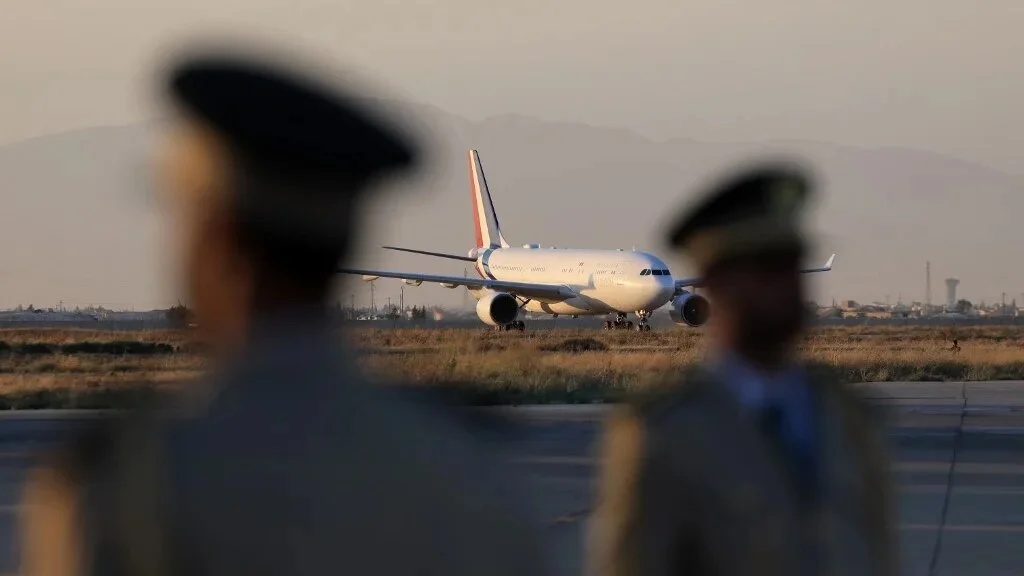
Syria's international airports in Damascus and Aleppo have recently reopened for nighttime operations, following a decision by Israel to remove restrictions that hindered the activation of essential navigation technologies, according to regional officials.
Context of Aviation Restrictions
The Syrian aviation sector has been operating under a shadow of international tensions for years. With both civil and military air traffic constrained by geopolitical conflicts, air travel in Syria has faced significant obstacles. Before this breakthrough, nighttime operations were impossible due to limitations in landing technologies, causing severe operational inefficiencies. This situation affected not only passenger travel but also cargo and humanitarian flights. Reopening these airports for nighttime usage could potentially double their operational capacity, a much-needed boost for a country grappling with economic challenges.
Recent Developments in Navigation Technologies
The Syrian General Authority for Civil Aviation and Transport confirmed the installation of critical air navigation systems, which include ILS/DME and DVOR/DME, necessary for enabling aircraft landings during nighttime or adverse weather conditions. These upgrades are actually part of broader efforts to modernize Syria's aviation infrastructure, long neglected due to ongoing conflict and sanctions. Notably, these systems have been deemed essential for significant improvements in safety and operational efficiency. However, activation was delayed for over six months due to specific regional dynamics that illustrate just how fraught with danger air operations can be in this context.
Calibration flights are integral to ensuring these newly installed systems work effectively. Unfortunately, the installation was met with a notable threat: Israeli officials indicated that they would intercept such flights within a 50km radius of Damascus airport. While these threats might seem like diplomatic bluster, they represent the complex realities of managing aviation in a region where military overlordship prevails and airspace is contested.
Shifting Geopolitical Boundaries
Historically, the Israeli border was situated about 60km from Damascus. However, through territorial expansions, Israeli forces now occupy areas only 25 to 40km from the Syrian capital. This territorial encroachment not only heightens tensions but complicates logistics around operational air travel as well. With the Israeli blockade firmly in place, the installation of navigation equipment remained largely theoretical until this recent diplomatic maneuvering took hold. The significance of these negotiations should not be overlooked; every inch gained or lost in such strained territories affects not just political relationships but day-to-day operations in Syria.
A Diplomatic Breakthrough
Regional diplomats noted that a potential resolution emerged when technicians discovered that calibration could be conducted within a 25km radius instead of the previously required 50km. This adjusted approach allowed Syrian authorities to inform Israel of their testing plans. And then, remarkably, Israel did not respond, which might indicate a strategic shift or a fatigue with the constant conflict escalation. This moment may serve not just as a technical victory for Syria but also as a possible blueprint for resolving other contentious issues that affect the region.
Israeli Concerns over Airborne Defense Systems
Earlier this year, Israel also expressed its opposition to the deployment of an advanced radar system at Damascus International Airport. Officials characterized this move as a threat to Israel's operational freedom in Syrian airspace. The air traffic control radar system in question was the HTRS-100, developed by Turkish defense firm ASELSAN. (And this is the part most people overlook) — the rivalry between Israel and Turkey further complicates these issues, given the varied interests and alliances involved. Israeli objections are grounded in strategic military considerations, particularly how these radar systems could enhance Syria's air defense capabilities against potential Israeli airstrikes.
Increasing Tensions and Future Implications
Following heightened tensions due to a recent Israeli strike on a Syrian airbase, which irritated US officials concerned about the potential for escalating conflict with Turkey, Israel appeared to seek a softer approach. This is indicative of a broader geopolitical strategy where military options are weighed against the risks of international backlash. US envoy Tom Barrack has taken steps toward forming a tripartite deconfliction mechanism to prevent such flare-ups in the future, highlighting the intricate balance that needs to be struck in this multi-state dispute. It makes you wonder: can calm be maintained?
Next Steps in Diplomatic Relations
Furthering diplomatic efforts, Israel recently appointed a charge d’affaires to its embassy in Ankara. This diplomat, who will primarily stay in Israel for security reasons, plans to travel frequently to Turkey for discussions with officials. The implications of this strategy could be far-reaching; establishing regular dialogue through on-ground diplomacy may pave the way for easing tensions and establishing some form of constructive cooperation. However, skepticism remains high — the road to stable relations is fraught with historical animosities and competing interests.
Future Outlook
As Syria reopens its airports for nighttime operations, the implications extend beyond just increased air traffic. If you're working in this space, you'll want to consider how changes in aviation capabilities could influence not just local economies but also regional security dynamics. Stakeholders across multiple nations will be watching how well the Syrian authorities manage these navigational systems and whether the newfound operational capacity does indeed lead to economic revitalization or simply more military entanglements. The future isn’t certain; it’ll take cautious but decisive steps from all parties to build a lasting peace, or at the very least, a stable coexistence.


Discussion
Sign in to join the discussion.