Recent research indicates that the American cheetah is more closely related to pumas than to modern cheetahs, revealing its adaptable diet.
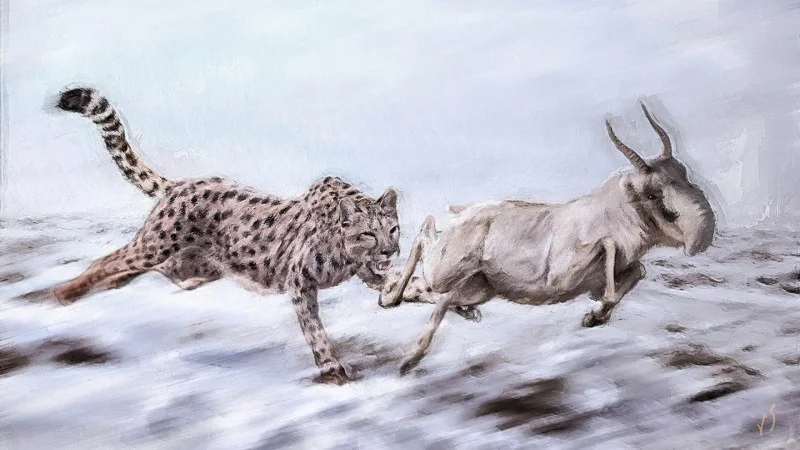
Tens of thousands of years ago, a long-legged feline known as the “American cheetah” roamed North America. Yet recent research indicates that this extinct species, scientifically referred to as Miracinonyx trumani, shares a closer lineage with modern pumas than with the African cheetah. This revelation, published on September 4 in Current Biology, has implications for understanding the evolutionary history and ecological behavior of this ancient predator.
Revising the Image of the American Cheetah
The term “American cheetah” has long conjured images of a high-speed predator, akin to its African counterpart, capable of chasing down nimble prey like the pronghorn antelope, which can sprint at speeds nearing 90 kilometers per hour. However, emerging evidence suggests that M. trumani displayed a greater versatility in hunting, akin to modern pumas, which prey on various animals ranging from large ungulates to smaller mammals. This distinction matters. Misunderstanding the hunting methods of ancient species can lead to skewed perceptions of their ecological roles and adaptations.
As researchers analyze the hunting behaviors of extinct species, they're often confronted with the challenges of labeling them based on modern equivalents. The “American cheetah” nomenclature may mislead casual observers into thinking that the animal shared behavior patterns characteristic of its African namesake. This reflects a broader issue in paleontology where names may overly simplify complex evolutionary relationships and behaviors. Scientific digs and the careful interpretation of fossil records reveal not just who these animals were, but how they adapted to their environments and what they ate.
A Flexible Predator
Fossils discovered in Canada’s Yukon Territory extend our understanding of the American cheetah’s range, dating back approximately 2.5 million to 16,000 years. The new findings indicate that this species may have had a more varied diet than previously thought. Chemical analysis of these fossils suggests that M. trumani could have included aquatic prey in its diet, which implies a flexible and adaptive hunting strategy. This adaptability sets them apart from many contemporary predators that adhere strictly to particular hunting styles.
Molly Cassatt-Johnstone, a molecular ecologist at the University of California, Santa Cruz, comments on the implications of the nickname “American cheetah.” She argues that it can misleadingly convey specific behaviors and ecological traits not necessarily representative of this species. Cassatt-Johnstone’s insights are a reminder of the importance of precise nomenclature in science; overly simplistic labels can obscure the nuanced realities of ancient life.
Researchers initially aimed to confirm the identity of three ancient fossils from the Yukon, which were tentatively classified as pumas due to their northern location. However, genetic analysis surprised the team, adding a new layer of understanding to the evolutionary relationships within the cat family. This type of investigative work highlights how science often unveils surprises when examining lineage—a reminder that our understanding is incomplete.
Insights from Ancient DNA
Further investigations uncovered a broader range for M. trumani, linking it to specimens from Bluefish Caves and Upper Quartz Creek, which were previously unconsidered. The ancient DNA revealed that this species shares its closest living relative with pumas, having diverged from a common ancestor about 2.6 million years ago. In contrast, African cheetahs and the American cheetah separated around 4.7 million years ago. This timeline provides a clearer picture of how environmental changes may have driven divergence in the feline family tree.
Considering the climate and prey available in the regions where these fossils were found, researchers sought to determine the dietary habits of M. trumani. By analyzing nitrogen isotopes, they gained insights into its ecological niche. Fossils from Wyoming indicated a diet primarily composed of terrestrial herbivores, exemplifying the species’ flexibility. Meanwhile, those from Yukon suggested that these cats may have primarily consumed fish, supported by the presence of Pleistocene fish fossils in the same site. It's fascinating how a diet can reflect an animal's adaptability within varied ecosystems.
Adapting to Local Resources
The findings raise intriguing questions about this species’ adaptability. One Yukon fossil was discovered alongside numerous fish remains, indicating a dietary shift that could have involved either active hunting or opportunistic scavenging near rivers. This strategy is less dangerous than pursuing large game. Such an approach might have conferred evolutionary advantages to the American cheetah, allowing it to thrive where competition for larger prey was fierce.
Larisa DeSantis, a paleoecologist at Vanderbilt University, states, “If they could exploit abundant prey sources that posed little risk, that’s beneficial for their survival.” This adaptability showcases an evolutionary strategy that may have allowed M. trumani to survive across its expansive range. It underscores a critical evolutionary principle: adaptability can dictate survival and reproductive success in shifting environments.
Future Insights and Implications
Ongoing research could shed further light on this fascinating species. Analyzing more specimens across different regions may reveal greater insights into the lifestyle and ecological strategies of the American cheetah. What this means for you, if you're working in this space, is that we are only beginning to understand the complexities that often lie behind familiar names, and that is both exciting and daunting.
Ultimately, the narrative surrounding the American cheetah isn't just a story of an ancient predator; it's a tale of how we reconstruct the past. As new methodologies, like genome sequencing and isotopic analysis, come into play, our perception of historical ecosystems continues to shift. If interpretations change with each new finding, it reminds us how much we've yet to discover about our planet's biological past, including its resilience and adaptability.


Discussion
Sign in to join the discussion.