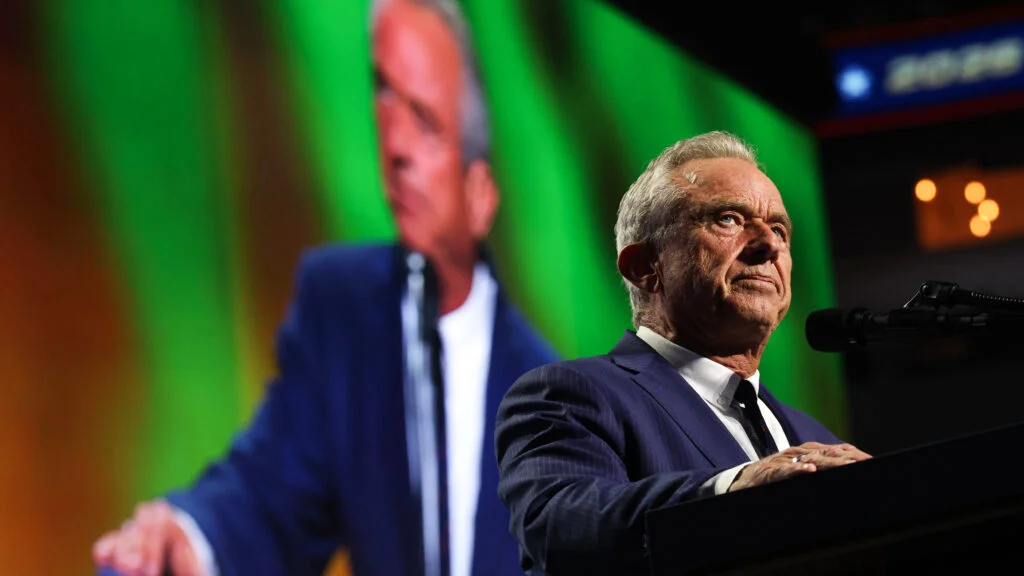
Robert F. Kennedy Jr. will speak at a Children's Health Defense conference, marking his return to the anti-vaccine organization he once led.
Resurgence of Vaccine Skepticism
In a notable return to the anti-vaccine movement, Health Secretary Robert F. Kennedy Jr. is set to deliver a keynote address at the Children’s Health Defense (CHD) conference in Washington, D.C. this week. This event marks a pivotal moment for Kennedy, who founded the group and led it for nearly a decade before stepping back to pursue his presidential campaign. His re-emergence in this space raises questions not only about public health policy but also about the broader implications of vaccine skepticism in American society.
The Role of Children’s Health Defense
CHD expressed enthusiasm for Kennedy's participation, stating in a recent email, “We couldn’t be more excited to welcome our founder back to the CHD stage.” The organization, founded on principles that challenge vaccine safety and efficacy since 2015, has gained traction in certain circles, especially among parents concerned about childhood vaccinations. The upcoming conference, located at the Grand Hyatt Washington on Thursday, marks a significant point in Kennedy’s ongoing influence, particularly as discussions surrounding vaccine policies heat up in the broader cultural context.
What many overlook is that CHD has also become a platform for various conspiracy theories related to vaccinations, claiming a range of potential health risks associated with vaccines. The dialogue sparked by CHD has entered mainstream conversations, where the once niche anti-vaccination sentiment has transformed into a sizable movement, influenced significantly by prominent figures like Kennedy. This transformation can be seen in social media discussions and community gatherings, where misinformation pervades, often stoking fear rather than promoting informed decision-making.
Influence and Legacy
Kennedy chaired CHD until December 2024—an important time during which he backed legal actions that challenged state vaccine mandates. His leadership not only elevated the group’s profile but also provided a conduit to influential political circles. During his tenure, CHD produced various campaigns that questioned not just vaccines, but broader public health initiatives, complicating the narrative around vaccine advocacy. His return could catalyze similar efforts, providing a sense of validation for those who harbor vaccine skepticism.
While Kennedy distanced himself from CHD during his presidential run, severing ties just before the Trump administration began, returning to the CHD spotlight may reignite discussions around vaccine policy in a politically charged environment. With public health paradigms still grappling with pandemic aftershocks, his influence will likely amplify discussions on vaccination, pushing certain viewpoints back into the limelight. This dynamic can be unsettling for public health advocates who work tirelessly to counter misinformation.
The Implications of Kennedy’s Return
Kennedy's presence at the conference might not just reignite past debates, but could influence future legislative and public health initiatives around vaccination. His stance has had a history of creating political ripples, similar systems typically see shifts in public perception when a figure like Kennedy revisits these contentious issues. In the past, his prominence enabled CHD to elevate correlational theories—like the discredited claim linking vaccines to autism—providing them with a semblance of legitimacy. Such narratives have not only affected vaccine uptake but have also influenced parents’ decisions, which can have dire repercussions for public health.
As he prepares for his speech at the CHD conference, it’s clear that Kennedy’s dual role as Health Secretary and anti-vaccine advocate will continue to shape the conversation around vaccines in America. This event could reaffirm his commitment to the beliefs he once championed, potentially influencing policy and public perception in the years to come. The intersection of his political career and anti-vaccination advocacy provides a unique lens through which to view public health messaging.
Political Reactions and Public Health Concerns
During his confirmation hearings, Kennedy faced significant scrutiny, particularly from Senator Bernie Sanders, who pressed him on his approval of CHD merchandise. Kennedy maintained that he supported vaccination efforts and had no real influence over the nonprofit’s products, including explicit messaging like “Unvaxxed, Unafraid” onesies. His insistence on separating his political role from CHD’s activities raises eyebrows. The contradictions in his statements reflect a complex balance between political aspirations and personal beliefs, and this is the part most people overlook—how tightly knit public health, politics, and personal ideology can be.
This tension will likely play out as he continues to navigate his role as Health Secretary while engaging with a community that has positioned itself firmly against established medical narratives. If you’re working in this space, the upcoming conference could hint at how Kennedy plans to position himself regarding vaccine policy as public health models adapt in response to shifting societal opinions.
Future Outlook
As the CHD conference approaches, observers will need to consider the long-term implications of Kennedy's remarks and the potential for renewed vigor within the anti-vaccine movement. Whether this marks the beginning of a new chapter for CHD remains to be seen, but it's clear that Kennedy’s return signifies an ongoing entrenchment of vaccine skepticism amid a polarized public discourse. The conversations born from this event will likely resonate far beyond the conference walls, influencing upcoming public health policies and community discussions about vaccination for years to come.

Discussion
Sign in to join the discussion.