Researchers document the first live bigfin squid sighting in the northeastern Pacific, adding valuable insights into this elusive species.
The Elusive Bigfin Squid: A Rare Discovery
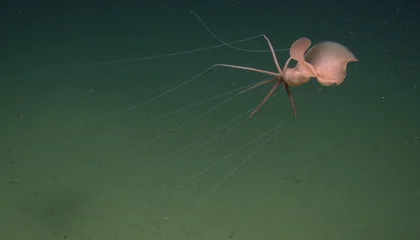
On August 7, a group of ecologists aboard the research vessel David Packard made an unexpected and significant finding: a live bigfin squid, a rare deep-sea creature, was captured on video. Olívia Soares Pereira, an ecologist with the Monterey Bay Aquarium Research Institute (MBARI), initially mistook the creature for a jellyfish as it glided through the water nearly two miles beneath the surface, approximately 80 miles southwest of Monterey, California.
First Official Sighting in the Northeastern Pacific
This milestone sighting, announced on September 2, represents the first confirmed observation of a bigfin squid from the Magnapinna genus in the northeastern Pacific. With a total of only around 70 observations or collections of this ethereal species recorded to date, the video adds critical data to our understanding of this elusive inhabitant of the deep.
Andrew DeVogelaere, an ecologist with NOAA’s Monterey Bay National Marine Sanctuary who participated in the expedition, remarked on the enthralling nature of the sighting. "These seasoned marine scientists were all of a sudden acting like kids again, and Magnapinna has that effect on people," he shared, capturing the moment's sheer excitement.
A Deep-Sea Expedition
The discovery occurred during the Seamount Hotspots expedition, a collaborative effort between MBARI and NOAA aimed at exploring the biodiversity on underwater mountains. This ten-day expedition aimed to unravel the mysteries of deep-sea ecosystems, particularly those associated with submerged geological formations like the Davidson Seamount.
Researchers were surveying a range of habitats when they recorded various data, including video footage and biological samples, which will provide further insights into the marine life that thrives in these unique environments. The seamounts are known to support rich biological communities by redirecting ocean currents, effectively enhancing nutrient availability and creating essential feeding grounds for numerous marine organisms.
Mysterious Furrows and Beaked Whales
Prior to the squid sighting, the expedition team aimed to investigate peculiar furrows on the seafloor believed to have been formed by beaked whales. These gouges, first noted in 2020, raised the researchers' curiosity due to their rarity; only a handful had been documented historically despite extensive seafloor studies. The team surmised that the whales could be foraging for cephalopods in the nutrient-rich areas near the seamount.
As part of the ongoing investigation, the team collected diverse samples and deployed underwater microphones, or hydrophones, at various locations around Davidson Seamount. These devices will monitor marine sounds for the next year, helping scientists track the activity levels of beaked whales and other marine creatures in the area.
Unveiling Bigfin Squid Behavior
The bigfin squid sighting proved to be particularly mesmerizing, displaying a typical pose observed in deep-sea squid. Drifting a few feet above the seabed, the squid's elongated body and distinctive tentacles were prominently visible on the remotely operated vehicle's (ROV) camera. Measuring around four feet in total length, the creature showcased its elongated appendages in what scientists refer to as the "elbow pose," likely utilized as a feeding strategy.
Pereira noted that this positioning allows the squid to extend its limbs without getting entangled, enabling it to passively capture prey that comes into contact with its arms and tentacles. Despite the rarity of observations, this behavior suggests adaptations that allow the bigfin squid to effectively hunt in the depths where it resides.
The Mystery Continues
With the first specimen recorded in 1883, the bigfin squid remained virtually undocumented until recently, with descriptions of its characteristics emerging only in 1998. Many details remain elusive, including the habitats and complexities of their lifecycle. Current knowledge indicates that while juvenile bigfin squid inhabit surface waters, adults can be found at extreme depths, reaching over 20,000 feet in some cases, making them the deepest known squid species.
Despite the expedition's focus on other scientific queries, the sighting reinforces the notion that ample room for discovery persists in our oceans. "Seeing one reminds us that we still have so much to learn," reflected DeVogelaere, underscoring the ongoing mysteries of deep-sea life.
In Perspective
The unexpected appearance of the bigfin squid serves as a reminder of the wonders lurking in the depths of our oceans. As researchers continue to explore the diverse ecosystems surrounding underwater mountains, each new find contributes to our growing understanding of marine biodiversity and the fragile balance that sustains it. The excitement shared by scientists involved in this discovery highlights the importance of exploration and continuous learning in marine science.


Discussion
Sign in to join the discussion.