Qesser Zuhrah testified that a drone shipment accelerated the 2024 action. Five defendants deny charges over the break-in at Elbit’s Filton factory.
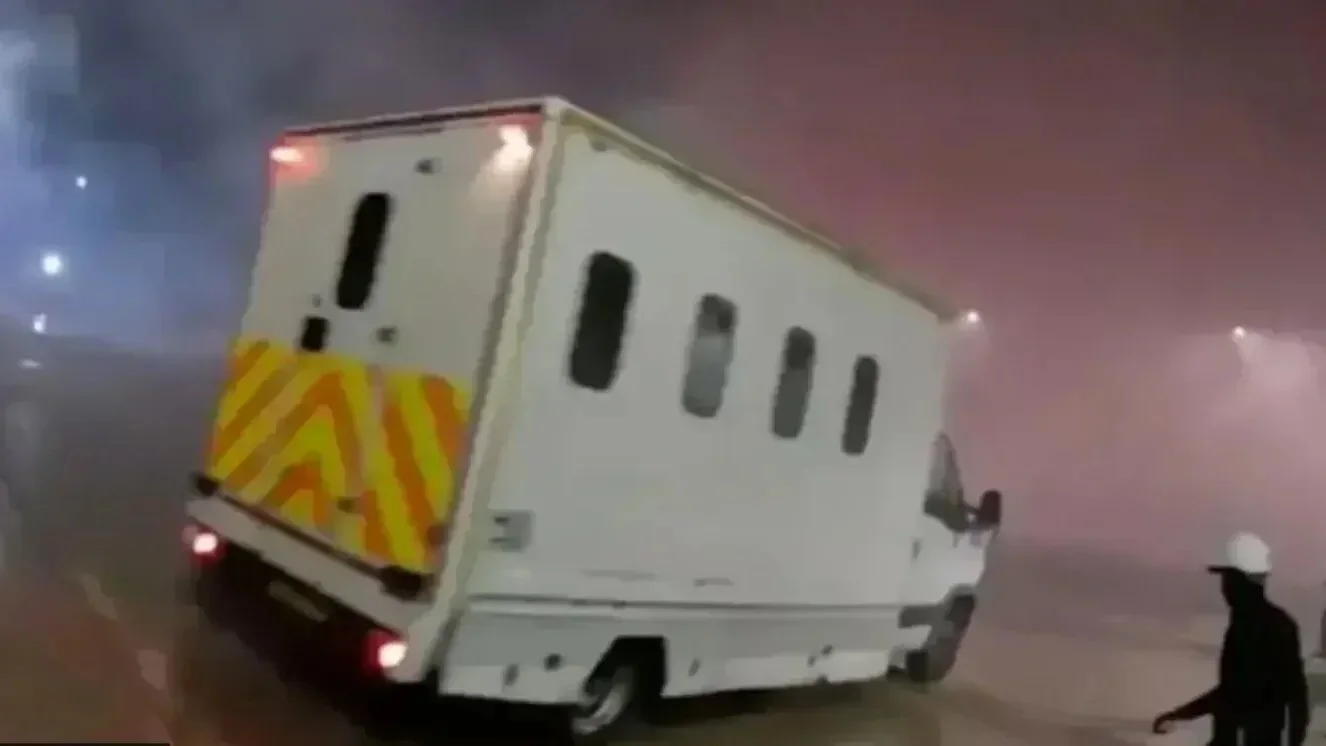
The court case over a 2024 break-in at an Elbit Systems factory near Bristol is turning on two competing accounts: prosecutors say activists used threats and violence to enable a group to smash into the site, while defendant Qesser Zuhrah says her role was to create a distraction and leave. Jurors also heard that the action was accelerated after activists learned the factory was due to send drones to Israel.
The factory, in Filton, was targeted on 6 August 2024. Five people — Zuhrah, Zahra Farooque, Kamran Ahmed, Heba Muraisi and Liam Mullany — face charges of criminal damage and violent disorder. All deny the charges. Their trial is being heard at Woolwich Crown Court in London.
Israeli-owned Elbit Systems is at the centre of Zuhrah’s explanation for why the group acted. She told jurors that she first heard of the Filton site after other activists raised concerns about what she described as an “immediate shipment of weapons”. That information, she said, meant the plan was “speedtracked”.
Zuhrah was 19 and a student at the time. She told the court she believed Elbit supplied “85 percent of Israel’s land-based weaponry” and drones found at its factories. She said she believed those drones could be used in Gaza, and argued that Elbit itself said its equipment was battle-tested on Palestinians. Those statements were her account to the jury.

Two groups, two accounts of the plan
Prosecutors describe the activists as two teams. The “black team”, they allege, wore black jumpsuits and set out to occupy security staff’s attention. A second group, called the “red team”, was to enter the factory in a prison van, ram the loading bay shutters and damage weapons and other equipment.
The prosecution says the black team sought to “overwhelm” guards by threatening or intimidating them, and, if necessary, assaulting them. It alleges they threw fireworks and carried items including whips, hammers and large kebab skewers. The five defendants reject the charges, and the jury has heard Zuhrah’s own description of what she understood her role to be.
She said the black team was meant to distract security, use smoke to obscure the scene, and set off fireworks to cover the sound of the van hitting the factory. She described the aim as helping the red team get inside, then leaving as quickly as possible.
Zuhrah said she had been asked to buy some of the equipment, including fireworks and flares. The group also had axes, crowbars and hammers, she told the court, as backup in case the van failed to break through the shutters. Jurors heard that one of her messages before the action referred to the items as “weapons”.
She said she used “weapons” interchangeably with “equipment” and “tools”, explaining that the language came from repeatedly discussing weapons factories. “They were weapons insofar as it’s what we use to destroy actual weapons inside the factory,” she told the jury.
The skewers, she said, were intended as a contingency: if the van failed to get through, they could puncture its tyres and leave it blocking the loading bay. “If that’s parked outside the factory, there's no weapons going anywhere for a good amount of time,” she said.
What Zuhrah says happened at the site
Asked by her lawyer, Garry Green KC, whether the plan involved violence or threats against security guards or anyone else, Zuhrah said: “Absolutely not.” She said that at previous actions the group would run away and make turns to lose security, rather than remain to provoke or initiate a confrontation. She also described that approach as naive, saying Elbit’s security staff were ex-military and “very smart”.
According to Zuhrah’s testimony, the van crossed the perimeter fence and the black team followed on foot while the red team’s vehicle moved towards the shuttered loading bay. A member of the black team used an angle grinder on the shutters to weaken them, she said. The others began lighting fireworks and flares to make smoke and conceal the van and the people nearby.
Zuhrah said she lit flares and threw them into an open area, and had not seen security staff at that point. After the van broke through the shutters, she said, the black team started towards the perimeter fence to leave. Then someone shouted that a team member was on the ground.
She told jurors she saw two legs disappear behind the factory, “as if it was a lifeless body being dragged”. She said two guards were pulling the person backwards by the throat. Zuhrah then lit and fired a firework, saying she thought it might make people separate and stop what was happening. She denied aiming it at the guards and said she fired into the open space ahead of her because she did not want to burn anyone.

“Everything was moving very fast,” Zuhrah said. She added that she did not know who was where, and that the guards were not in front of her when she fired. She also recalled seeing a guard swinging an axe and a whip and said she feared he might use them against the activists.
Her account included an abrupt shift from the group’s plan to leave. “This was not part of the plan, we were meant to leave. I had exams I had to get home and do,” she said. She testified that she ran towards the fence with the others but could not climb over it. As she tried to get across using a pole, she said, a guard whipped her.
Questions about the risk of confrontation
Prosecutor Deanna Heer KC challenged Zuhrah about messages she had sent before the raid. In one, she told a prospective participant that some security staff were ex-military and that an encounter could become “literally fight or flight”. Zuhrah said she was checking that the person would stay calm and not respond by fighting or fleeing.
Heer also asked about a message concerning an activist whose brother was reluctant to take part, and whether the hesitation reflected concern about violence. Zuhrah said violence was not being discussed; she said the concern was the risk of arrest.
The testimony leaves jurors to weigh Zuhrah’s stated intentions against the prosecution’s account of how the teams operated, the equipment they brought and what happened when security staff encountered them. The alleged drone shipment supplies the motive she described for speeding up the action, while the trial’s central dispute remains what the defendants planned and did during the break-in.

The trial continues.


Discussion
Sign in to join the discussion.