From salmon runs and coastal wetlands to mountain hikes, Anchorage puts trails, wildlife and big views within easy reach of the city.
Anchorage’s outdoor appeal comes from how much variety fits around the city. A short walk can lead to a salmon stream; a longer ride follows the coast past marshes and spruce forest. Farther east, mountain trails climb into Chugach State Park. For visitors and residents alike, the practical draw is access: wildlife viewing, hiking and winter recreation can all fit into a day without leaving the Anchorage area.
The terrain shifts from coastal plain to alpine slopes, bringing different habitats close together. That range shapes what you can see and do, from watching birds in a wetland to looking for belugas along Cook Inlet. These six places offer distinct ways to experience that mix, with options for a quick stop, a long trail outing or a steep climb.
Follow a salmon river through the city
Ship Creek
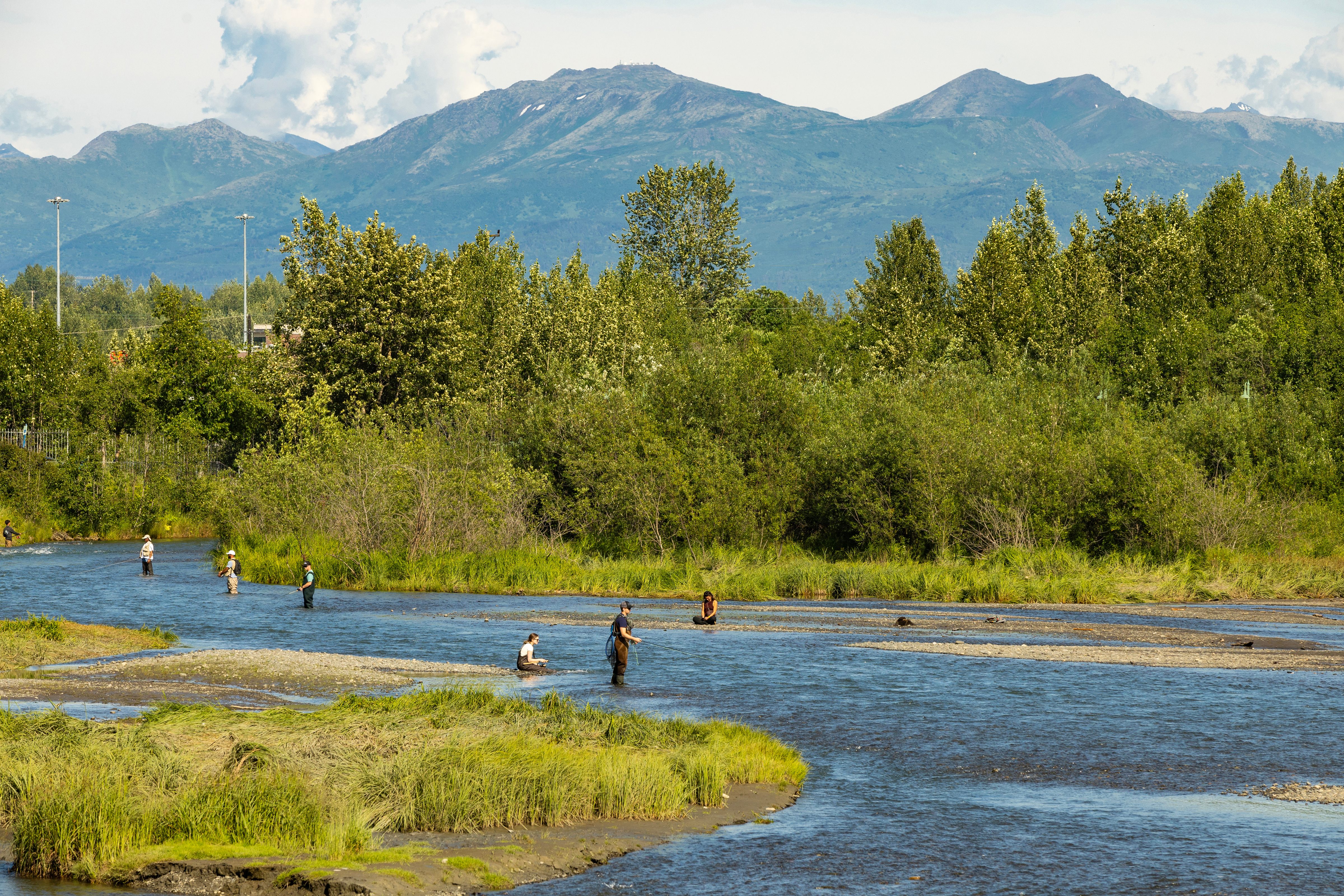
Ship Creek runs 25 miles from the Chugach Mountains to the Port of Alaska on Anchorage’s northern edge. Near its mouth, ocean-fed water and broad mud and sedge flats support a substantial annual run of coho and Chinook salmon. The area is also known for sport fishing and bird watching. Ship Creek is described as the world’s only urban Chinook fishery, a distinction that makes the river an unusually direct meeting point between city life and a major salmon run.
The 5.8-mile Ship Creek Trail follows the water, with summer bringing the chance to see salmon moving upstream to spawn. Ship Creek Overlook Park and the pedestrian bridge near King’s Landing are useful stops for views of the river and surrounding mountains. Anglers may be trying for fish weighing 20 to 30 pounds. Along the route, the statue of Dena’ina matriarch Grandma Olga offers a cultural landmark: she holds fish filets, with a bronze drying rack behind her.
A coastal route with several ways in
Tony Knowles Coastal Trail
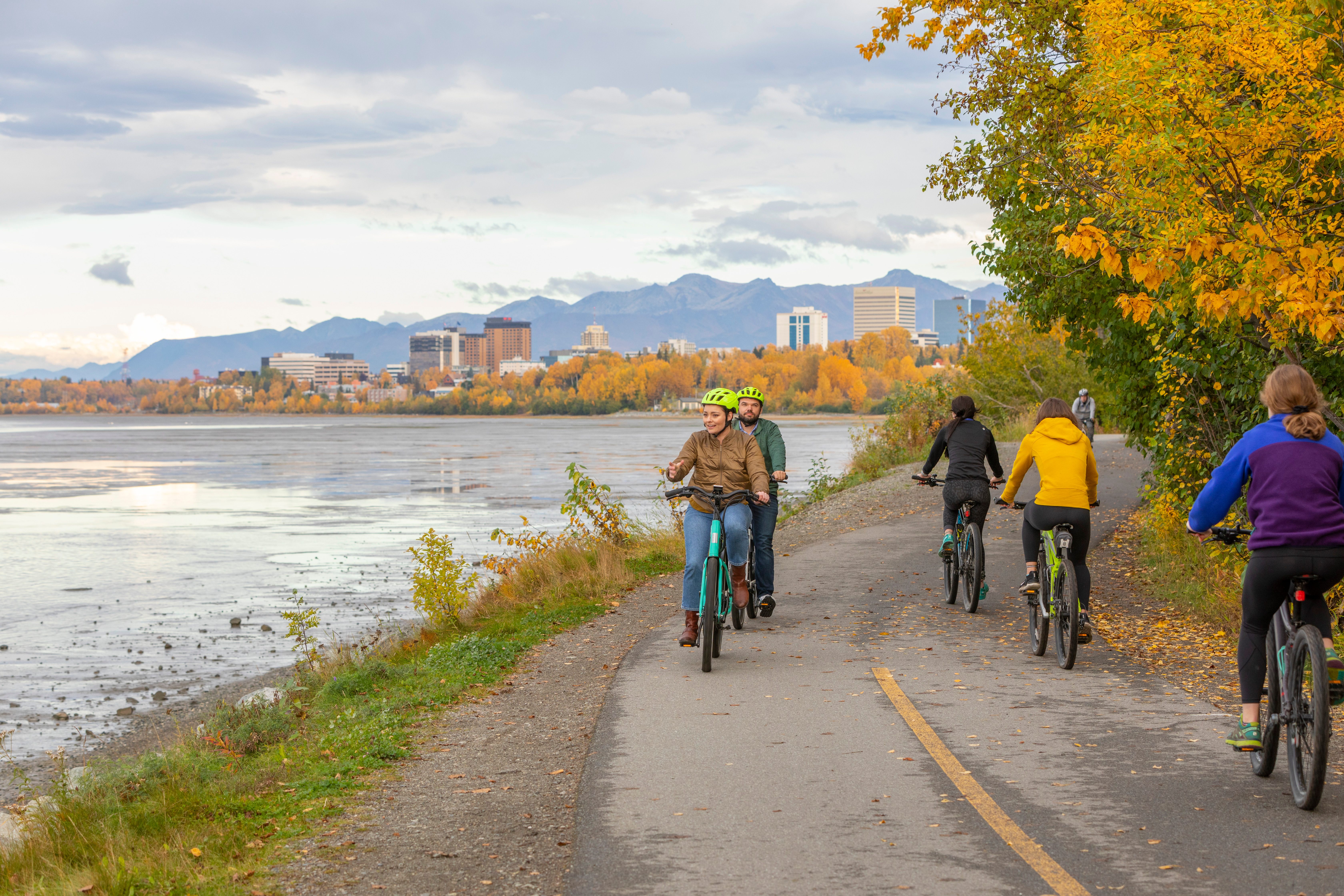
This 11-mile trail links downtown Anchorage with the Kincaid Park Chalet. Because it has multiple access points, walkers can choose a short section instead of committing to the full route. Bikes work well here, and cross-country skiing is an option in winter. The path offers changing views of downtown, Mount McKinley (Denali), Mount Susitna and Fire Island, with especially broad panoramas from the hills near Point Woronzof.
The route’s habitats are part of its appeal. It crosses marsh, muskeg—acidic, waterlogged peatland—and thick spruce forest, so the surroundings change as the trail unfolds. Moose are often seen on or near the path during winter. Sandhill cranes, ermine and bald eagles also inhabit the area, while belugas can sometimes be spotted in Cook Inlet. The trail works as both a long-distance outing and a flexible way to sample Anchorage’s coastal edge.
Make room for a full day outdoors
Kincaid Park
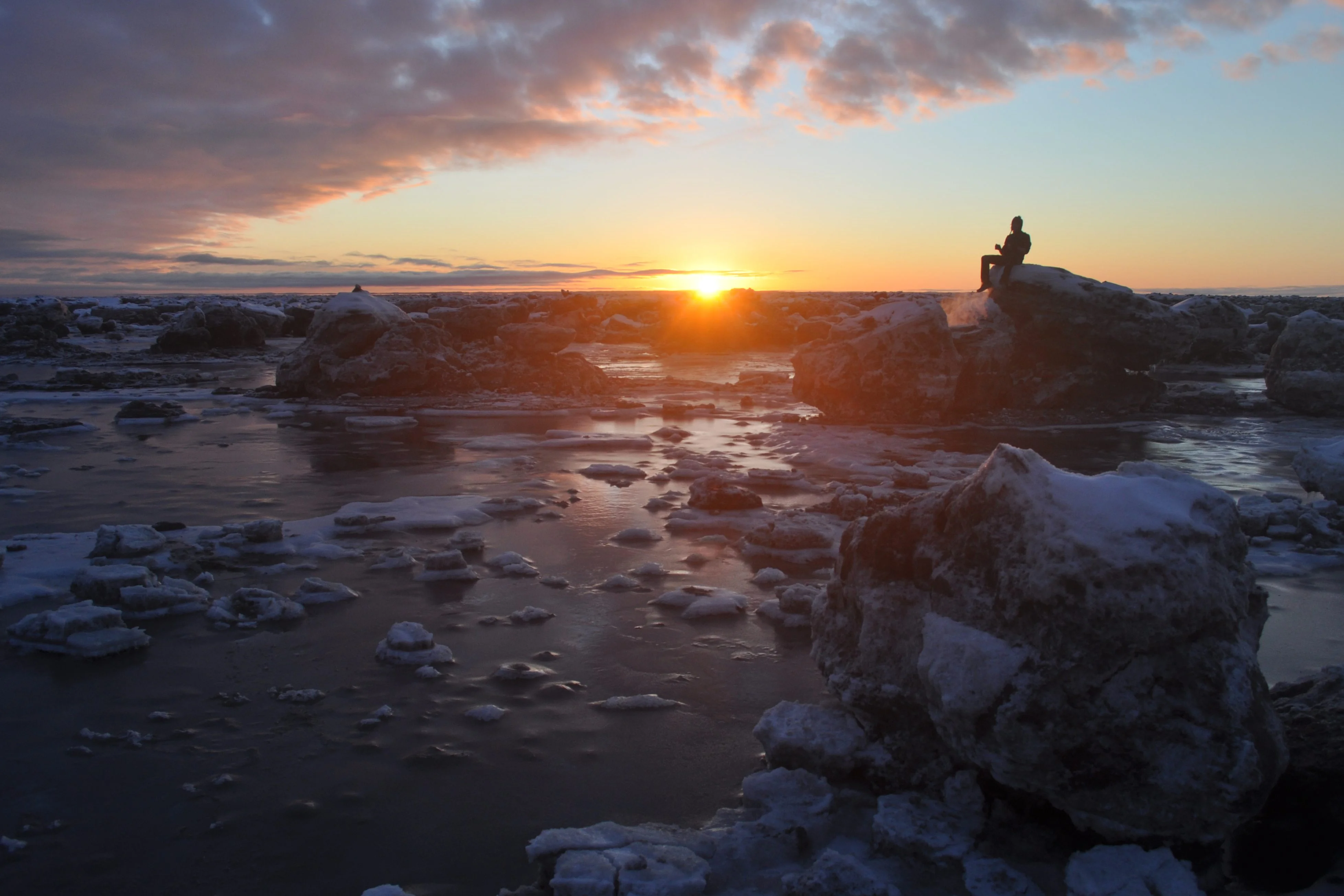
Kincaid Park covers 1,400 acres on land once used as a Cold War missile base. Its 40 miles of cleared trails support hiking and winter activities, including cross-country skiing and sledding, with routes for different skill levels. The range of facilities makes the park more than a walking destination: visitors can use an archery range, paddle on Little Campbell Lake, play an 18-hole disc golf course or visit one of seven soccer fields. There’s also a motocross course and a large sand dune overlooking Cook Inlet and the Kenai Peninsula.
That mix makes Kincaid a practical choice for groups with different interests or for anyone who wants to build a full day around one location. The park’s scale offers room to roam, while its winter trails keep it active beyond the hiking season.

A boardwalk through wetland habitat
Potter Marsh
About 15 minutes south of downtown, Potter Marsh sits within the Anchorage Coastal Wildlife Refuge. A half-mile boardwalk crosses channels and sedges, opening views across the wetland toward the Turnagain Arm. Muskrats move through the water, and moose sometimes wade into the marsh. More than 130 bird species have been recorded here, including Arctic terns, Canada geese, trumpeter swans, red-necked grebes and northern pintails.
Timing changes what the marsh offers. April is a strong month for seeing migrating birds; by midsummer, three salmon species can be seen schooling below the boardwalk. Information panels and telescopes support a self-guided visit, giving visitors a way to take in the habitat at their own pace. Potter Marsh is also visible from the Alaska Railroad and the Seward Highway, though the boardwalk allows a closer look at the channels and wildlife.
Look for whales and the incoming tide
Beluga Point
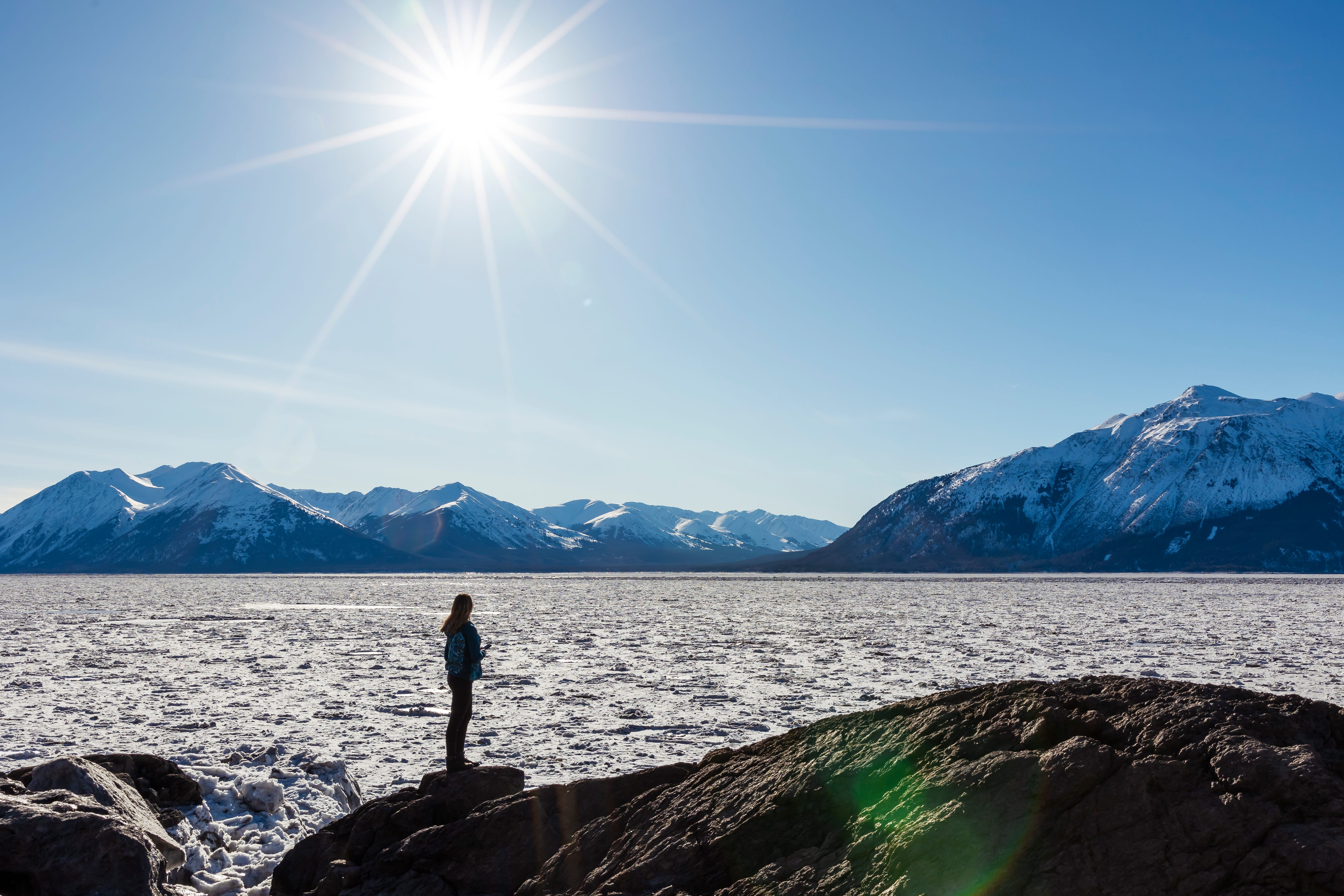
Beluga Point is a rocky lookout along the Seward Highway, named for the whales that come into the inlet to feed on salmon. Belugas are most often spotted here in July and August. Even outside those months, the promontory offers a 180-degree view of the Chugach Mountains and makes a worthwhile place to pause on the drive.
The Turnagain Arm bore tide adds another reason to watch the water. Incoming tides push a dramatic wave through the inlet nearly every day. The wave can reach 6 to 10 feet, and its relatively slow movement draws surfers from around the world. The combination of a broad mountain view and a visible tidal event gives Beluga Point a different character from Anchorage’s trail and marsh stops.
Climb above the city
Flattop Mountain
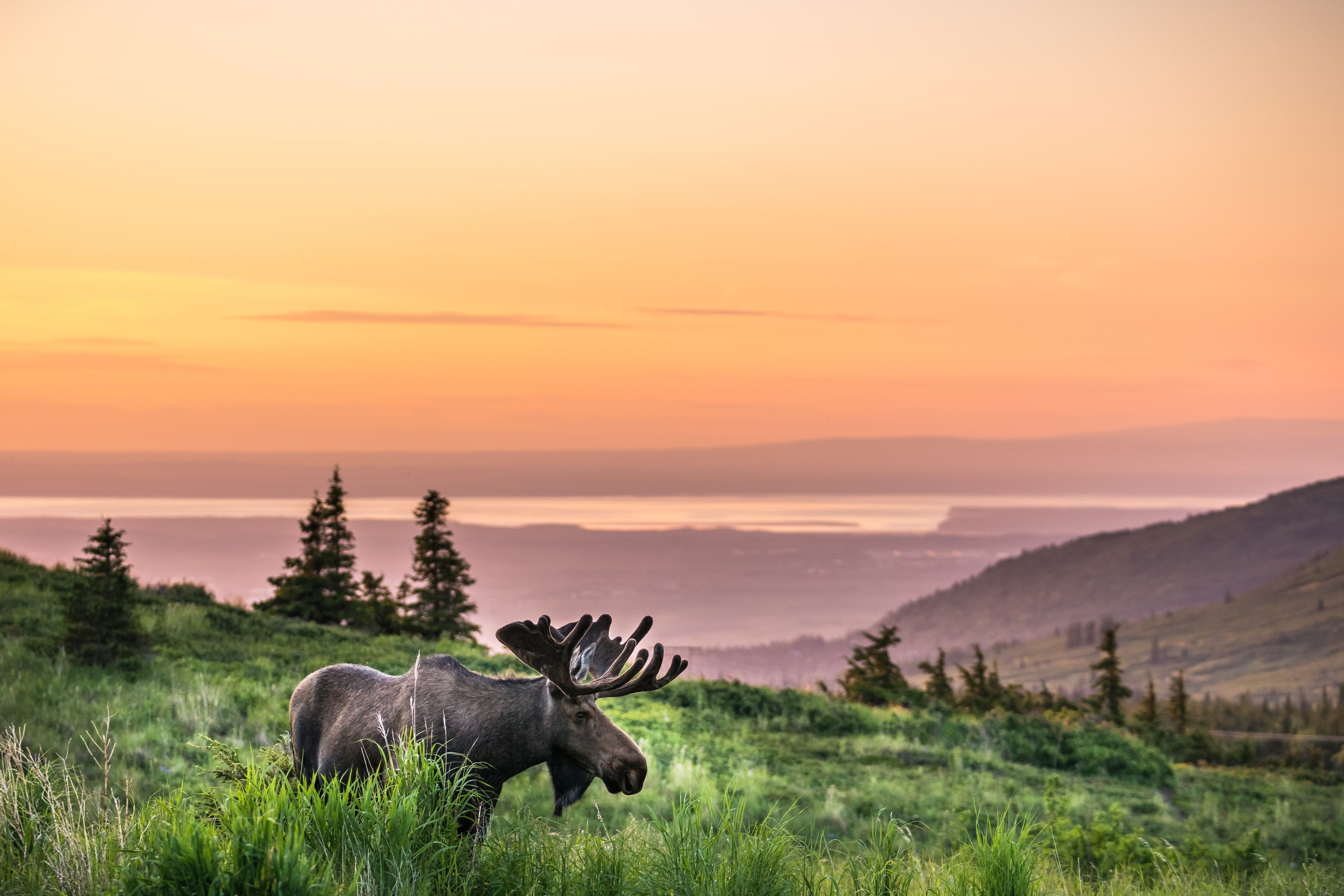
For a more demanding outing, Flattop Mountain rises just east of Anchorage in Chugach State Park. It’s Alaska’s most-climbed mountain, and the Glen Alps Trailhead is accessible by a shuttle from downtown. From the trail parking lot, the hike to the top of the plateau covers 1.5 miles and gains 1,500 feet in elevation. Clear days can bring views of the Anchorage skyline, Denali, Mount Foraker and Mount Spurr.
A further trail leads from the plateau to the summit. The steep climb is better suited to experienced hikers, so the plateau itself remains a natural turnaround point for many visitors. In summer and fall, trails also draw berry pickers looking for wild blueberries, crowberries and lowbush cranberries, particularly along Powerline Pass. Paragliders use the level summit and its open approaches as a launch area.
Together, these destinations show why Anchorage’s outdoor access is more than a collection of nearby parks. The city sits beside salmon water, coastal wetlands, forest trails and alpine terrain, with each setting offering a different way to spend time outside. Choose a short boardwalk or a demanding ascent, and the next outing can begin close to town.


Discussion
Sign in to join the discussion.