Founded in 1999, Laguna Pueblo’s Indian Arts Center pairs locally made pottery, textiles and jewelry with traditional fry bread and Indian tacos.
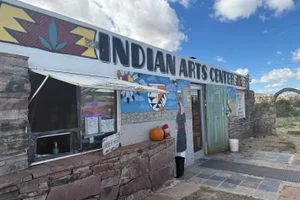
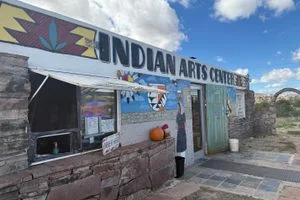
Just outside Albuquerque, the Indian Arts Center brings two kinds of welcome together: handmade work by Laguna Pueblo artists and food served to travelers along historic Route 66. Visitors can browse pottery, textiles, jewelry and other crafts, then ask owner Dominick Quiroz for an Indian taco or fry bread with sweet toppings. That combination gives the stop a character distinct from a standard roadside food counter or souvenir shop. It connects objects made for people to take home with food meant to be eaten there.
The center’s setting matters. Route 66 has long carried travelers through communities as well as between destinations, and its roadside businesses often serve as brief points of contact with local places. A stop like this can offer more than a break from driving, provided visitors understand that the crafts and food are part of a living community rather than scenery arranged for a passing audience. The details available here are concise, but they point to a business built around both cultural sharing and the practical appeal of a warm meal.
A center rooted in Laguna Pueblo culture
Quiroz’s father opened the center in 1999 to preserve and share Laguna Pueblo traditions. That purpose gives the business a longer horizon than a roadside stop designed only to catch passing traffic. It also frames the shop’s range of goods: pottery, textiles and jewelry aren’t interchangeable souvenirs, but distinct forms of handmade work associated with artists and their community.
The community’s own name is Kawaika, meaning “lake people.” “Laguna,” Spanish for “little lake,” came later. Those names offer a compact reminder that a place can be known through more than one language and history. For visitors, learning the distinction is a small but useful step toward understanding the community on its own terms, instead of treating the familiar name on a map as the whole story.
That context changes how a quick visit can feel. A person looking at pottery or textiles can ask who made a piece and what materials or techniques are involved, if that information is available. The center’s stated purpose is to introduce Laguna Pueblo traditions to visitors, but introduction works best as an exchange: the visitor looks, listens and buys with attention, while the artists’ work remains connected to the people who made it. Not a display detached from its makers.
Craft and food share the same welcome
Pairing craft with food is a practical choice, and it can shape a visitor’s experience more than a brochure would. Fry bread and Indian tacos give travelers a reason to pause; the art gives them something to consider beyond the meal. Quiroz’s offer of fry bread with sweet toppings also suggests a straightforward invitation to sit with a familiar roadside appetite while encountering work rooted in Laguna Pueblo culture.
The center doesn’t need to turn that encounter into a formal lesson. A meal can make a place approachable, and browsing can leave room for questions that might not arise during a quick photo stop. That said, the presence of Indigenous food or art shouldn’t be treated as a complete account of a culture. The source describes one center, one owner and a selection of handmade work; it doesn’t claim to represent every Laguna Pueblo artist or tradition.
This is more significant than it looks. Roadside commerce often depends on quick recognition: a sign, a snack, a place to stretch. Here, those familiar cues sit alongside a stated commitment to cultural preservation. For a visitor, the combination makes the stop accessible without making its purpose merely transactional. If you’re working in this space, that balance is the hard part: attracting people passing through while giving the local work enough context to be seen as more than a souvenir.
Recognition and the Route 66 approach
In 2023, the center received a Certificate of Special Congressional Recognition for its work preserving Laguna Pueblo culture and introducing it to visitors. The recognition gives an outside acknowledgment to the purpose Quiroz’s father established when he opened the center. It’s a meaningful signal of public appreciation, though the source doesn’t describe the criteria or process behind the certificate. The award can mark the work; the daily effort of welcoming visitors and sharing traditions is what sustains it.
Finding the center is part of its roadside identity. Route 66 travelers can follow the “FRY BREAD” signs near Exit 114, around the roundabout, to the welcome flag and signs for local pottery and fry bread. Those directions are concrete and easy to follow, with the food sign acting as a guide for drivers who may have only a short window to decide where to stop. The sequence matters: visitors are directed toward a welcome, then toward the center’s crafts and food.
For a business outside a major city, visibility can depend on signs that make a stop legible from the road. But the signs here do more than point to a menu item. They lead toward a place that presents local pottery and fry bread together, making the destination’s cultural and commercial purposes visible before a visitor arrives. (And this is the part most people overlook.) The route to a cultural center is also part of how travelers encounter it: as a detour, a destination, or a brief pause along a much longer journey.
What the stop offers visitors
The Indian Arts Center’s appeal rests on a simple proposition: visitors can eat and browse in the same place, just outside Albuquerque and along a historic travel route. Its deeper value depends on how that invitation is received. Buying a piece of handmade work can support the person who made it, while asking a question can turn a quick look into a more attentive visit. Neither act requires visitors to arrive with expert knowledge.
There’s a limit to what a short roadside stop can explain. One visit won’t make a traveler an authority on Laguna Pueblo history, and a collection of crafts can’t stand in for the full range of a community’s experience. Yet a place can still be useful precisely because it offers an opening rather than a complete account. The center’s founding purpose, its naming context and its welcome to visitors give that opening some substance.
For travelers following Route 66, the center offers a reason to slow down and look beyond the highway itself. The food may draw people in; the handmade work and the story of Kawaika can give them something to carry away besides a meal. That’s a modest but worthwhile role for a roadside stop: connecting passing visitors with local makers and traditions, while leaving room for the encounter to be more than a transaction.

Discussion
Sign in to join the discussion.