Justice William Cushing's gravesite in Scituate, Massachusetts, offers a unique homage to a key figure in American history, nestled in a tranquil state park.
A Hidden Gem in Scituate
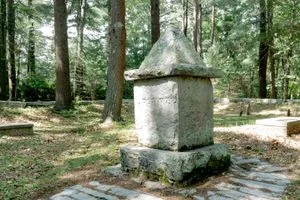
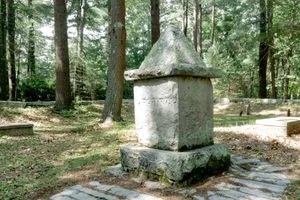
Nestled just south of Scituate, Massachusetts, about a mile and a half from the Atlantic Ocean, lies the gravesite of Justice William Cushing. This secluded location is tucked away at the end of a residential street within Massachusetts's second-smallest state park. Despite its proximity to the scenic coastline, the entrance can easily be missed. If you're working in this space, you'll find that places like this often require a bit of determination to discover. However, those who venture here are rewarded with a serene forest setting and a tranquil view of a salt marsh, making it an ideal spot to reflect on the contributions of one of the nation’s founders. It’s the kind of site that invites you to pause and consider the weight of history, hidden from the whirlwind of modern life.
Justice Cushing's Significant Contributions
Before earning his place on the Supreme Court, William Cushing played a pivotal role in shaping American law and society. He presided over the groundbreaking case Commonwealth v. Jennison in 1783, which declared slavery incompatible with the Massachusetts Constitution, positioning the state as a leader in abolition. Cushing's decision wasn't just a legal ruling; it was a societal hallmark that challenged the institutions of his time, reflecting broader Enlightenment ideas that were reshaping the American ethos. Cushing also played a vital role during Shay's Rebellion, ensuring the courts remained operational amidst the unrest. This wasn't merely an administrative task; it represented his commitment to upholding law and order during a period rife with instability and dissent. As vice-president of Massachusetts’s convention, he oversaw the critical ratification of the U.S. Constitution, a testimony to his influence during a formative period in American governance. His legacy also includes being the last U.S. judge to don a wig in court, an interesting nod to the traditional legal attire of earlier days.
Part of the Founding Judiciary
As one of George Washington's first appointees to the federal judiciary, Cushing's early days on the Supreme Court involved significant travel and circuit riding to oversee lower courts. His commitment to establishing a functioning judicial system in the early republic cannot be understated. His most notable judicial opinion came during Chisholm v. Georgia, which marked a key moment in establishing the Court as an authoritative institution. Interestingly, he was also the first Supreme Court Justice to administer the oath of office to a sitting president, conducting the ceremony for Washington's second term. This established a lasting tradition that underscores the need for continuity and stability in American governance, a principle that remains relevant in today's political climate.
The Journey to Honor Cushing's Memory
To reach the memorial, travel west on Neal Gate St. and turn onto Judge Cushing Rd., which is signposted as "Cushing Park Dr." This path, adorned with stonework gates and plaques commemorating Cushing's achievements, leads to a cul-de-sac at the top of the hill. Visitors often overlook these subtle signs, but they’re a prelude to the honor this location upholds. A sign marks the entrance to Cushing Memorial State Park and the trail to his grave. After a brief walk along the trail, visitors will find the simple yet significant grave, a tribute to a largely unsung hero of American history. The lack of ostentation here is striking. In a world bustling with commemoration, this quiet spot remains "secluded in plain sight," offering a unique perspective on a foundational figure that few have the chance to visit. It's a reminder that not all historical figures receive the monuments they deserve, and sometimes, their greatest impact lies in the unmarked corners of our society.
Implications and Future Outlook
Justice William Cushing's legacy prompts a broader conversation about how history remembers its figures. His contributions shaped critical legal precedents, yet his story remains largely untold in many discourse circles. As we navigate modern discussions about justice and equality, Cushing’s life offers valuable lessons on the responsibilities that come with power and the unpredictable tides of public sentiment. This raises a pressing question: How will society choose to honor the unsung heroes of our past? The journey to Cushing’s grave suggests that a quiet remembrance is often more poignant than a grandiose monument.
That said, this site could serve a larger purpose. Community initiatives aimed at increasing visitor awareness could transform Cushing's memorial into an educational hub, encouraging deeper engagement with American history. Imagine guided tours that address not just Cushing’s life but the social dynamics of his time. Exploring his contradictions and achievements could foster a more nuanced understanding of America’s founding principles.
What this means for you as a contemporary observer is that the stories we choose to highlight—or ignore—define our current values. The simple act of visiting Cushing's grave may ignite discussions about justice that resonate even today. It might inspire future generations to reflect critically on how they honor both the achievements and missteps of their predecessors.


Discussion
Sign in to join the discussion.