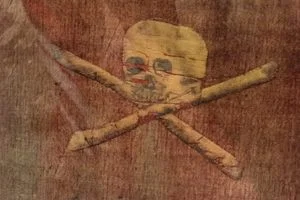
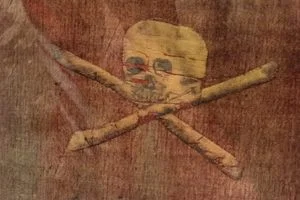
A unique Jolly Roger from 1790, captured by Admiral Richard Curry, offers insight into pirate signaling and history at the National Museum of the Royal Navy.
The Historical Significance of the Jolly Roger
The National Museum of the Royal Navy in Portsmouth is showcasing a remarkable artifact: a Jolly Roger captured from pirates in 1790 by Admiral Richard Curry. This flag is more than just a piece of fabric; it tells a story of maritime conflict and the psychological tactics pirates employed at sea. Surviving examples of pirate flags are extremely rare, with most having been discarded after voyages due to their inexpensive and ephemeral nature. As a result, the Jolly Roger in Portsmouth stands out not only as a relic of a bygone era but also as a significant piece of maritime history.
Unlike other artifacts that might be preserved due to their grandeur or artistic merit, the history of pirate flags often hinges on their mundane nature—practical items that were meant to send a message. Most pirate flags were deemed disposable, but the few that have survived provide invaluable insight into the lives of those who roamed the high seas. Today, only a small number of historically accurate pirate flags are recognized globally. This Portsmouth flag holds a special place in that limited collection, and it's significant for what it reveals about the identity and practices of pirates of the late 18th century.
The Language of the Sea: Pirates and Their Flags
Insights into pirate flag design largely derive from secondary sources, including court documents and Captain Charles Johnson's 1724 work, A General History of the Pyrates. This literary contribution laid the groundwork for our understanding of piracy, but it also highlights the limitations of historical scholarship on the subject. The flag captured by Admiral Curry stands as one of the few primary artifacts that demonstrate how pirates communicated their intentions while instilling fear at sea. Rather than being merely decorative, these flags were instruments of psychological warfare that conveyed threats in a language understood by sailors across the maritime world.
The Jolly Roger was emblematic of piracy itself, serving as a warning to merchant ships. Its black background with a white skull and crossbones is so recognizable that one might overlook its origins. However, common perceptions often fall short. Early iterations of the Jolly Roger were typically dyed blood red—a stark choice that communicated a much grimmer message to its victims. This choice was a deliberate tactic to convey a message of no mercy—intimating that surrender would lead to immediate execution instead of capture. Understanding this context adds layers to the interpretation of what many consider a mere symbol of rebellion or freedom.
The Dual Legacy of the Jolly Roger
The skull-and-crossbones emblem itself has bureaucratic roots, originally employed in ships' logs to denote a death on board. Here’s where things get interesting: the Jolly Roger's transformation from a flag of terror to a symbol of camaraderie in naval lore illustrates the complexities of maritime culture. During and after World War I, Royal Navy submariners adopted the flag, transforming an insult from Admiral Sir Arthur Wilson regarding submarine warfare into a point of pride. They routinely stitched symbols onto their flags to commemorate successful missions, demonstrating how this once-feared symbol found a new life in the annals of naval history.
Even today, the Jolly Roger continues to evoke a mix of admiration and condemnation. While it may embody the lawlessness of piracy, it also speaks to the romanticized view that society often holds regarding pirates. This duality ensures its continued relevance, as the flag draws interest from historians, enthusiasts, and the general public alike—each group interpreting its significance through different lenses.
Implications and Future Outlook
What this means for you, whether you're a history buff or a casual observer, is that the Jolly Roger represents more than just a relic of lawlessness; it’s a key to understanding a complex social fabric interwoven with fear, pride, and maritime culture. As maritime museums like the National Museum of the Royal Navy continue to curate such artifacts, there's a growing opportunity for public engagement. This not only revives interest in maritime history but also encourages critical discussion about the ways in which symbols can shift in meaning over time.
The continued examination of artifacts like Admiral Curry’s Jolly Roger may even prompt scholars to look deeper into how maritime societies communicated fear and power. These discussions can bridge gaps across disciplines, involving historians, psychologists, and cultural scholars in a multifaceted conversation about the impact of symbols on societal behavior. In an era where historical revisionism often clouds the narrative, preserving and understanding these artifacts becomes ever more important.
Plus, as popular culture continues to romanticize piracy—think “Pirates of the Caribbean”—the legacy of the Jolly Roger is likely to evolve. Will future generations see it purely as a novelty, or will its historical implications stir a deeper understanding of maritime history? No one can predict the outcome, but the conversation around this flag is far from over.


Discussion
Sign in to join the discussion.