Finnieston's European Ash tree, recently acclaimed as the UK's Tree of the Year, has a fascinating origin and storied resilience through decades.
Finnieston's Iconic Ash Tree
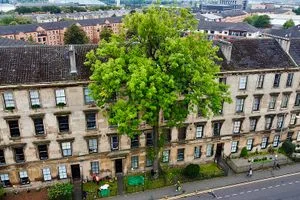
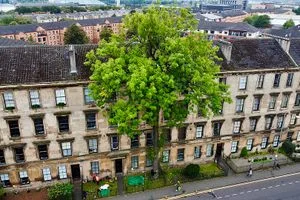
In the lively district of Finnieston, Glasgow, an extraordinary European Ash tree (Fraxinus excelsior) commands attention along Argyle Street, situated prominently in front of a row of tenement flats. Towering at more than 82 feet (approximately 25 meters), this tree is a remarkable presence within an urban setting. Its height and solitary nature transform it into more than just a tree; it's a landmark deeply woven into the fabric of the community. But what makes this tree so special goes far beyond its physical attributes.
The significance of the Ash lies in its integration into the local culture. The tree isn’t merely a backdrop to the everyday life of Finnieston residents; it has become a cultural icon representing resilience, history, and community spirit. In a city where rapid urban development often overlooks the natural environment, the tree stands as a reminder of what once was, inviting people to pause and reflect on the past. So, if you're strolling through Finnieston, don't just glance at it. It warrants your attention.
A Celebration of Natural Heritage
This remarkable tree recently captured widespread attention when it was nominated for the Woodland Trust's "UK Tree of the Year" for 2025. Triumphantly, it clinched the title, symbolizing a collective appreciation for trees within the community. The Woodland Trust, established in the early 1970s, is a conservation charity committed to protecting the UK’s trees and woodlands. Their initiative empowers locals to engage actively with their natural surroundings by voting for trees they consider worthy of recognition.
The celebrations didn’t stop at the national level; following its victory, the Argyle Ash went on to represent the UK in Europe’s “Tree of the Year” contest in 2026. While it finished in 12th place, the participation itself highlights the growing enthusiasm for environmental stewardship, even in a competitive arena. The fact that a single tree can unite public sentiment speaks volumes about the role trees play in our emotional landscape. For many residents, supporting the tree isn’t solely about it being a "winner"; it’s about their connection to history and the environment.
The Tree's Enigmatic Origin
The backstory of this Ash tree is itself a compelling narrative, one that might feel at home in a fairy tale. In the mid-1800s, a family returning from abroad inadvertently introduced primrose roots into their garden. Among those roots was a sapling that would grow up to be the magnificent Ash tree we see today. Against all odds, the conditions provided by the neighboring tenement flats—sheltering it from harsh winds and affording it warmth—allowed this unlicensed transplant to thrive. This whimsical origin story lends an air of mystique to the tree, making it not just a living organism, but a testament to serendipity and chance.
It’s fascinating how a seemingly mundane action—bringing home garden cuttings—resulted in a tree that became emblematic of a community. People often overlook how such histories shape local identities, but here, the tale enriches our understanding of community bonds. And this is the part most people overlook: every tree has a story that connects it deeper to human history than its mere existence suggests.
Resilience Through Adversity
Interestingly, this Ash has exhibited striking durability, withstanding not only the whims of nature—harsh weather conditions and infestations of ash dieback fungus—but also the devastation of World War II bombings. Over the years, various redevelopment efforts in Finnieston have posed threats to its existence, yet the tree has persisted. In 1980, it became the first tree in Glasgow to receive a protective order, marking a significant moment in its story and solidifying its status as a cherished asset to the city. This designation reflects a shift in priorities—moving from mere urban expansion to a recognition of heritage and environmental importance.
The legend surrounding the tree doesn’t stop there. An amusing incident involved a cat and the local fire brigade, which took two full days to rescue the feline from the Ash's branches. This quirky addition to the tree’s life story only deepens its character and makes it memorable for residents and visitors alike. The story serves as a reminder that even in a bustling urban setting, there’s room for both humor and natural beauty, ensuring that the Ash tree remains a cherished part of community life.
Implications and Future Outlook
The Argyle Ash tree, with its remarkable backstory and public recognition, prompts one to consider the broader implications of urban green spaces. In an age where urbanization increasingly encroaches on natural habitats, the tree symbolizes a hopeful trend toward conservation and community engagement. Its recognition as a tree of the year has rallied residents around a common cause, illustrating how something as simple as a tree can inspire civic pride.
As cities continue to grow, the struggle between development and preservation intensifies. What this means for you, whether you're an urban planner or simply a concerned citizen, is clear: the Argyle Ash’s story serves as a model for integration of nature into urban life. It poses a challenge—how to balance the needs for development with the innate desire to preserve the natural world. That said, as public focus shifts towards sustainable practices and better quality of life in urban environments, the hope is that more trees like this one will receive the recognition they deserve. The future of Finnieston’s tree isn’t just tied to its ability to withstand adversity, but to how it can inspire a sustained commitment to preserving green spaces in the heart of the city—and beyond.


Discussion
Sign in to join the discussion.