Budapest's iconic Exchange Palace transitions from a historic stock exchange to a film location and now faces a new chapter in redevelopment.
A Historic Transformation
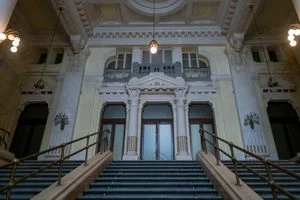
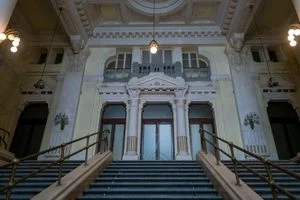
The Exchange Palace in Budapest, designed by architect Ignác Alpár and constructed between 1902 and 1907, has a storied history that stretches beyond its initial purpose as the headquarters for the Budapest Stock Exchange. Positioned prominently on Szabadság tér, this architectural gem was crafted for the frenetic activity of early 20th-century finance; however, its legacy would take multiple turns over the decades. The building reflects not only the economic aspirations of a burgeoning city but also the architectural trends of its time, merging functionality with ornate design that was characteristic of its era.
From Finance to Television
When the stock exchange closed its doors in 1948, the grand building transitioned into a hub for Hungarian Television (MTV) during the 1950s. For over fifty years, the expansive interior was reconfigured to accommodate television studios and technical setups, allowing it to thrive in a completely different industry. This transformation was significant; the world was experiencing a media revolution, and MTV found in the Exchange Palace a perfect setting to capture the imagination of a nation through emerging broadcast media.
Abandonment and Cinematic Fame
Following MTV's departure in 2009, the Exchange Palace fell into disuse, its magnificent halls becoming shadowy remnants of its rich past. The contrast between its majestic façade and the empty, neglected interiors created a captivating presence in central Budapest, sparking curiosity among locals and tourists alike. This juxtaposition of opulence and decay tells a story familiar to many historical buildings; it reflects the passage of time and the evolving needs of the city. Notably, the palace also served as a filming location for the sci-fi sequel Blade Runner 2049, adding a cinematic layer to its already diverse narrative. (And this is the part most people overlook: how old structures can gain new life through popular culture.) The film’s portrayal not only renewed interest in the building but highlighted the broader conversation around urban renewal and the preservation of historical architecture in modern contexts.
A New Chapter Ahead
Today, the Exchange Palace is poised for revival with plans for redevelopment into contemporary office and commercial spaces. Its intriguing history—a former stock exchange, a television headquarters, and a film site—contributes to its unique place in Budapest's architectural narrative. As it emerges from years of obscurity, this landmark is set to play a vital role in the city's evolving urban tapestry. But questions remain: will the redevelopment pay homage to the building's rich past, or will it become another faceless structure in a city cluttered with modernity? This is where the interests of architects, historians, and developers often collide. If you're working in this space, the tension between preservation and progress is something you need to navigate carefully.
Implications and Future Outlook
The transformation of the Exchange Palace has implications that extend beyond its walls. With rising interest in urban renewal, the project's success could set a precedent for other historic buildings facing the threat of neglect. Cities around the globe face similar dilemmas—how to honor their past while accommodating the present and future. As cities evolve, the stories of their landmarks become crucial to maintaining cultural identity.
Recent trends indicate that older cities like Budapest are increasingly looking to blend new development with historical preservation. This could serve as a case study for urban planners and architects worldwide. Still, reimagining a structure with such a potent legacy isn’t just a matter of aesthetic choice; it’s about engaging local communities and understanding the emotional attachments people have to their architectural heritage. The Exchange Palace could potentially be more than just another office space; it could foster a sense of place that resonates with both locals and visitors.
The challenges are significant: striking the right balance between modernization and maintaining the building's historic character can be difficult. Yet, the potential benefits of utilizing such spaces are equally compelling. Repurposed buildings can create unique environments that encourage innovation and community interaction. Consider this: each brick of the Exchange Palace holds stories that connect the past to the present. If developers can tap into that history, they might create something truly special.


Discussion
Sign in to join the discussion.